A U.S. think tank has urged Taiwan to adopt a "hellscape" strategy that would flood the Taiwan Strait with drones and other uncrewed systems to deter a potential invasion by China.
(Full text of the story is now in CNA English news archive. To view the full story, you will need to be a subscribed member of the CNA archive. To subscribe, please read here.)
More in DEFENSE
![Army unveils Stinger simulators, highlights counter-drone role]() Army unveils Stinger simulators, highlights counter-drone roleTaiwan's Army unveiled simulators for United States-made Stinger missile systems Tuesday, highlighting their use in training personnel to engage airborne targets, including drones.09/22/2026 07:39 PM
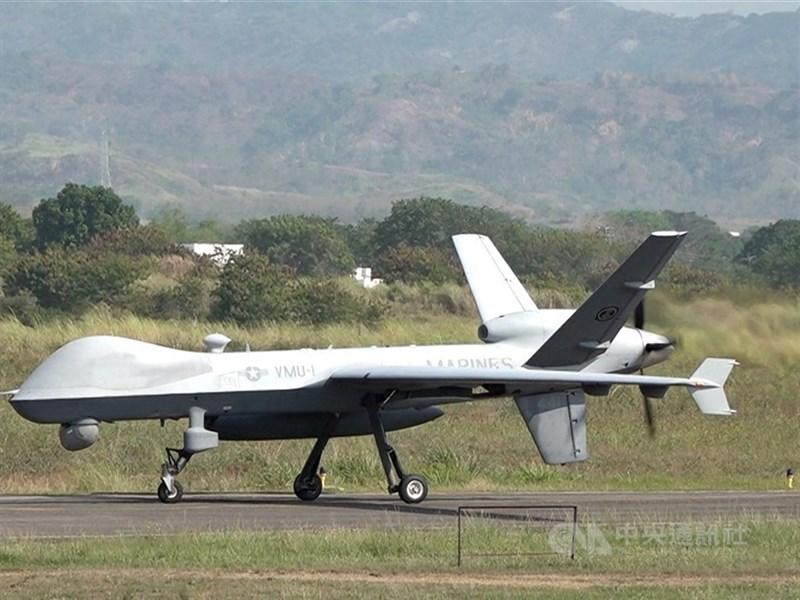
Army unveils Stinger simulators, highlights counter-drone roleTaiwan's Army unveiled simulators for United States-made Stinger missile systems Tuesday, highlighting their use in training personnel to engage airborne targets, including drones.09/22/2026 07:39 PM![MQ-9B 'SkyGuardian' drones undergo flight testing in Taiwan: Source]() MQ-9B 'SkyGuardian' drones undergo flight testing in Taiwan: SourceThe first two of the four MQ-9B "SkyGuardian" drones Taiwan purchased from the United States underwent their first flight tests at an air base in eastern Taiwan early Monday, a source familiar with the matter told CNA.09/14/2026 12:47 PM
MQ-9B 'SkyGuardian' drones undergo flight testing in Taiwan: SourceThe first two of the four MQ-9B "SkyGuardian" drones Taiwan purchased from the United States underwent their first flight tests at an air base in eastern Taiwan early Monday, a source familiar with the matter told CNA.09/14/2026 12:47 PM![New report shows PLA prioritizing joint island-landing capabilities: Analyst]() New report shows PLA prioritizing joint island-landing capabilities: AnalystThe Ministry of National Defense's 2026 report on China's military power, submitted to the Legislative Yuan on Monday, places greater emphasis than last year's report on the People's Liberation Army's (PLA) efforts to strengthen its capabilities for a potential landing operation on Taiwan, according to an analyst.09/01/2026 04:28 PM
New report shows PLA prioritizing joint island-landing capabilities: AnalystThe Ministry of National Defense's 2026 report on China's military power, submitted to the Legislative Yuan on Monday, places greater emphasis than last year's report on the People's Liberation Army's (PLA) efforts to strengthen its capabilities for a potential landing operation on Taiwan, according to an analyst.09/01/2026 04:28 PM

Latest
- Society
DPP township council candidate dies after collapsing on stage
09/23/2026 11:52 AM - Science & Tech
Taiwan part of WorldSkills Competition opening ceremony in China
09/23/2026 10:53 AM - Business
U.S. dollar down in Taipei trading
09/23/2026 10:17 AM - Society
Taiwan headline news
09/23/2026 10:05 AM - Business
Taiwan shares open higher
09/23/2026 09:15 AM