TANG PRIZE/Chinese historian Ge Zhaoguang wins 2026 Tang Prize in Sinology
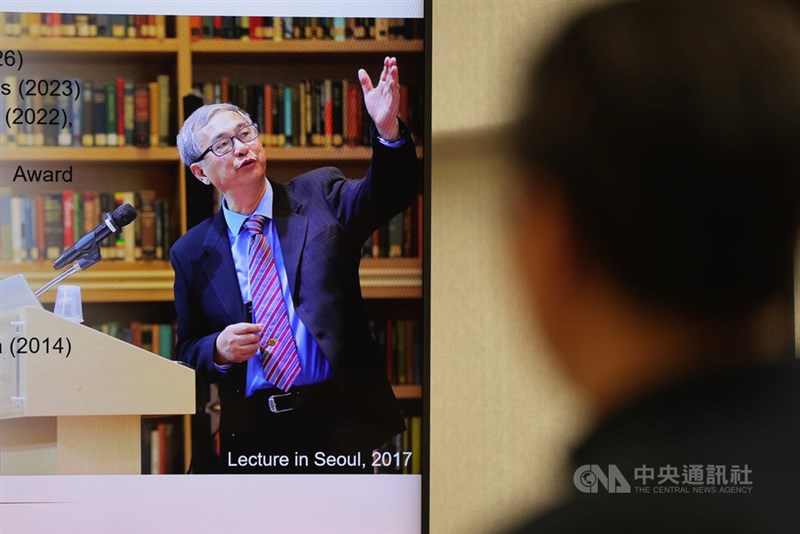
Taipei, June 17 (CNA) Chinese historian Ge Zhaoguang (葛兆光), a specialist in Chinese intellectual, cultural and religious history, has been named the 2026 Tang Prize laureate in Sinology for his wide-ranging scholarship that has influenced academic circles in China and around the world.
● Given new life by Sinology, Tang Prize laureate eager to promote Chinese culture
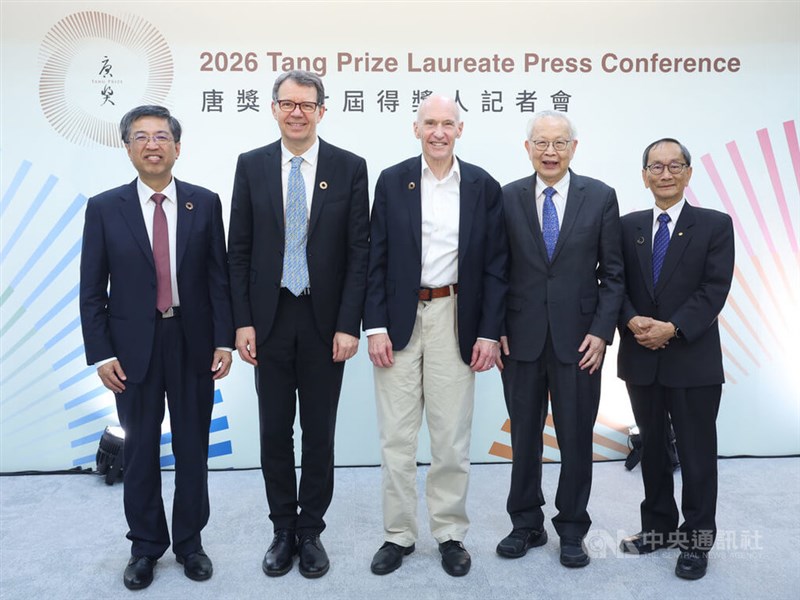
"Ge was chosen for his mastery of ancient Chinese thought," said David Wang (王德威), chairman of the Tang Prize Selection Committee for Sinology, at a press conference in Taipei on Wednesday.
"From his early work on Chan Buddhism, Taoism, and the history of philosophical thought to his more recent series of studies on 'What is China?,' Professor Ge has consistently offered original insights and groundbreaking discoveries," Wang said.
"His achievements have not only exerted a far-reaching influence within China but have also resonated throughout the global Chinese-speaking academic community, as well as in Japan, Korea, North America and Europe," he said.
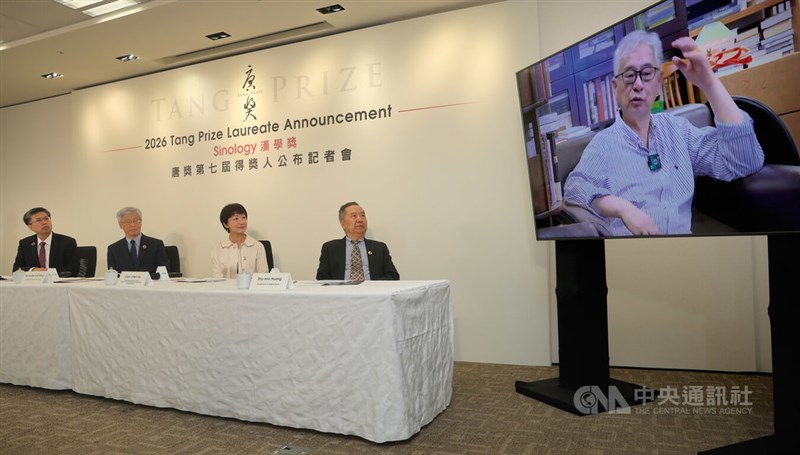
In a prerecorded message played at the event, Ge said he sincerely hoped that, with the support of the Tang Prize, Sinology will become a focus of international academic discussion and foster dialogue with other fields of cultural studies, including Indian, Persian, Egyptian and Japanese studies.
Ge is the first China-based scholar to receive the Tang Prize in Sinology, which recognizes research on China and related fields, including Chinese thought, history, philology, linguistics, religion, philosophy, archaeology, traditional canons, literature and art.
According to the Tang Prize Foundation, Ge, who has been a professor at Fudan University's National Institute for Advanced Humanistic Studies and Department of History since 2006, was selected as a Princeton Global Scholar by Princeton University in 2009.
Born in Shanghai in 1950, he studied classical philology in Peking University's Department of Chinese Language and Literature from 1978 to 1984 before teaching history at Yangzhou University and later at Tsinghua University.
He has received numerous literary and academic honors, including the Asia-Pacific Awards in Japan (2014) and South Korea's Paju Book Award (2014).
According to the Tang Prize Foundation, Ge has written dozens of books since the 1980s that demonstrate a broad and deep understanding of Chinese literature and history while balancing academic rigor with contemporary relevance.
In his writings, Ge presents a rich and diverse picture of Chinese intellectual thought. His influence extends beyond the Chinese-speaking world through Japanese, Korean and English translations of his works, the foundation said.
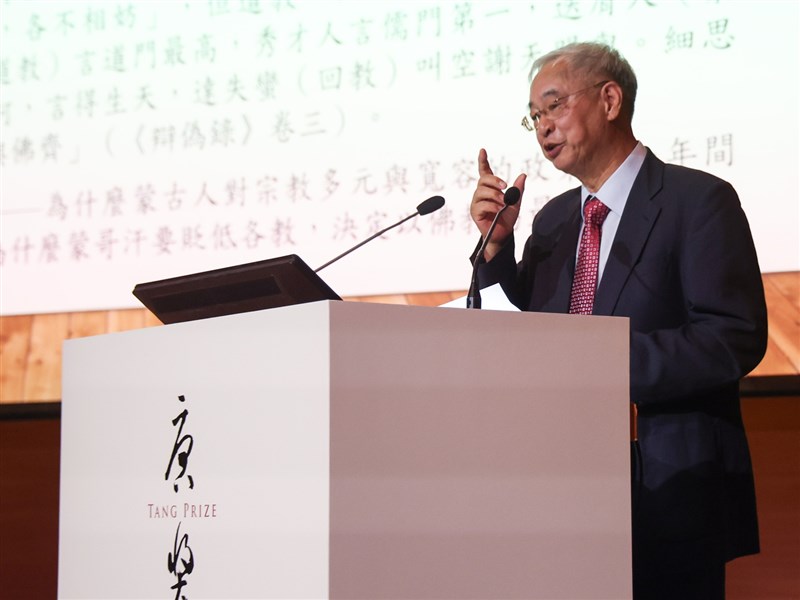
"What makes him especially remarkable is his ability to move fluently across ancient and modern, Chinese and non-Chinese traditions alike," said Huang Shu-min (黃樹民), Taiwanese anthropologist and academician, at Wednesday's press event.
He has been able to do that, Huang said, while transcending the conventional boundaries that separate literature, history, philosophy, religion and art.
"Through his expansive vision, rigorous command of textual sources, and interdisciplinary methodology, he has fundamentally reshaped historical studies of Chinese thought and religions, deepening scholarly understanding both within China and internationally of China, Chinese thought and the Chinese culture," Huang said.
The Taiwanese scholar said the translation of Ge's works into many languages have not only promoted international understanding of Chinese thought and culture but also opened new paths for younger generations of scholars to work across disciplinary boundaries.
The Tang Prize is a biennial award established in 2012 by the late Taiwanese entrepreneur Samuel Yin (尹衍樑) to honor people who have made prominent contributions in four categories -- sustainable development, biopharmaceutical science, sinology, and rule of law.
A cash prize of NT$40 million (US$1.26 million) and an additional NT$10 million in research funding are granted to each award category.
![U.S. research funding cuts hurt scientific progress: Tang Prize laureates]() U.S. research funding cuts hurt scientific progress: Tang Prize laureatesThe 2026 Tang Prize laureates in Biopharmaceutical Science warned Saturday that cuts to U.S. government research funding could slow scientific progress and reduce opportunities for young researchers, with potentially long-term consequences for the scientific workforce.09/19/2026 07:39 PM
U.S. research funding cuts hurt scientific progress: Tang Prize laureatesThe 2026 Tang Prize laureates in Biopharmaceutical Science warned Saturday that cuts to U.S. government research funding could slow scientific progress and reduce opportunities for young researchers, with potentially long-term consequences for the scientific workforce.09/19/2026 07:39 PM![Find pivotal moments that shape history: Tang Prize Sinology laureate]() Find pivotal moments that shape history: Tang Prize Sinology laureateGe Zhaoguang (葛兆光) used his platform as the 2026 Tang Prize laureate in Sinology on Saturday to encourage historians to broaden their perspective and focus on identifying pivotal moments that shape history's course.09/19/2026 07:02 PM
Find pivotal moments that shape history: Tang Prize Sinology laureateGe Zhaoguang (葛兆光) used his platform as the 2026 Tang Prize laureate in Sinology on Saturday to encourage historians to broaden their perspective and focus on identifying pivotal moments that shape history's course.09/19/2026 07:02 PM![Ozone recovery a rare success story: Tang Prize laureate Susan Solomon]() Ozone recovery a rare success story: Tang Prize laureate Susan SolomonThe recovery of the Antarctic ozone layer represents a rare example of science and international policy successfully addressing a global environmental threat, said Susan Solomon, whose research on chlorofluorocarbons (CFCs) earned her the 2026 Tang Prize in Sustainable Development.09/19/2026 05:25 PM
Ozone recovery a rare success story: Tang Prize laureate Susan SolomonThe recovery of the Antarctic ozone layer represents a rare example of science and international policy successfully addressing a global environmental threat, said Susan Solomon, whose research on chlorofluorocarbons (CFCs) earned her the 2026 Tang Prize in Sustainable Development.09/19/2026 05:25 PM
- Society
Typhoon Champi to turn away from Taiwan, will still bring heavy rain
10/19/2026 07:53 PM - Society
Taiwan, Philippines sign animal husbandry research pact
10/19/2026 07:26 PM - Society
Workers rally in Taipei for pension reform, profit-sharing rules
10/19/2026 07:00 PM - Politics
Ho proposes bus reforms; Chiang outlines smart safety network in Taichung
10/19/2026 06:21 PM - Sports
Xiao Xiang-wen wins Taiwan's 1st gold at Nagoya Asian Para Games
10/19/2026 06:04 PM