INTERVIEW/Solomon bets on AI vision to power next generation of robots
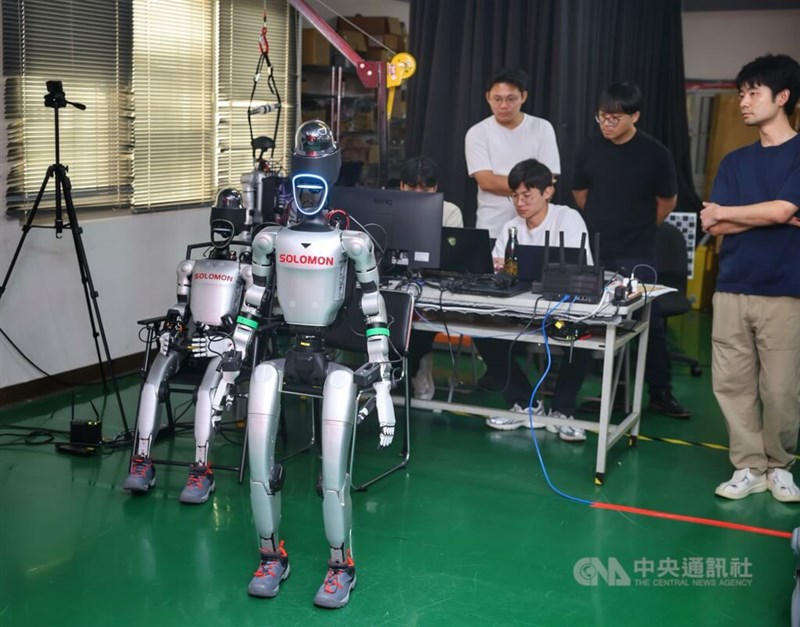
Taipei, Aug. 8 (CNA) Taiwan's Solomon Technology Corp. is expanding its artificial intelligence-powered systems for humanoid robots, with chairman Johnny Chen (陳政隆) saying the company aims to address one of the biggest hurdles to wider adoption -- machine perception.
Rather than manufacturing humanoid robots, Solomon develops AI-powered 3D vision modules and machine vision software that enable robots to perceive, understand and interact with their surroundings.
The company is also applying the technology to drones, autonomous mobile robots (AMRs) and industrial inspection systems.
In a recent interview with CNA, Chen cited an intelligent drone inspection system for solar farms in southern Taiwan as one of Solomon's latest commercial applications.
Drones equipped with the company's 3D machine vision and AI software can automatically detect obstructions on solar panels that reduce power generation, he said.
The drones identify potential problems during aerial inspections and transmit high-resolution images to maintenance crews, allowing faults to be addressed more quickly and improving the efficiency of solar farm operations, according to Chen.
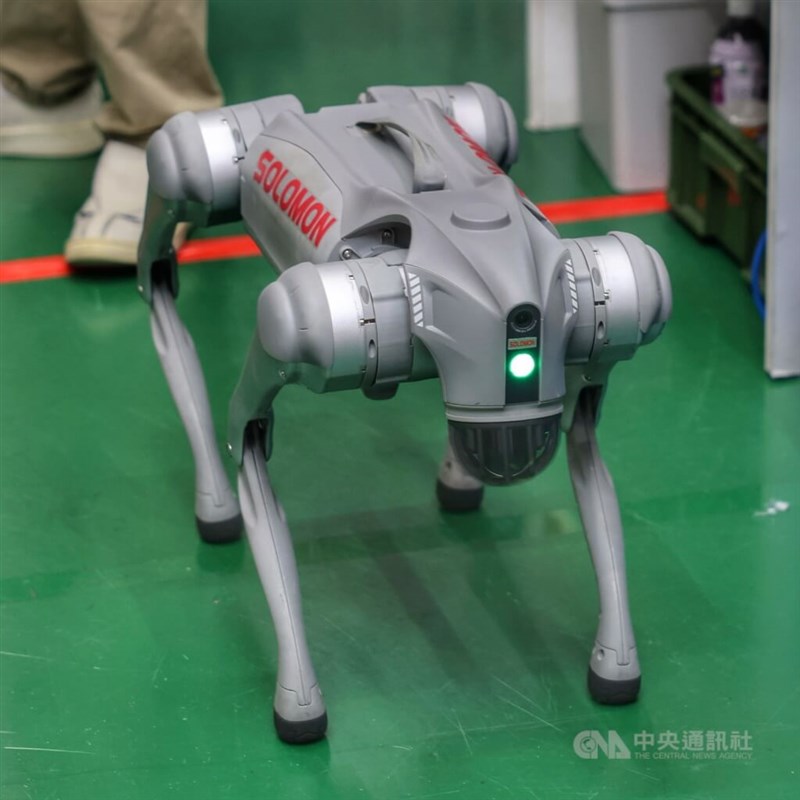
The same AI vision technology has also been deployed in AMRs, robotic arms, pan-tilt-zoom cameras and quadruped robots used in industrial inspection projects in markets including the United States and Japan, he said.
Addressing perception bottleneck

Humanoid robots must combine three core capabilities to perform practical industrial tasks: reasoning, active perception and action, Chen said.
Although advances in large language models and vision-language models have improved robots' ability to understand instructions, perception remains a major challenge because robots still struggle to identify distant or partially obscured objects in complex environments, he said.
To address the problem, Solomon has developed generative AI vision technology that uses synthetic images to train AI models, reducing training time while improving robots' ability to recognize unfamiliar objects and adapt to different real-world scenarios.
The company has also developed an "active perception" system that replaces conventional single-image recognition with a continuous cycle of searching, selecting, zooming and evaluating before searching again if necessary.
The approach enables robots to identify objects from several meters away before moving closer, reducing unnecessary movement and improving accuracy, Chen said.
Autonomous demonstration
During a rare public demonstration at its headquarters, Solomon showcased a bipedal humanoid robot that received spoken or written instructions, located an object about five meters away using its vision system, moved toward it and grasped it without relying on pre-programmed scripts.
The robot also read analog gauges, counted inventory items and relocated objects that had been moved, demonstrating the integration of reasoning, perception and action, according to the company.
Unlike many industry demonstrations that rely on edited videos or remote control, Solomon's robot completed the tasks autonomously after receiving human instructions, the company said.
Commercial outlook
AI software for humanoid robots is advancing more quickly than hardware, and broader commercial adoption is likely to begin around 2028, Chen said.
He expects logistics and warehousing to be among the first sectors to deploy the technology, with hybrid robots featuring a humanoid upper body and wheeled base likely to meet operational and safety requirements more effectively.
Taiwanese manufacturers already have strengths in key humanoid robot components, including gear reducers, joint modules, sensors and servo motors, although opportunities remain to develop complete robotic systems, Chen said.
![New ECCT chair urges greater agility in Taiwan's software, energy sectors]() New ECCT chair urges greater agility in Taiwan's software, energy sectorsTaiwan is known for its strength in hardware manufacturing, but Frank Grunert, the new chairperson of the European Chamber of Commerce Taiwan (ECCT), sees considerable potential in software as well.10/10/2026 12:36 PM
New ECCT chair urges greater agility in Taiwan's software, energy sectorsTaiwan is known for its strength in hardware manufacturing, but Frank Grunert, the new chairperson of the European Chamber of Commerce Taiwan (ECCT), sees considerable potential in software as well.10/10/2026 12:36 PM![Strategic partnership key to Taiwan-U.K. cooperation: Deputy economics minister]() Strategic partnership key to Taiwan-U.K. cooperation: Deputy economics ministerTaiwan's Deputy Minister of Economic Affairs Cynthia Kiang (江文若), who has just concluded an annual economic and trade dialogue with her U.K. counterpart in London, said Friday that establishing a strategic partnership is key to bilateral cooperation.10/03/2026 01:53 PM
Strategic partnership key to Taiwan-U.K. cooperation: Deputy economics ministerTaiwan's Deputy Minister of Economic Affairs Cynthia Kiang (江文若), who has just concluded an annual economic and trade dialogue with her U.K. counterpart in London, said Friday that establishing a strategic partnership is key to bilateral cooperation.10/03/2026 01:53 PM![Taiwan, democracies must build resilience against China, Russia: Scholar]() Taiwan, democracies must build resilience against China, Russia: ScholarTaiwan and other democracies must strengthen their resilience against the "sharp power" wielded by authoritarian regimes such as China and Russia to defend their shared democratic values, a visiting American scholar said Monday.09/21/2026 04:39 PM
Taiwan, democracies must build resilience against China, Russia: ScholarTaiwan and other democracies must strengthen their resilience against the "sharp power" wielded by authoritarian regimes such as China and Russia to defend their shared democratic values, a visiting American scholar said Monday.09/21/2026 04:39 PM
- Politics
Lai urges respect for WWII history, Taiwan's 'right to exist'
10/10/2026 02:44 PM - Politics
Taiwan needs a 'chain of guardian mountains' across industries: Lai
10/10/2026 01:19 PM - Business
New ECCT chair urges greater agility in Taiwan's software, energy sectors
10/10/2026 12:36 PM - Culture
BigBang throws concert in Taipei; Jay Chou shares photos with group
10/10/2026 11:50 AM - Politics
Full text of President Lai Ching-te's National Day address
10/10/2026 11:10 AM