INTERVIEW/Given new life by Sinology, Tang Prize laureate eager to promote Chinese culture
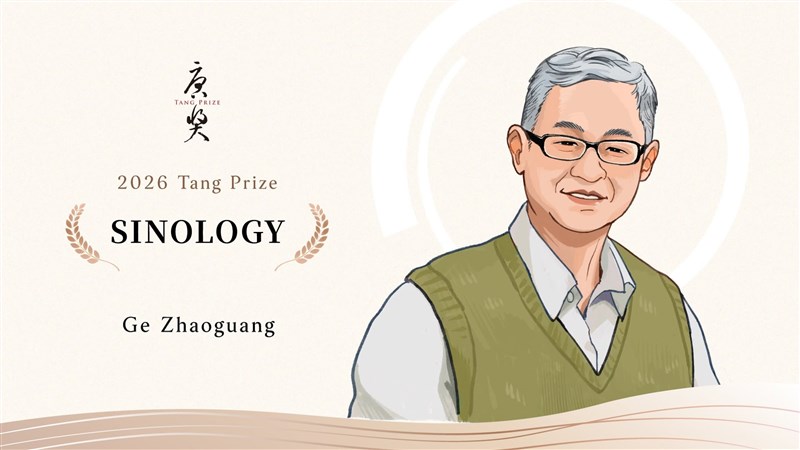
Taipei, June 17 (CNA) The 2026 Tang Prize laureate in Sinology Ge Zhaoguang (葛兆光) said studying Chinese history has given him a chance at "rebirth," and that he believes Sinologists have a mission to promote a better understanding of Chinese culture worldwide.
● Chinese historian Ge Zhaoguang wins 2026 Tang Prize in Sinology
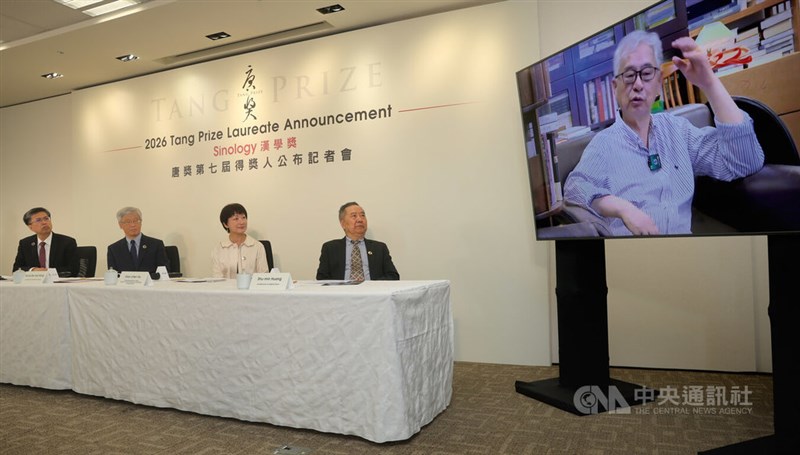
The 76-year-old renowned historian, who specializes in Chinese intellectual and religious history, won the prize on Wednesday "for his mastery of ancient Chinese thought," according to the Tang Prize Selection Committee for Sinology.
"From his early work on Chan Buddhism, Daoism, and the history of philosophical thought, to his more recent series of studies on 'What is China,' he has consistently offered original insights and groundbreaking discoveries," the committee said.
His influence extends beyond the Chinese-speaking world through Japanese, Korean and English translations of his works, the Tang Prize Foundation said.
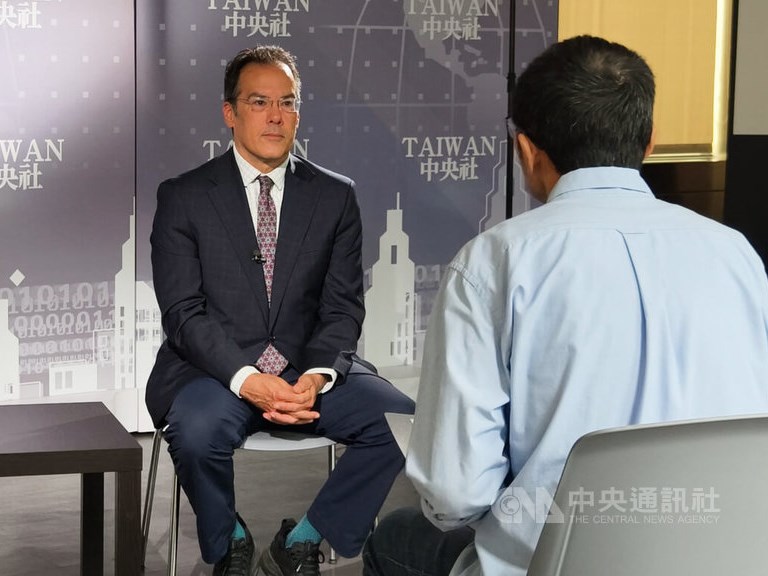
Asked what Sinology means to him, Ge told CNA during a recent interview that "rebirth" was the first word that came to mind.
Ge, who was born and raised in China and is now a professor at Fudan University's National Institute for Advanced Humanistic Studies and Department of History, said he did not pursue higher education after finishing junior high school at age 16.
It was not until more than a decade later that he returned to his studies and, after passing the college entrance examination, officially began his academic career by enrolling in the Department of Chinese at Peking University, where he studied classical philology.
"Whether you see it as me choosing this career or the career choosing me, it did offer me a life-changing opportunity, a chance at rebirth," he said in the interview, conducted in Mandarin Chinese.
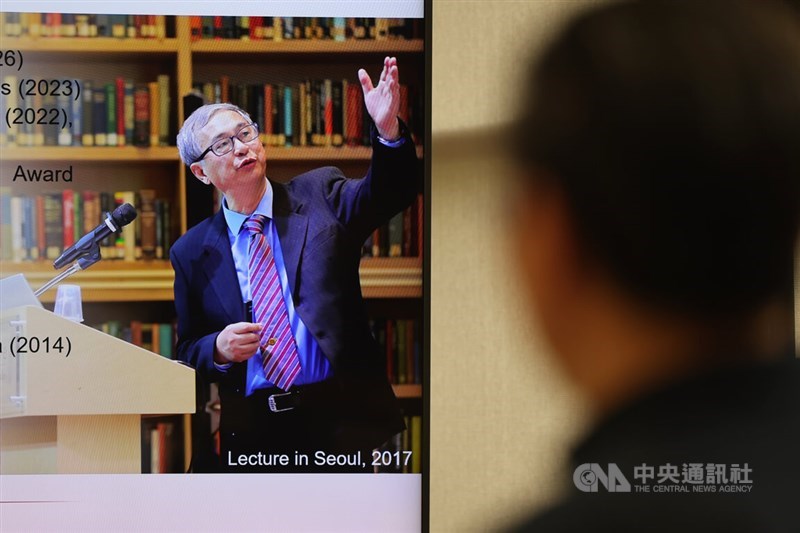
Ge said that for himself and fellow Chinese scholars who entered academia in the 1980s, the study of traditional Chinese culture was not merely a profession.
"We had another important mission: to explain, interpret and present traditional Chinese culture to the world outside China," he said.
What he has been doing over the past decades, Ge said, is trying to identify the driving force behind Chinese history, or what he called "the gene of Chinese history."
Like a gene in biology -- a basic unit of heredity that determines which traits are passed from generation to generation -- the gene of Chinese history shapes how China has evolved over the centuries, according to the scholar.
"What I have been doing all these years is telling not only people in China, but also people outside China, how to understand modern China and comprehend its various behaviors and systems," he said.
How China is perceived by the world today has everything to do with its history and culture, Ge argued.
"If you don't know history, you will definitely have some misunderstanding of modern China," he said.
On winning the Tang Prize, Ge said he had the highest respect for the prize's founder, late Taiwanese entrepreneur Samuel Yin (尹衍樑), and was deeply saddened to learn of Yin's recent passing.
Yin, chairman of the Ruentex Group, died in Taipei on May 26 at the age of 75.
● Ruentex chairman, Tang Prize founder Samuel Yin dies at age 75
He said he sincerely hoped that, with the support of the Tang Prize, Sinology will become a focal point for international academic discussion and foster dialogue with other fields of cultural studies, including Indian, Persian, Egyptian and Japanese studies.
Ge is the first China-based scholar to receive the Tang Prize in Sinology, which recognizes research on China and related fields, including Chinese thought, history, philology, linguistics, religion, philosophy, archaeology, traditional canons, literature and art.
The inaugural Sinology laureate was Chinese-American scholar Yu Ying-shih (余英時) in 2014. American Sinologist William Theodore de Bary received the award in 2016.
American scholar Stephen Owen and Japanese scholar Yoshinobu Shiba shared the prize in 2018, followed by Chinese Australian scholar Wang Gungwu (王賡武) in 2020, British scholar Jessica Rawson in 2022, and Taiwanese-American historian Hsu Cho-yun (許倬雲) in 2024.
The Tang Prize is a biennial award established in 2012 to honor those who have made contributions in four categories -- sustainable development, biopharmaceutical science, sinology and rule of law.
![Strategic partnership key to Taiwan-U.K. cooperation: Deputy economics minister]() Strategic partnership key to Taiwan-U.K. cooperation: Deputy economics ministerTaiwan's Deputy Minister of Economic Affairs Cynthia Kiang (江文若), who has just concluded an annual economic and trade dialogue with her U.K. counterpart in London, said Friday that establishing a strategic partnership is key to bilateral cooperation.10/03/2026 01:53 PM
Strategic partnership key to Taiwan-U.K. cooperation: Deputy economics ministerTaiwan's Deputy Minister of Economic Affairs Cynthia Kiang (江文若), who has just concluded an annual economic and trade dialogue with her U.K. counterpart in London, said Friday that establishing a strategic partnership is key to bilateral cooperation.10/03/2026 01:53 PM![Taiwan, democracies must build resilience against China, Russia: Scholar]() Taiwan, democracies must build resilience against China, Russia: ScholarTaiwan and other democracies must strengthen their resilience against the "sharp power" wielded by authoritarian regimes such as China and Russia to defend their shared democratic values, a visiting American scholar said Monday.09/21/2026 04:39 PM
Taiwan, democracies must build resilience against China, Russia: ScholarTaiwan and other democracies must strengthen their resilience against the "sharp power" wielded by authoritarian regimes such as China and Russia to defend their shared democratic values, a visiting American scholar said Monday.09/21/2026 04:39 PM![European Parliament vice president praises Hsiao as 'role model' for women]() European Parliament vice president praises Hsiao as 'role model' for womenEuropean Parliament Vice President Pina Picierno on Saturday praised Taiwanese Vice President Hsiao Bi-khim (蕭美琴) as a role model for freedom-loving women around the world and told CNA that she would soon begin planning a trip to Taipei after accepting Hsiao's invitation to visit.09/13/2026 01:08 PM
European Parliament vice president praises Hsiao as 'role model' for womenEuropean Parliament Vice President Pina Picierno on Saturday praised Taiwanese Vice President Hsiao Bi-khim (蕭美琴) as a role model for freedom-loving women around the world and told CNA that she would soon begin planning a trip to Taipei after accepting Hsiao's invitation to visit.09/13/2026 01:08 PM
- Politics
China-born spouse denied right to run for local office in Hsinchu
10/07/2026 08:59 PM - Society
Taiwan Railway apologizes after train blows past station
10/07/2026 07:52 PM - Politics
Defense company executives underscore autonomous capabilities at forum
10/07/2026 07:06 PM - Business
Micron Taoyuan union secures strike authorization, weighs 'surprise strike'
10/07/2026 06:42 PM - Politics
KMT lawmaker to propose tougher penalties for drug-impaired driving
10/07/2026 05:29 PM