FEATURE/Beyond labels: How immigrant families reshape NCCU's Southeast Asia department
By Sunny Lai, CNA staff reporter
[Editor's Note: This is part two of a two-part series on a university department in Taiwan dedicated to Southeast Asian languages and regional studies, and the people behind it.]
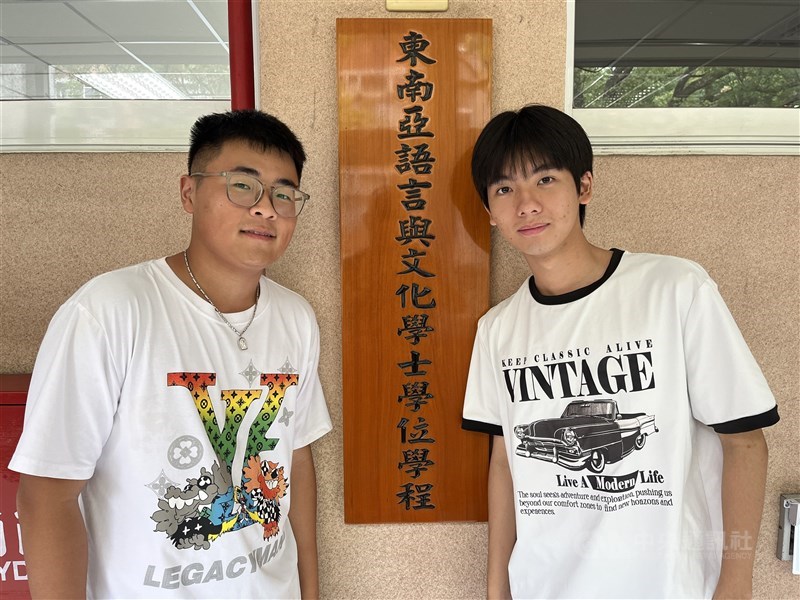
For Harry Chan (詹浩夆), Vietnamese has always been part of family life.
Born in Vietnam and raised by his maternal grandparents as a child, Chan moved between Vietnam and Taiwan and grew up speaking Vietnamese with his mother and younger brother.
Yet as he grew older, he realized he had inherited only part of the language.
"I realized I was effectively illiterate," Chan said, describing how frustrating it was to understand spoken Vietnamese but not be able to read it.
Sean Hsu (許喜恩) had almost exactly the opposite experience.
Although he regularly visited relatives in Vietnam as a child and could recognize some written Vietnamese, his family mainly communicated in Mandarin. During those visits, he often found himself unable to say much beyond simple greetings.
For Hsu, Vietnamese and the culture surrounding it existed "somewhere between familiar and unfamiliar."
Now both 19, Chan and Hsu have Vietnamese mothers and Taiwanese fathers and are preparing to enter their second year in the Vietnamese track at National Chengchi University's (NCCU) Department of Southeast Asian Languages and Cultures.
● Beyond language: Inside a Taiwan university's Southeast Asian department
In a recent interview with CNA, they said they enrolled not only to improve their Vietnamese but also to better understand the country and culture connected to their mothers.
Their experiences also reflect a broader demographic shift in Taiwan. According to the National Immigration Agency, more than 615,000 new immigrants were living in Taiwan as of March 2026, while children from immigrant families have become an increasingly visible part of Taiwanese society.
Learning Vietnam anew
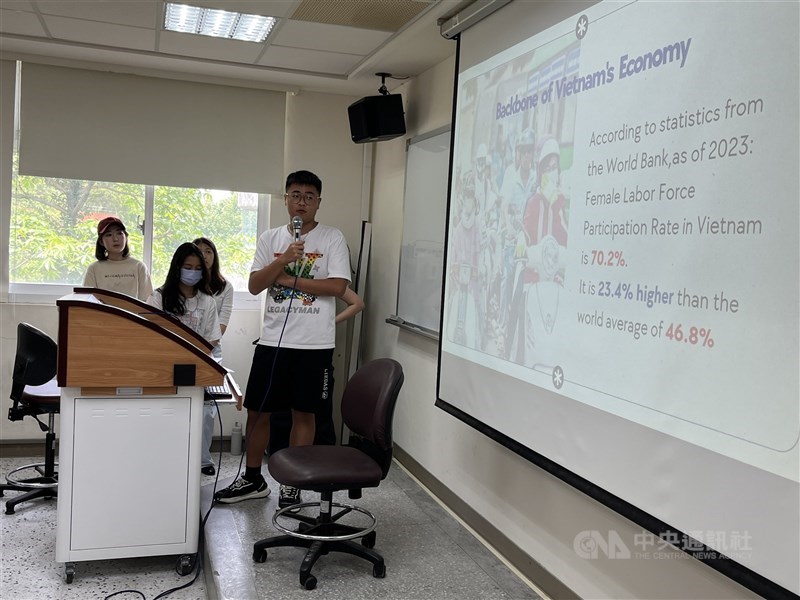
The transition from Vietnamese at home to Vietnamese in the classroom was not always easy.
Both students had grown up speaking Vietnamese with a southern accent at home rather than through structured instruction, making it challenging at first when they enrolled in courses taught in a northern accent.
They also quickly discovered that the department offered much more than language training.
"My mother was busy working and didn't teach me much about Vietnam's cultural or historical background," Hsu said. "Those were things I only began learning after entering university."
Chan said his courses introduced him to topics including women's status across Southeast Asian countries, regional economic development and broader social issues that extended well beyond his family's own experience.
Department chair Le Thi-Nham (黎氏仁) said many heritage-language students arrive with conversational ability or close family ties to Southeast Asia but soon discover that studying in the department also means learning about the region's "cultures, history, civilization, literature, politics and economics."
Confronting stereotypes
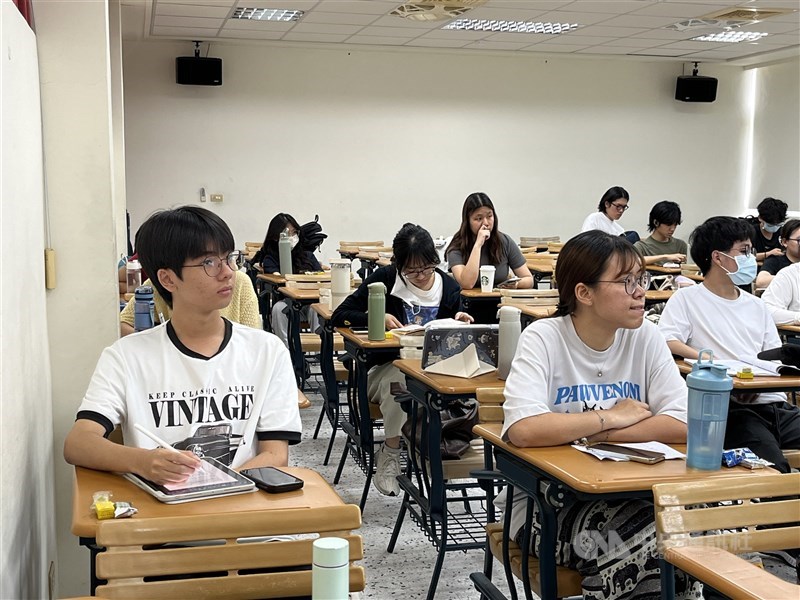
Their decision to study Vietnamese was not always understood.
Some high school classmates questioned why they needed to study a language they already spoke or suggested they could simply learn it from their mothers.
The department itself was mocked online last year as a "migrant worker department," reflecting a common tendency to associate Southeast Asia primarily with the roughly 895,000 migrant workers in Taiwan.
"Calling us a 'migrant worker department' is meaningless," Hsu said.
"The people actually learning the language are us, not them," Chan added.
Those attitudes were familiar to both students. They recalled that speaking Vietnamese in public as children sometimes drew unwanted attention.
Chan said some market vendors appeared to "look differently" at him and his mother compared to others after hearing them speak Vietnamese, while Hsu remembered passersby staring into his mother's shop when Vietnamese music was playing or when her Vietnamese friends gathered there.
A changing society
Today, however, both say the reactions are often very different.
Chan said vendors now tend to respond with surprise and admiration when they hear him speaking Vietnamese.
"They'll say, 'Wow, you can speak Vietnamese,'" he said.
Hsu has noticed a similar change, saying people are now more likely to compliment him on being bilingual than question his background.
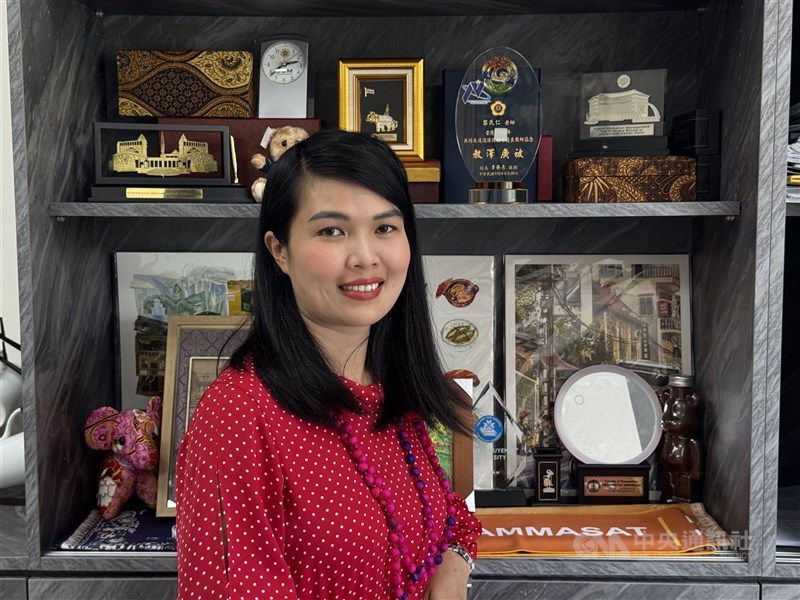
Le, who moved to Taiwan from Vietnam in 2010, said she has witnessed a similar shift over the past decade.
When she first arrived, many children of Southeast Asian immigrants tried to conceal their family backgrounds for fear of discrimination.
As Taiwanese society has become more familiar with Southeast Asia and immigrant families, however, she has increasingly seen students embrace those identities.
"Most of the second generation now step out," Le said. "They say they're very proud. They say, 'I am half Vietnamese, and I love my mother's culture.'"
Finding belonging
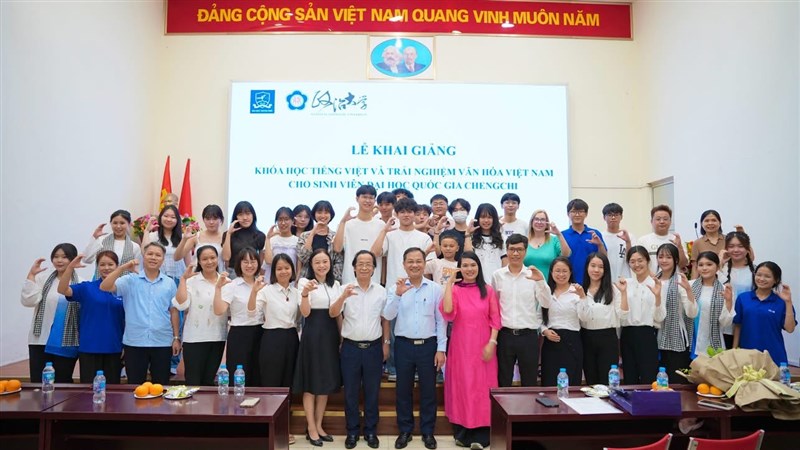
Joining the department further strengthened Chan and Hsu's sense of belonging, particularly because around half of the students in their cohort also come from immigrant families.
"I am now proud of this identity," Chan said.
Hsu said becoming more fluent in Vietnamese had strengthened both his connection with his mother's family and his appreciation of his Vietnamese heritage.
Both believe schools could do more to support children from immigrant families.
Hsu said Vietnamese was never offered at the schools he attended, despite the availability of Taiwanese (Hokkien) and Hakka classes. Chan said many classmates treated the Vietnamese elective at his high school as an easy course rather than a chance to seriously learn the language.
Expanding access to Southeast Asian language classes, they said, would help more children from immigrant families understand their backgrounds and feel confident about their identities.
Building bridges
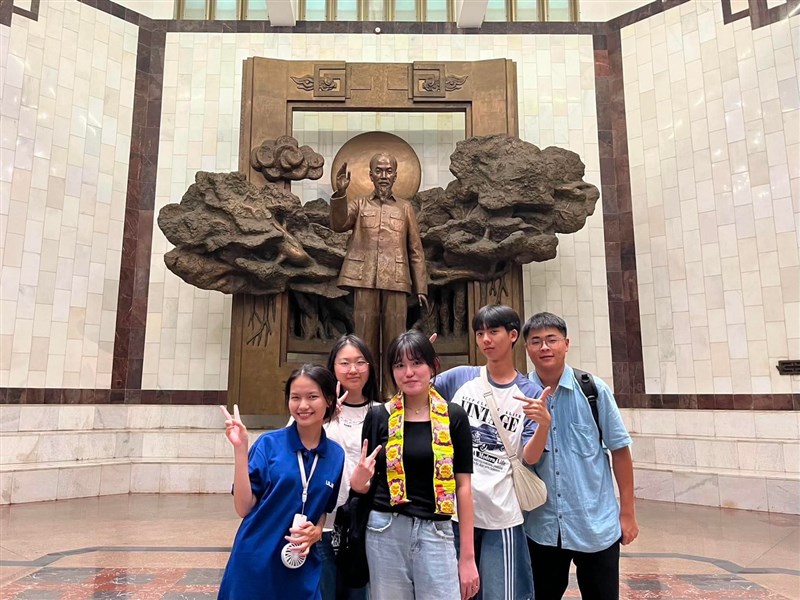
Le said students from immigrant families enrich classroom discussions by bringing "very authentic and very real stories" about their families, helping classmates understand Southeast Asian cultures from different perspectives.
Looking ahead, Hsu said he is interested in translation or teaching and has not ruled out living in Vietnam. Chan said he is also open to working there.
Hsu said the growing number of immigrant families could become an important force linking Taiwan and Southeast Asia through travel, trade and cultural exchange.
Chan said children from immigrant families could also play an important role by helping people become more accepting of different cultures and move beyond stereotypes.
"They are simply a new group that has come to our country," he said. "They are proof of our diversity."
Enditem/sfj
![DPP at 40: Founders reflect on risk, rise, reckoning]() DPP at 40: Founders reflect on risk, rise, reckoningFour decades after the Democratic Progressive Party (DPP) was founded under martial law, its pioneers recall the risks they took, the democratic changes they helped bring about and the challenges facing the party today.09/28/2026 11:10 AM
DPP at 40: Founders reflect on risk, rise, reckoningFour decades after the Democratic Progressive Party (DPP) was founded under martial law, its pioneers recall the risks they took, the democratic changes they helped bring about and the challenges facing the party today.09/28/2026 11:10 AM!['Umpire strikes back': Taiwanese ump sets U.S. pro baseball milestone]() 'Umpire strikes back': Taiwanese ump sets U.S. pro baseball milestoneIn her younger days, Sophiyah Liu (劉柏君) was a spiritual medium, serving as a bridge between the mortal plane and that of the unknown.09/18/2026 04:44 PM
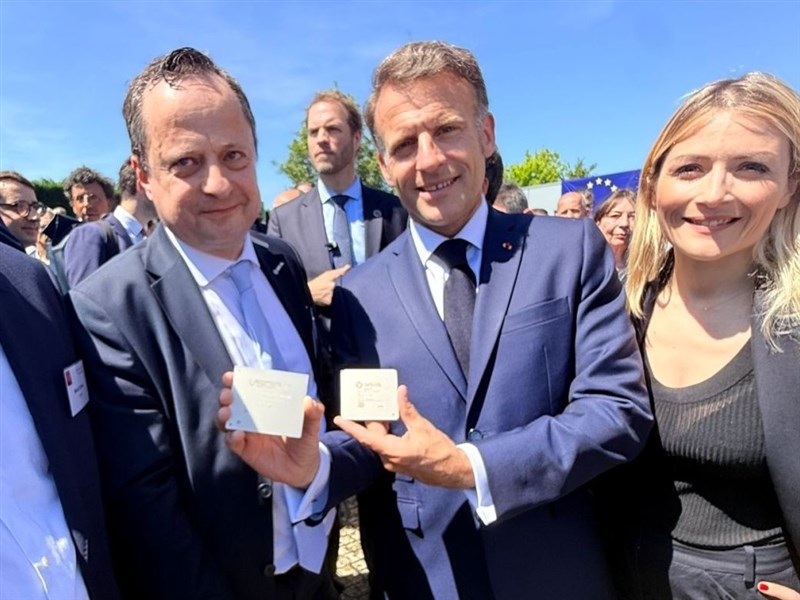
'Umpire strikes back': Taiwanese ump sets U.S. pro baseball milestoneIn her younger days, Sophiyah Liu (劉柏君) was a spiritual medium, serving as a bridge between the mortal plane and that of the unknown.09/18/2026 04:44 PM![Made in Taiwan, sovereign in Europe: France's different chip strategy]() Made in Taiwan, sovereign in Europe: France's different chip strategyDuring a May visit to a high-performance computing center operated by the French Alternative Energies and Atomic Energy Commission (CEA) in Bruyères-le-Châtel, south of Paris, French President Emmanuel Macron was photographed holding a sample of Rhea1.09/05/2026 05:27 PM
Made in Taiwan, sovereign in Europe: France's different chip strategyDuring a May visit to a high-performance computing center operated by the French Alternative Energies and Atomic Energy Commission (CEA) in Bruyères-le-Châtel, south of Paris, French President Emmanuel Macron was photographed holding a sample of Rhea1.09/05/2026 05:27 PM
- Business
Taiwan shares close down 0.02%
10/12/2026 01:40 PM - Politics
12 mayoral candidates sign sustainability pledges ahead of elections
10/12/2026 01:14 PM - Politics
Taiwan resumes processing of visa applications from Moroccans
10/12/2026 12:54 PM - Politics
PLA drills not close to Taiwan: Defense Minister Koo
10/12/2026 12:18 PM - Sports
Lin finishes runner-up in men's singles at WTT China Smash
10/12/2026 10:55 AM