FEATURE/Beyond language: Inside a Taiwan university's Southeast Asian department
By Sunny Lai, CNA staff reporter
[Editor's Note: This is part one of a two-part series about a university department in Taiwan dedicated to Southeast Asian languages and regional studies, and the people behind it.]
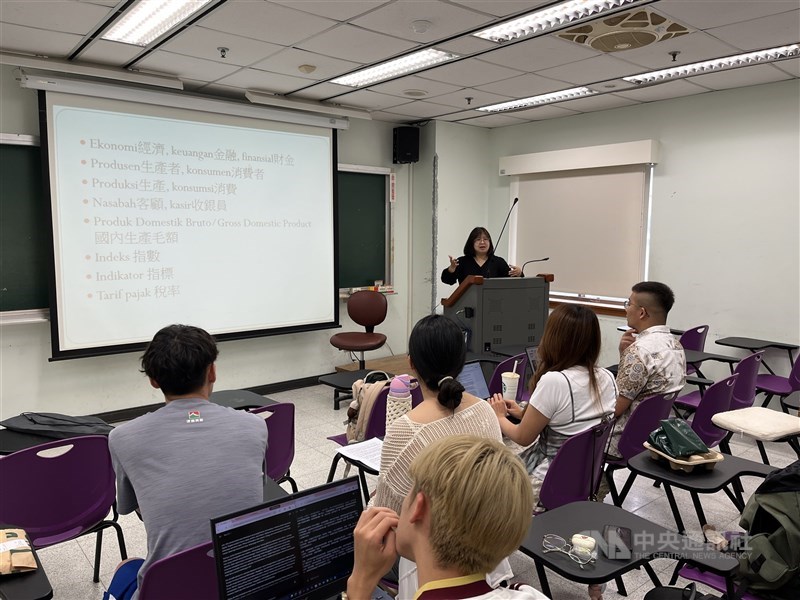
In a classroom at National Chengchi University (NCCU) in Taipei, students answer their lecturer's questions in Indonesian.
Down the hall, another class engages in a lively debate on Southeast Asian politics, discussing topics ranging from colonial history to the status of women.
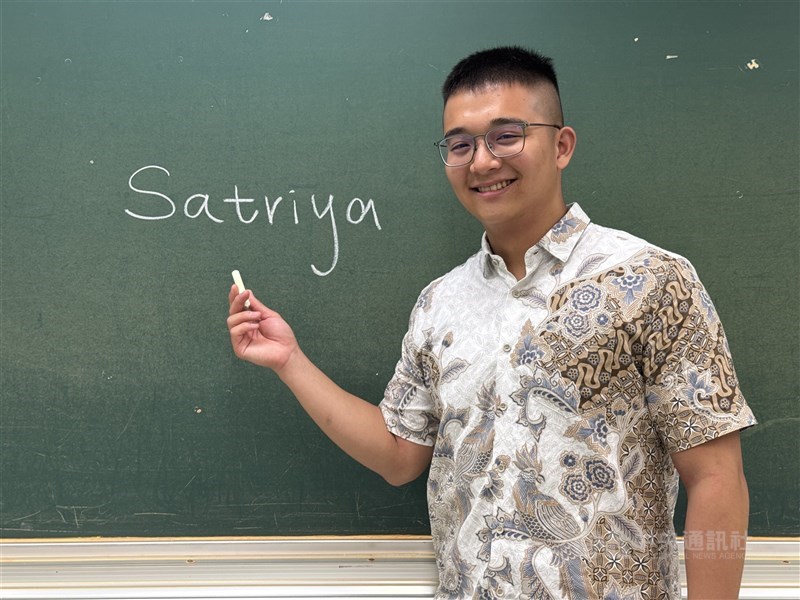
Four years ago, that was a world unfamiliar to Ethan Huang (黃逸廷), a Taiwanese recent graduate of NCCU's Department of Southeast Asian Languages and Cultures.
Curious about foreign cultures and encouraged by his family, who saw growing opportunities in Southeast Asia, Huang chose the relatively new program when applying to NCCU.
"I had almost no understanding of Indonesia," Huang, who chose the department's Indonesian track, told CNA in a recent interview. "Everything about that part of the world was very vague to me."
Today, the 22-year-old Huang speaks Indonesian confidently, has studied in Indonesia, and hopes to build a career there.
His experience illustrates how the program introduces Taiwanese students to a region that has become increasingly important to Taiwan, especially as it continues to diversify its economy away from China.
● Beyond labels: How immigrant families reshape NCCU's Southeast Asia department
Language and regional studies
At the department, students can choose among Indonesian, Thai and Vietnamese tracks while also studying the region's history, politics, society and culture.
Established as a bachelor's degree program in 2017 and upgraded to a department in 2024, it is one of Taiwan's few university departments specializing in Southeast Asian languages and regional studies.
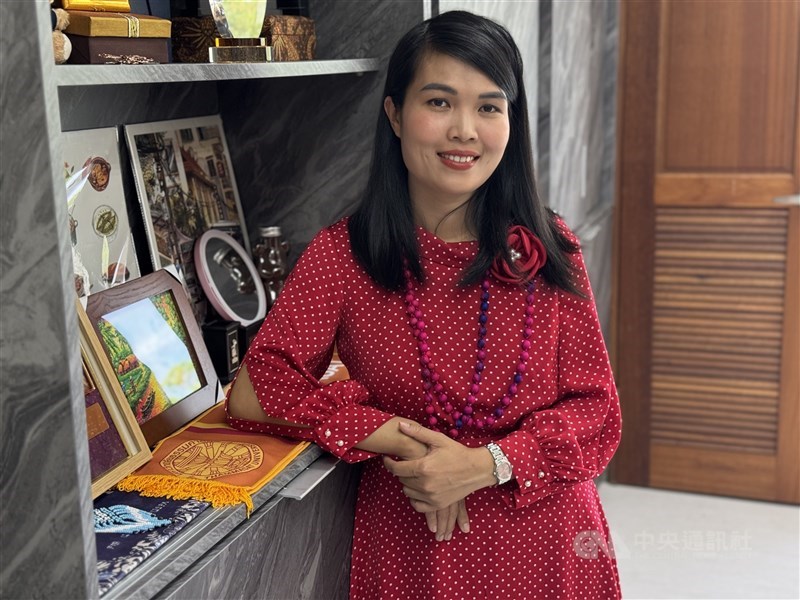
For department chair Le Thi-Nham (黎氏仁), a Vietnamese scholar who joined NCCU in 2018, language remains at the "center" of the curriculum.
"However, language is not enough," she said.
Rather than simply producing graduates who can speak a Southeast Asian language, Le said the department aims to give them a broader, interdisciplinary understanding of the region, with many regional studies courses taught in English.
"You need to have a second major," Le said, pointing to fields such as diplomacy, law, communications and business also offered at NCCU.
By drawing on the university's wider academic resources, students can combine their language training with professional knowledge and become "more competitive in the job market," she said.
Learning the culture
The department's broader approach to Southeast Asian studies also shapes its language teaching, with advanced courses moving beyond grammar and vocabulary to emphasize cultural context.
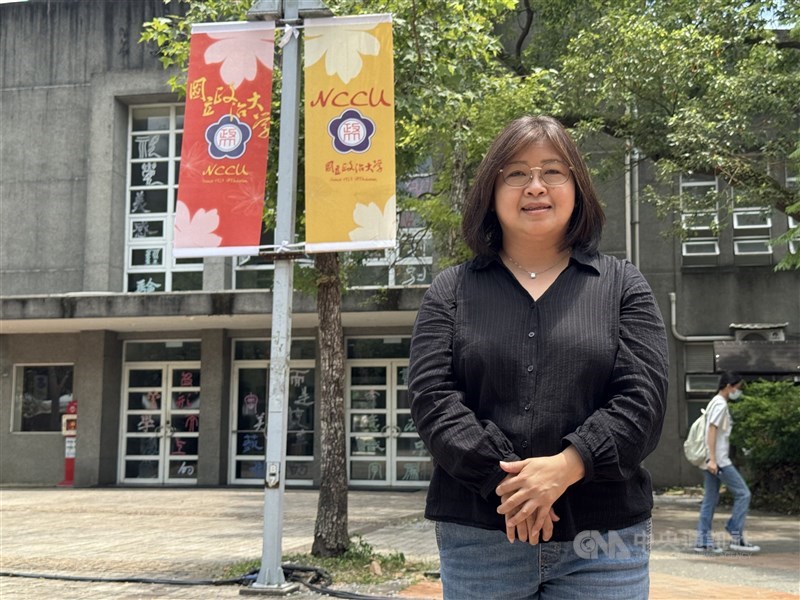
Farini Anwar (曾秀情), an Indonesian lecturer at NCCU and host of Radio Taiwan International's Indonesian-language programming, teaches Indonesian-Chinese translation and interpretation.
She said the department's third- and fourth-year students generally have stronger Indonesian skills than students she has taught elsewhere in Taiwan, allowing her to focus on meaning and cultural nuance.
"The most important thing is culture," Farini Anwar said. "Students need to learn how to translate between two different cultures so they can convey the real meaning."
Career paths and regional ties
About 50 students graduate from the department each year, according to Le.
She described graduates' career paths as "very diverse," ranging from public service -- including the Ministry of Foreign Affairs and the National Immigration Agency -- to banking, aviation, and businesses operating across Taiwan and Southeast Asia.
Such opportunities are expanding as trade between Taiwan and Association of Southeast Asian Nations (ASEAN) member states grows.
Bilateral trade reached US$181.5 billion in 2025, up 32.54 percent from a year earlier and up 104 percent from 2019, according to the International Trade Administration.
For Le, however, the department's role extends beyond supplying talent for a growing regional market.
She described education as "diplomatic soft power," saying that teaching and research can help Taiwanese better understand Southeast Asian societies while also allowing people from the region to learn more about Taiwan.
Taiwan's ties with Southeast Asia, she said, should be viewed not only through economics but also through cultural exchange and people-to-people connections.
Students can then carry what they learn beyond campus, sharing it with family and friends and gradually changing how Taiwanese society views a region still sometimes seen through stereotypes, particularly those associated with migrant workers.
From language to connection
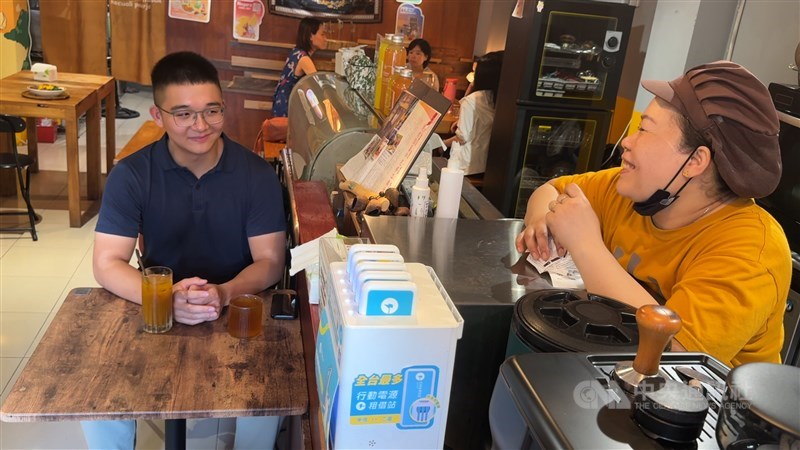
For Huang, the people-to-people ties Le described grew alongside his command of Indonesian.
By his third year in the program, when his language skills had improved, he was able, for example, to communicate fluently with staff at an Indonesian restaurant in Taiwan.
"That was when I felt my Indonesian had reached the level I wanted," Huang said.
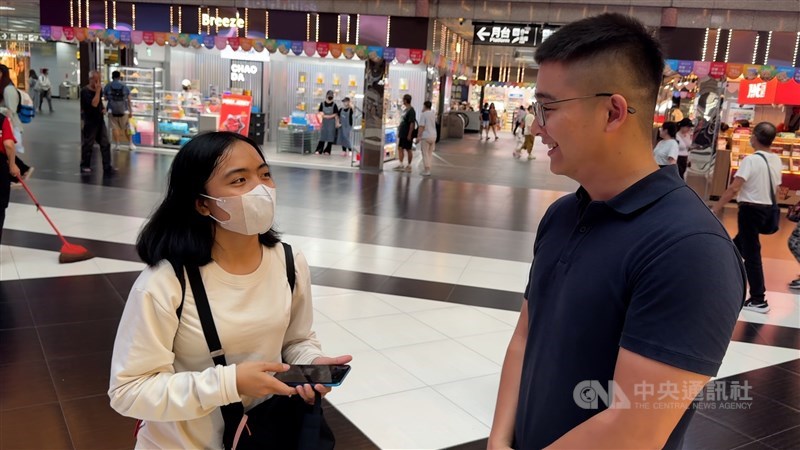
Greater fluency also opened the door to Indonesian community circles in Taiwan, where migrant workers and others shared stories with him about work, family and daily life that most Taiwanese rarely hear.
Those encounters helped Huang look beyond news reports that often portray migrant workers primarily through stories of "hardship."
A semester-long exchange program at Gadjah Mada University in Yogyakarta and travel across Indonesia further exposed him to the country's religious, linguistic and cultural diversity.
"You can't look at Indonesia as a single entity," Huang said. "There are hundreds of ethnic groups, languages and cultures."
He now shares those lesser-known sides of Indonesia with friends, hoping to broaden their understanding of a country he once knew little about himself.
"The language itself may fade if I don't use it," he said. "But my understanding of Indonesia will never disappear."
Enditem/ls
![DPP at 40: Founders reflect on risk, rise, reckoning]() DPP at 40: Founders reflect on risk, rise, reckoningFour decades after the Democratic Progressive Party (DPP) was founded under martial law, its pioneers recall the risks they took, the democratic changes they helped bring about and the challenges facing the party today.09/28/2026 11:10 AM
DPP at 40: Founders reflect on risk, rise, reckoningFour decades after the Democratic Progressive Party (DPP) was founded under martial law, its pioneers recall the risks they took, the democratic changes they helped bring about and the challenges facing the party today.09/28/2026 11:10 AM!['Umpire strikes back': Taiwanese ump sets U.S. pro baseball milestone]() 'Umpire strikes back': Taiwanese ump sets U.S. pro baseball milestoneIn her younger days, Sophiyah Liu (劉柏君) was a spiritual medium, serving as a bridge between the mortal plane and that of the unknown.09/18/2026 04:44 PM
'Umpire strikes back': Taiwanese ump sets U.S. pro baseball milestoneIn her younger days, Sophiyah Liu (劉柏君) was a spiritual medium, serving as a bridge between the mortal plane and that of the unknown.09/18/2026 04:44 PM![Made in Taiwan, sovereign in Europe: France's different chip strategy]() Made in Taiwan, sovereign in Europe: France's different chip strategyDuring a May visit to a high-performance computing center operated by the French Alternative Energies and Atomic Energy Commission (CEA) in Bruyères-le-Châtel, south of Paris, French President Emmanuel Macron was photographed holding a sample of Rhea1.09/05/2026 05:27 PM
Made in Taiwan, sovereign in Europe: France's different chip strategyDuring a May visit to a high-performance computing center operated by the French Alternative Energies and Atomic Energy Commission (CEA) in Bruyères-le-Châtel, south of Paris, French President Emmanuel Macron was photographed holding a sample of Rhea1.09/05/2026 05:27 PM
- Politics
12 mayoral candidates sign sustainability pledges ahead of elections
10/12/2026 01:14 PM - Politics
Taiwan resumes processing of visa applications from Moroccans
10/12/2026 12:54 PM - Politics
PLA drills not close to Taiwan: Defense Minister Koo
10/12/2026 12:18 PM - Sports
Lin finishes runner-up in men's singles at WTT China Smash
10/12/2026 10:55 AM - Business
U.S. dollar up in Taipei trading
10/12/2026 10:12 AM