ITRI develops noninvasive in-ear vagus nerve stimulator for anxiety
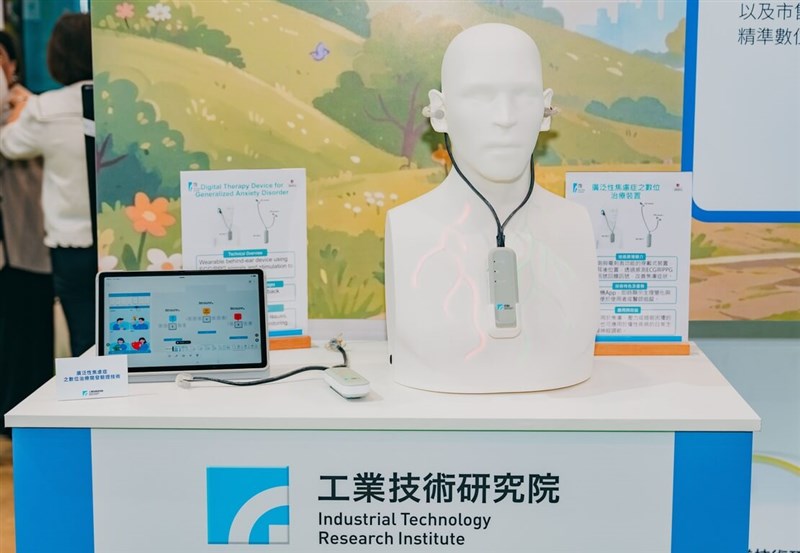
Taipei, Aug. 16 (CNA) Taiwan's Industrial Technology Research Institute (ITRI) has developed a noninvasive in-ear vagus nerve stimulator that it said is Taiwan's first digital therapeutic technology for generalized anxiety disorder (GAD).
The technology is intended to provide a nonpharmacological treatment option for people with anxiety, with ITRI aiming to bring it into practical use within three to five years, Hu Chang-lin (胡長霖), an ITRI project manager, told CNA on Thursday.
The wearable device stimulates the vagus nerve via the ear to activate the parasympathetic nervous system, which Hu explained is associated with relaxation.
Hu said that the device also monitors physiological signals, including heart rate variability (HRV) and photoplethysmography (PPG), and uses this data to adjust stimulation parameters.
According to Hu, the system is connected to a digital therapeutics app that allows users to monitor stress and treatment data. The information can also be uploaded to the cloud for analysis, helping doctors track patients' conditions, he added.
Hu said the technology could eventually be used at home, allowing patients to collect physiological data before outpatient visits, "much like measuring blood pressure at home." The data could provide doctors with additional information for diagnosis and follow-up, he said.
According to Ministry of Health and Welfare research cited by ITRI, about one in four people in Taiwan experience psychological distress.
More than 2 million people have sought medical treatment for a mental health condition, while only about 1-7 percent have received psychological therapy covered by the National Health Insurance program, Hu said.
Medication remains the main treatment for many, but some patients are concerned about side effects or have difficulty tolerating drugs. Others may avoid seeking treatment because of the stigma surrounding mental illness, Hu said.
The ITRI technology is intended as an additional treatment option rather than a replacement for existing therapies, Hu said, adding that it could initially be used alongside medication and potentially help reduce patients' reliance on drugs.
Noninvasive transcutaneous auricular vagus nerve stimulation (taVNS) has been developed overseas for years, but many existing products provide electrical stimulation without real-time physiological monitoring, he said.
The device has completed electrical safety and biocompatibility testing and is undergoing the application process for clinical trials, he said, adding that ITRI expects the regulatory review process to take up to 1.5 years.
Hu said ITRI hopes to develop the technology for home healthcare and eventually bring the price down to several thousand Taiwan dollars, comparable to a home blood pressure monitor.
It will also seek partnerships with medical-device and wearable-device companies to transfer the technology and commercialize the product after clinical validation, he said.
- Sports
Taiwan's Chen Yi-fan wins artistic skating gold at World Skate Games
10/09/2026 07:21 PM - Politics
Lai's National Day address to focus on Taiwan's economy, global role
10/09/2026 07:07 PM - Politics
Japanese lawmakers visit Taiwan for National Day celebrations
10/09/2026 07:02 PM - Culture
Czech, Taiwanese writers explore democracy, history at Frankfurt Book Fair
10/09/2026 07:00 PM - Society
China Youth Corps' designation as KMT-affiliated organization upheld
10/09/2026 06:09 PM