ANALYSIS/Iran could cloud Trump-Xi talks but unlikely to spark Taiwan war: Scholars
03/02/2026 06:13 PM
Escalating conflict in the Middle East is unlikely to trigger an immediate cross-strait crisis or directly imperil Taiwan in U.S.-China dealings, but it could pose growing risks by straining U.S. resources and complicating the upcoming Trump-Xi meeting, scholars said.
(Full text of the story is now in CNA English news archive. To view the full story, you will need to be a subscribed member of the CNA archive. To subscribe, please read here.)
More in ANALYSIS
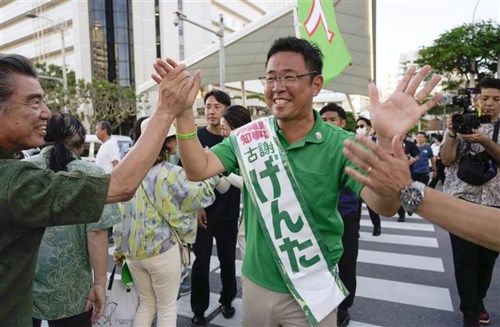
![Okinawa vote likely to boost Japan's defense buildup, Taiwan security: Scholars]() Okinawa vote likely to boost Japan's defense buildup, Taiwan security: ScholarsThe anti-Henoko "All Okinawa" camp's 12-year hold on the Okinawa governorship ended Sunday when former Naha Deputy Mayor Genta Koja unseated two-term incumbent Denny Tamaki in a six-candidate race.09/15/2026 09:34 PM
Okinawa vote likely to boost Japan's defense buildup, Taiwan security: ScholarsThe anti-Henoko "All Okinawa" camp's 12-year hold on the Okinawa governorship ended Sunday when former Naha Deputy Mayor Genta Koja unseated two-term incumbent Denny Tamaki in a six-candidate race.09/15/2026 09:34 PM![Taiwan, U.S. must counter China gray-zone pressure: Stanford scholar]() Taiwan, U.S. must counter China gray-zone pressure: Stanford scholarTaiwan and the United States need to prepare for a crisis triggered by China's intensifying gray-zone pressure rather than focus only on deterring a full-scale conflict, a Stanford University scholar said Wednesday at a symposium in Taipei.09/09/2026 07:50 PM
Taiwan, U.S. must counter China gray-zone pressure: Stanford scholarTaiwan and the United States need to prepare for a crisis triggered by China's intensifying gray-zone pressure rather than focus only on deterring a full-scale conflict, a Stanford University scholar said Wednesday at a symposium in Taipei.09/09/2026 07:50 PM![China defense mobilization law signals preparations for full-scale conflict: Analysts]() China defense mobilization law signals preparations for full-scale conflict: AnalystsChina's revised National Defense Mobilization Law, which will take effect on Oct. 1, indicates that the Chinese Communist Party (CCP) plans to mobilize the country's full resources in the event of potential conflicts with external adversaries, including Taiwan, according to analysts.09/05/2026 07:24 PM
China defense mobilization law signals preparations for full-scale conflict: AnalystsChina's revised National Defense Mobilization Law, which will take effect on Oct. 1, indicates that the Chinese Communist Party (CCP) plans to mobilize the country's full resources in the event of potential conflicts with external adversaries, including Taiwan, according to analysts.09/05/2026 07:24 PM

Latest
- Business
Taiwan drone maker partners with North American group to boost exports
09/18/2026 08:58 PM - Politics
Taiwan welcomes delegates for launch of global disaster alliance
09/18/2026 08:24 PM - Politics
CEC to hold 5 televised forums, debates on nuclear referendum
09/18/2026 08:16 PM - Business
Taiwan freezes electricity rates to support economy
09/18/2026 07:36 PM - Politics
President Lai attends eastern Taiwan quake drill observed by 18 countries
09/18/2026 06:59 PM