ANALYSIS/Failing better? Experts see progress in Taiwan's latest early WBC exit

By Chao Yen-hsiang, CNA staff reporter
Team Taiwan's 2026 World Baseball Classic (WBC) campaign ended the same way as most others -- with an early exit.
But after starting Pool C with a 3-0 loss to Australia and a 13-0 rout at the hands of Japan, it salvaged its pride and nearly secured a quarterfinal berth with a 14-0 whitewash of the Czech Republic and a 10-inning 5-4 triumph over South Korea on March 8.
Taiwan ended up tied with Australia and South Korea with a 2-2 record, but the Koreans advanced by the narrowest margin through the tiebreaker -- fewest runs allowed divided by the number of outs.
CNA spoke with ELTA Sports play-by-play man Blue Wei (魏楚育), who called three of Taiwan's four games, and Kevin Cheng (鄭凱駿), COO of the sabermetrics startup Rebas, to assess how the team did and where it needs to get better.
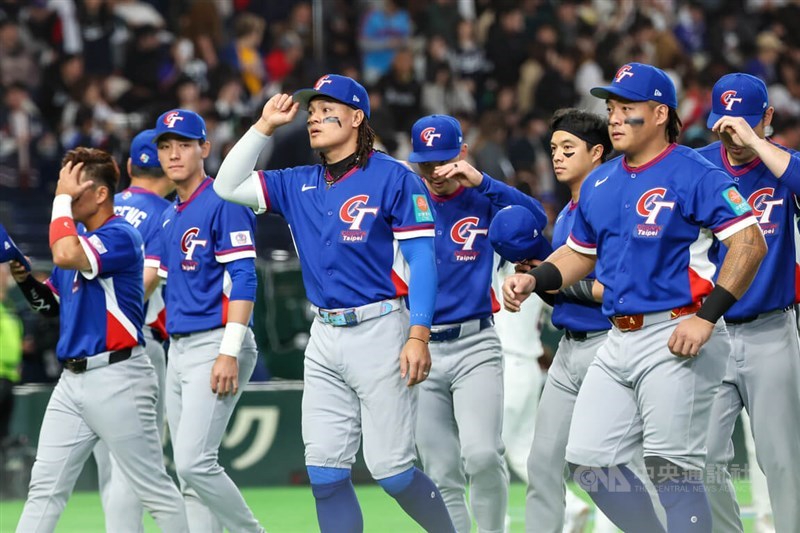
Different vibe
Since the WBC's inauguration in 2006, Taiwan has advanced to the quarterfinals only once (2013), but Wei said Tuesday the team's finish automatically qualified it for the next WBC and left a positive outlook.
In 2023, when Taiwan finished last in a group where all five teams had a 2-2 record, Wei said social media was "filled with a sense of lingering regret and 'what-ifs'."
In recent days, however, "fans I've spoken with have all mentioned how moved they were by this national team's performance."
"We still finished 2-2, but the gap between us and the other teams has become incredibly small," Wei said.
The shift in tone, Wei said, came from the exhilarating win over South Korea, which he called the most memorable game of the rivalry since he started working in the industry in 2014.
"It will help the players' confidence when they play the Koreans in the future," he said.
Missing bats
The big mystery in 2026 was why Taiwan struggled at the plate, especially in its first two games, after hitting so well at the WBC in 2023.
Taiwanese batters had a slash line of .186/.307/.305. Their .612 OPS (on-base plus slugging) was better only than the Czech Republic's .449 in Pool C, trailing South Korea (.796), Australia (.744), and Japan (.987).
They were also only 1 for 12 (.083) with runners in scoring position in games other than against the Czechs.
Cheng and Wei both felt the cancellation of the team's first pre-tournament exhibition against the Orix Buffaloes' farm team in Miyazaki was a significant setback.
"It is hard to replace a real game with batting practice," Cheng noted.
The late withdrawals of sluggers Jonathon Long and Lee Hao-yu (李灝宇), prospects in the Chicago Cubs and Detroit Tigers organizations, respectively, also dealt severe blows, Cheng said, because home runs remain the decisive factor in short international series.
"Slugging allows you to generate plenty of runs quickly," he said.
Their absence proved costly: Australia scored all three of its runs against Taiwan on two home runs, while Taiwan relied on three homers to score four of its five runs against South Korea, including a Stuart Fairchild two-run blast to force extra innings.

Wei touted Fairchild's WBC debut as a "new starting point" for recruiting players of Taiwanese ancestry.
He suggested that Fairchild's success might encourage others to represent the home country of their parents or grandparents.
To facilitate this, Wei recommended establishing better scouting and agent channels to identify and approach overseas talent more effectively.
Cheng suggested, however, that a hard look at the team's preparations is needed, especially because the players actually began training in mid-January -- earlier than usual.
"Even before the exhibition games, the players never really seemed to get it going with the bats. That was a big problem," Cheng said.
Breakout on the mound
Lopsided as the loss to Japan was, both experts praised the improved depth of the pitching staff and framed the loss as a calculated sacrifice to preserve the rotation's best arms for the two following games.
"The pitchers did their job in saving arms for the pivotal games against the Czech Republic and South Korea," Wei said.
Standout performances came from 25-year-old right-handers Hsu Jo-hsi (徐若熙), who tossed four scoreless innings against Australia, and Gu Lin Ruei-yang (古林睿煬), who threw four shutout frames against South Korea before retiring with two runners in the fifth.

Citing Baseball Savant data, Cheng said Taiwan's pitching velocity has risen significantly.
The team's average four-seam fastball velocity rose from 89.8 mph (144.5 kph) three years ago to 93.5 mph this year, moving Taiwan's ranking from 17th to 7th among the 20 teams.
Remarkably, this was achieved by a staff averaging just 24.9 years old.
"We can expect the velocity to increase even further in the next edition," Cheng said.

Encore
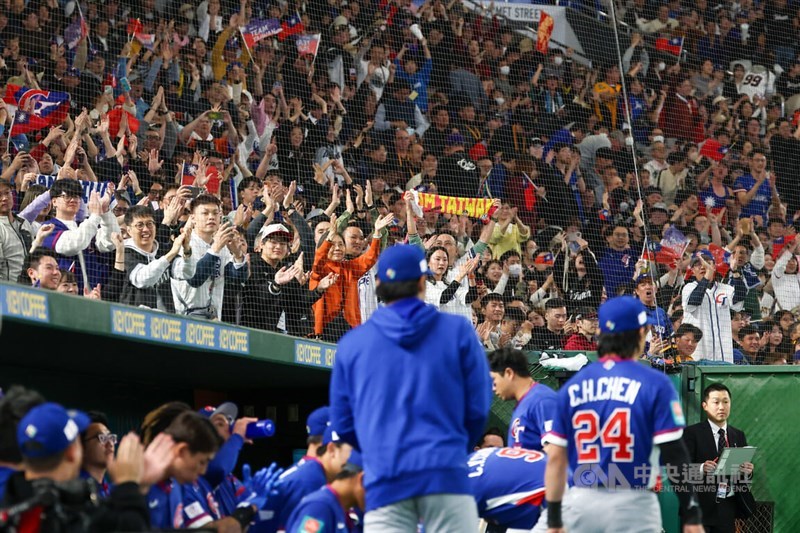
Off the field, Taiwanese fans turned the Tokyo Dome into a sea of support, with a remarkable 163,943 spectators attending Taiwan's four games in a stadium with a seating capacity of about 45,600.
Many players thanked the "traveling home crowd" for the enthusiastic atmosphere and "turning the stadium into our home field."
Wei said the fans were cultivating a new Taiwanese baseball culture.
"In the future, whether the games are held in Japan or South Korea, I believe Taiwanese fans will find a way to pack the stands to the rafters," Wei said.
Enditem/ls
![Taiwan gains role in Ukraine drone supply chain, but still depends on China]() Taiwan gains role in Ukraine drone supply chain, but still depends on ChinaTaiwanese suppliers are gaining a foothold in Ukraine's drone supply chain, but costs, the scale of production and continued reliance on Chinese inputs remain major obstacles to further expansion, researchers at a Taiwan-based think tank told CNA.07/21/2026 03:44 PM
Taiwan gains role in Ukraine drone supply chain, but still depends on ChinaTaiwanese suppliers are gaining a foothold in Ukraine's drone supply chain, but costs, the scale of production and continued reliance on Chinese inputs remain major obstacles to further expansion, researchers at a Taiwan-based think tank told CNA.07/21/2026 03:44 PM![Analysts see passage of scaled-down defense bill as 'positive first step']() Analysts see passage of scaled-down defense bill as 'positive first step'Taiwan's opposition-controlled Legislature approved a scaled-down defense budget on Friday, a move analysts viewed as a "positive first step" despite concerns that delays to local defense programs could hurt Taiwan's long-term military buildup.05/09/2026 02:32 PM
Analysts see passage of scaled-down defense bill as 'positive first step'Taiwan's opposition-controlled Legislature approved a scaled-down defense budget on Friday, a move analysts viewed as a "positive first step" despite concerns that delays to local defense programs could hurt Taiwan's long-term military buildup.05/09/2026 02:32 PM![Lai's canceled Africa trip a 'wake-up call' for world: Experts]() Lai's canceled Africa trip a 'wake-up call' for world: ExpertsPresident Lai Ching-te's (賴清德) aborted trip to Eswatini, allegedly due to pressure from China, should serve as a warning about Beijing's "kindness," two United States-based experts said.04/24/2026 01:14 PM
Lai's canceled Africa trip a 'wake-up call' for world: ExpertsPresident Lai Ching-te's (賴清德) aborted trip to Eswatini, allegedly due to pressure from China, should serve as a warning about Beijing's "kindness," two United States-based experts said.04/24/2026 01:14 PM
- Politics
Domestic needs to drive next Trump-Xi meeting: Scholar
09/04/2026 06:00 PM - Society
- Business
U.S. dollar closes lower on Taipei forex market
09/04/2026 04:26 PM - Sports
2026 Asian U18 baseball final set for Taipei Dome
09/04/2026 04:19 PM - Business
Taiwan, Lithuania sign pact on advanced packaging for next-gen chips
09/04/2026 04:12 PM