Taiwan allows import of spinal cords from U.S. cattle 30 months or younger
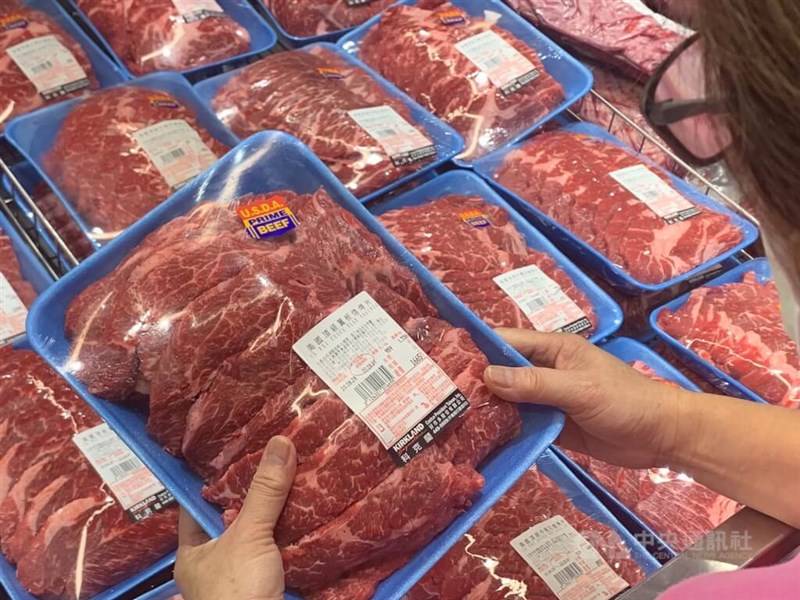
Taipei, Feb. 13 (CNA) Under a trade deal signed with the United States Thursday (U.S. time), Taiwan has agreed to allow the import of spinal cords and other internal organs from U.S.-raised cattle aged 30 months or younger, Minister of Health and Welfare Shih Chung-liang (石崇良) said Friday.
Shih clarified the terms regarding agricultural product imports under the agreement, saying that in addition to beef spinal cords, Taiwan has also agreed to allow the import of skulls, brains, and eyes from U.S. cattle within the designated age range.
However, edible offal parts of cattle older than 30 months along with advanced meat recovery (ARM) from spinal cords are still prohibited from entering Taiwan, Shih said.
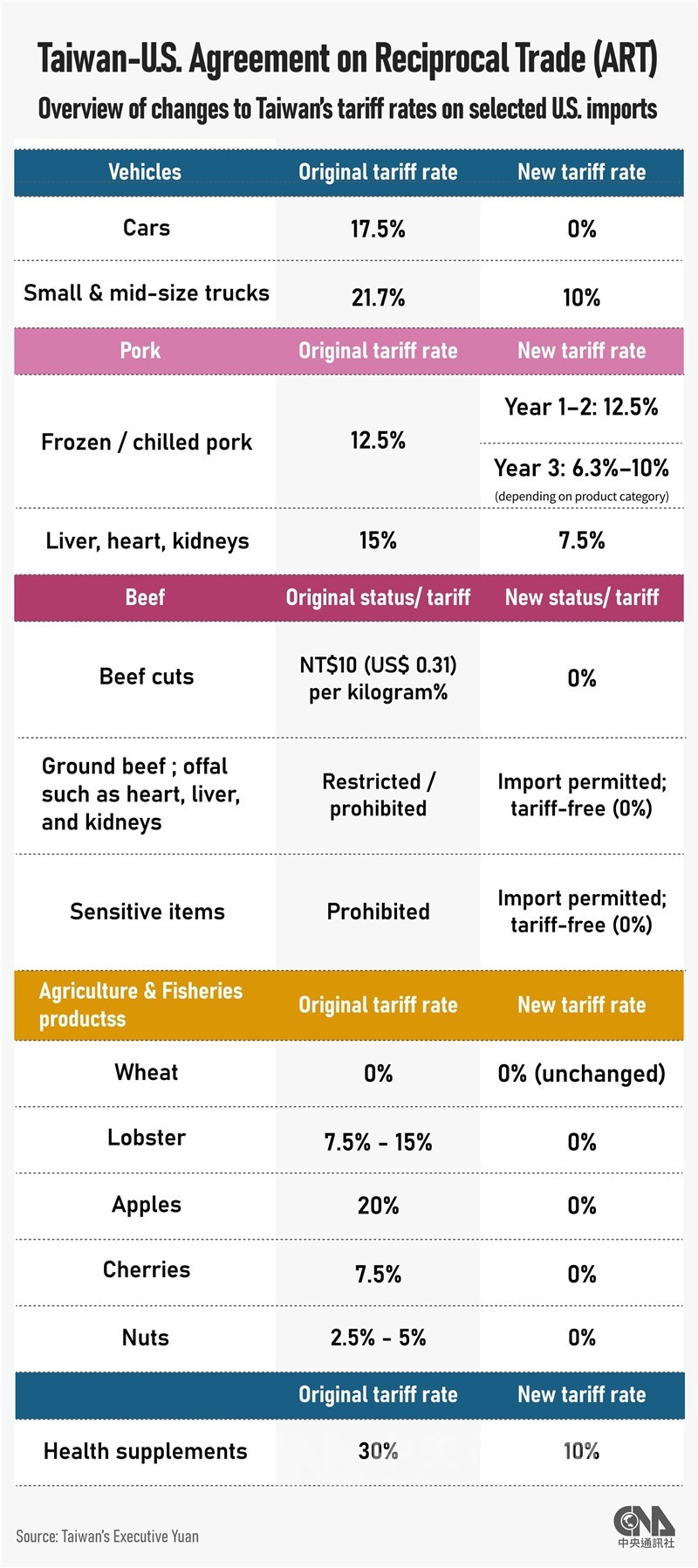
Tsai Shu-chen (蔡淑貞), deputy director of the Taiwan Food and Drug Administration, cited the newly-signed trade deal as saying that U.S. ground beef, beef heart, liver and kidneys from all ages of cattle are now allowed to enter the Taiwan market.
Before the trade agreement, Taiwan had lifted a ban on imports of beef from the U.S. in stages following a 2003 outbreak of mad cow disease or bovine spongiform encephalopathy (BSE), which is believed to be caused by a misfolded protein, known as a prion.
In 2021, Taiwan lifted the ban on beef from cattle of all ages from the U.S. but continued to ban other more sensitive items, such as skulls, brains, eyes, spinal cords and other organs.
The Agreement on Reciprocal Trade (ART), which has lowered tariffs on Taiwanese goods from 20 percent to 15 percent, has paved the way to granting preferential market access for U.S. agricultural exports, including ground beef and certain beef organs that were previously banned.
The Cabinet said earlier Friday that the easing aligns Taiwan's import rules with international standards, following the U.S.' classification in 2013 by the World Organisation for Animal Health (WOAH) as a country with negligible risk of BSE under WOAH's international risk assessment framework.
Chen Shun-sheng (陳順勝), a Taiwanese prion expert, said compared with international standards, Taiwan still has a more prudent attitude toward BSE.
With prion inspection technologies, disinfection technologies and environmental inspections improving, concerns over the impact of prions has eased, he said
- Society
More camellia oil batches fail carcinogen test; sales suspended
07/27/2026 08:57 PM - Politics
Concerns over Chinese sea operations raised with Beijing, Taiwan says
07/27/2026 08:46 PM - Culture
Yu Kan-ping to receive Golden Horse lifetime achievement award
07/27/2026 08:38 PM - Business
Economic monitoring indicators stay red for 7th straight month
07/27/2026 08:18 PM - Society
TFDA releases findings on Central Union cooking oil contamination
07/27/2026 05:59 PM