ANALYSIS/Xi's WWII account obscures ROC role, evokes Japan tensions: Scholars
By Chao Yen-hsiang, CNA staff reporter
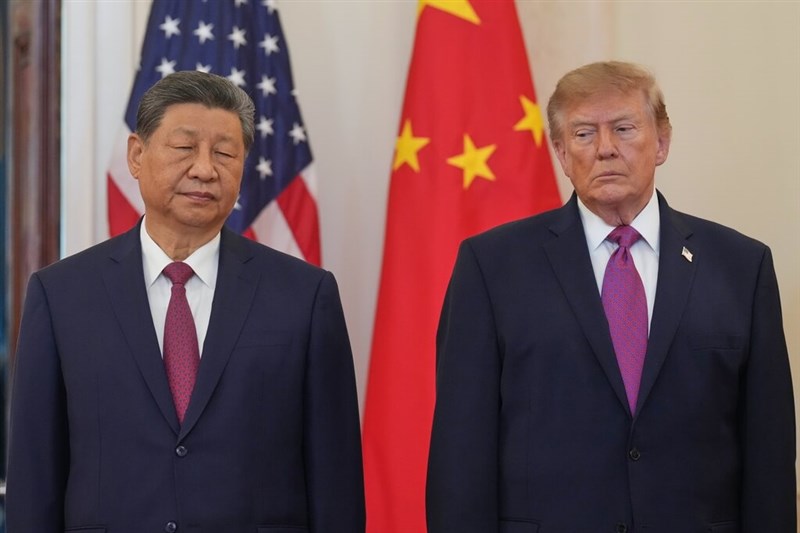
When Chinese President Xi Jinping (習近平) recalled U.S.-China cooperation during World War II at the White House on Thursday, he left out a name central to that history: the Republic of China (ROC).
"During World War II, China and the United States fought side by side against fascist aggression," Xi said at a White House welcoming ceremony before his closed-door talks with U.S. President Donald Trump.
China did fight alongside the United States, but its government at the time was the ROC, now based in Taiwan. The People's Republic of China (PRC), which Xi leads, was founded in 1949, four years after World War II ended.
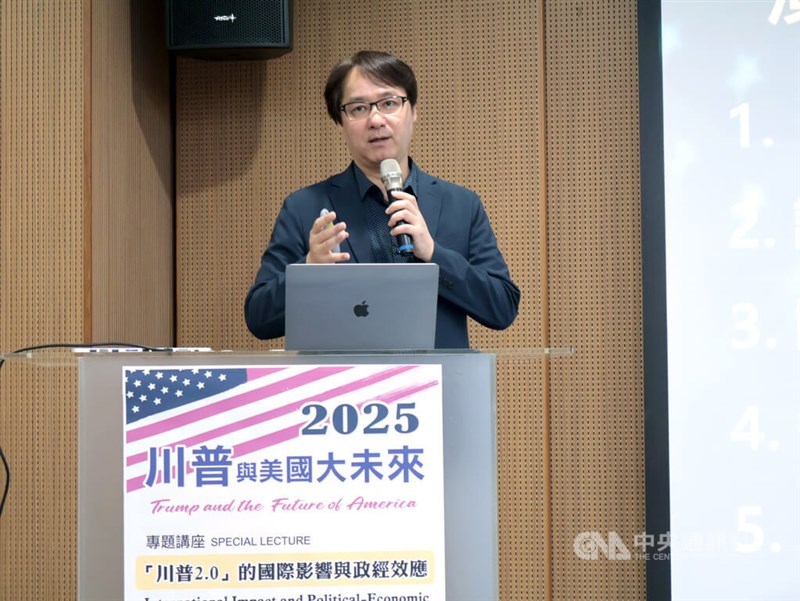
At a forum in Taipei on Tuesday on the Trump-Xi summit, Taiwanese scholars said leaving the ROC unnamed was likely aimed at helping Beijing portray the wartime alliance as part of the PRC's own history.
Wang Hsin-hsien (王信賢), director of National Chengchi University's Institute of International Relations, said Xi stood to gain if the alliance came to be remembered simply as one between "China" and the United States.
Wang warned that repeated use of such language by Washington could make "the erasure of the Republic of China ... very apparent."
The White House's own fact sheet, issued Friday after the visit, also referred simply to "China."
It said the leaders recalled that the United States and "China" were World War II allies who fought side by side, without identifying the ROC as the Chinese government at the time.
An earlier account from the American Institute in Taiwan (AIT) was more specific. In a September 2025 post commemorating the war's end, AIT Director Raymond Greene described the Flying Tigers as American volunteers who fought alongside the ROC Air Force.
Taiwan's Mainland Affairs Council protested Xi's remarks Friday, saying they did not reflect the fact that it was the ROC that fought alongside the United States while the PRC did not exist yet.
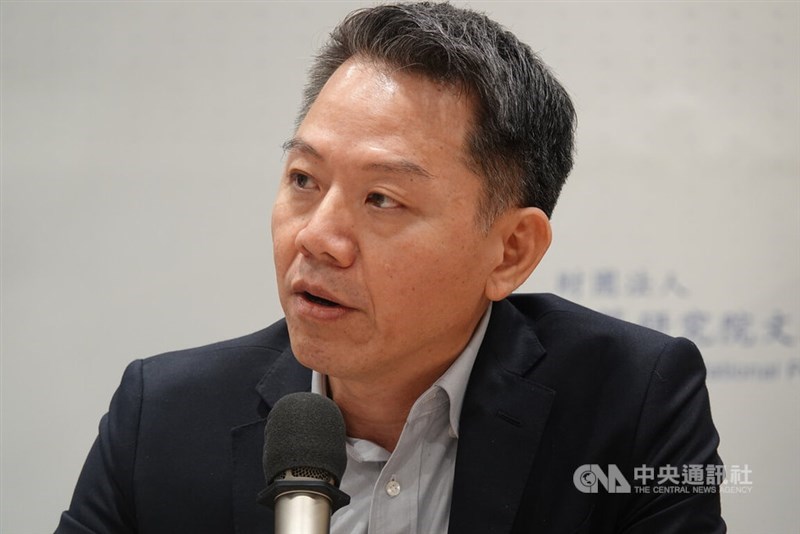
Kuo Yu-jen (郭育仁), vice president of the Institute for National Policy Research, told CNA on Saturday that Xi's comments had different aims.
One of them was to "suggest that the Republic of China has completely disappeared and been replaced by the People's Republic of China."
Another, Kuo said, was for Xi to highlight Japanese wartime militarism through his reference to fighting fascism amid strained China-Japan relations.
He linked it to Tokyo's campaign for a permanent United Nations Security Council seat and its call to remove the U.N. Charter's "enemy state" clauses, which refer to countries that fought against the charter's signatories during World War II.
Days before Xi's remarks, Japanese Prime Minister Sanae Takaichi called for those clauses to be deleted in a U.N. General Assembly address that also urged Security Council reform.
No change in relations
Despite the controversy over Xi's remarks, Tzeng Wei-feng (曾偉峯), an associate research fellow at NCCU's institute, saw no clear sign that the visit had immediately changed Washington's Taiwan policy.
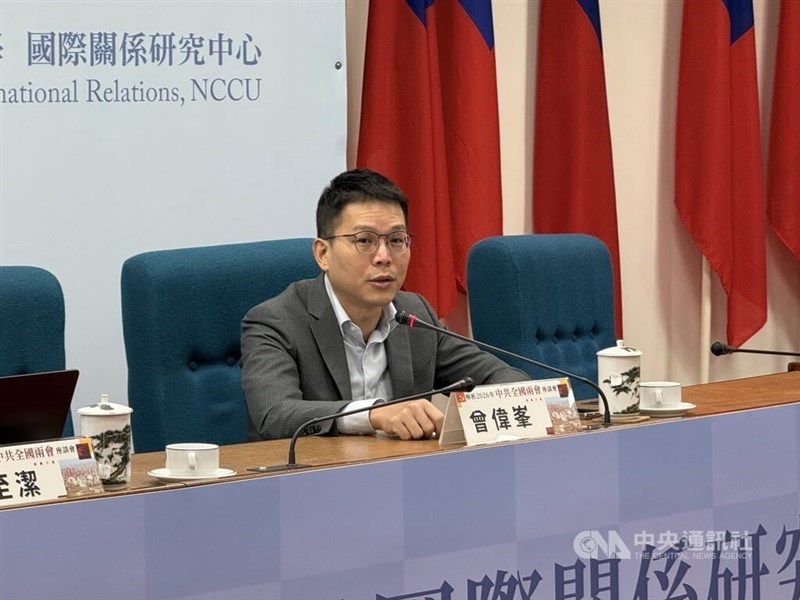
His concern was how language used in prominent diplomatic settings could spread and endure.
He pointed to the 1972 Shanghai Communiqué, in which the United States "acknowledged" that people on both sides of the Taiwan Strait maintained there was one China and that Taiwan was part of China.
Tseng said Beijing's later portrayal of that wording as U.S. "recognition" of its position showed how an interpretation of diplomatic language could spread and endure.
"Xi isn't saying this just for Trump to hear," Tseng said. "He's saying it for the whole world to hear."
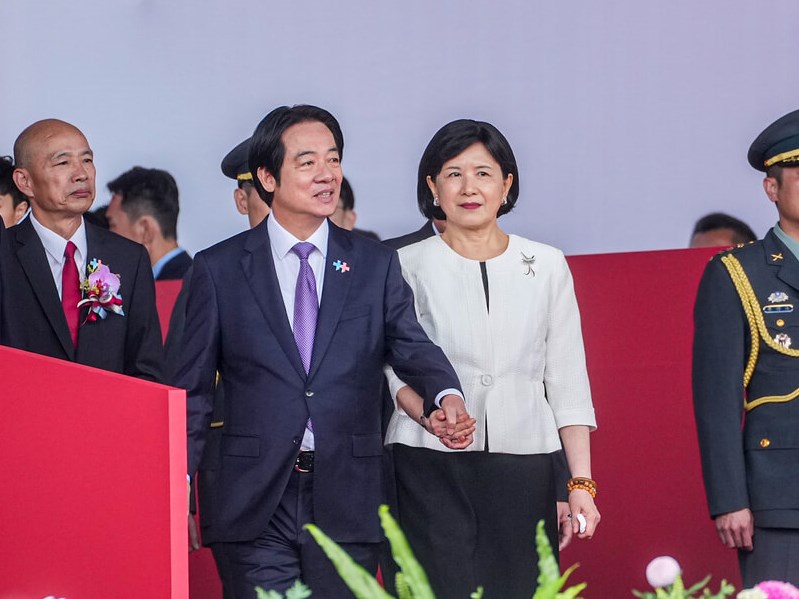
![Lai's WWII remarks warn of China's bid to reshape world order: Analysts]() Lai's WWII remarks warn of China's bid to reshape world order: AnalystsA senior official said Saturday that President Lai Ching-te's (賴清德) emphasis on preserving the historical facts of World War II in his National Day address highlighted concerns over Beijing's efforts to undermine the postwar international order.10/10/2026 07:27 PM
Lai's WWII remarks warn of China's bid to reshape world order: AnalystsA senior official said Saturday that President Lai Ching-te's (賴清德) emphasis on preserving the historical facts of World War II in his National Day address highlighted concerns over Beijing's efforts to undermine the postwar international order.10/10/2026 07:27 PM![Laos air base part of China's Indian Ocean ambitions: Expert]() Laos air base part of China's Indian Ocean ambitions: ExpertThe recent opening of a joint air support center in Laos is part of China's decades-long power-projection efforts to extend its influence into the Indian Ocean, a Taiwanese defense expert said Sunday.10/04/2026 04:44 PM
Laos air base part of China's Indian Ocean ambitions: ExpertThe recent opening of a joint air support center in Laos is part of China's decades-long power-projection efforts to extend its influence into the Indian Ocean, a Taiwanese defense expert said Sunday.10/04/2026 04:44 PM!['Hao-yu like that?' A deep dive into Lee's rookie MLB season]() 'Hao-yu like that?' A deep dive into Lee's rookie MLB seasonOne of the biggest stars on the Detroit Tigers' Threads account is infielder Lee Hao-yu (李灝宇), with posts featuring the Taiwanese rookie rarely drawing fewer than 5,000 likes, far more than the 1,000 likes posts featuring other players only occasionally draw.10/03/2026 10:00 AM
'Hao-yu like that?' A deep dive into Lee's rookie MLB seasonOne of the biggest stars on the Detroit Tigers' Threads account is infielder Lee Hao-yu (李灝宇), with posts featuring the Taiwanese rookie rarely drawing fewer than 5,000 likes, far more than the 1,000 likes posts featuring other players only occasionally draw.10/03/2026 10:00 AM
- Society
NIA seeks new logo for fund supporting new immigrants
10/19/2026 09:32 PM - Politics
Business groups back Taipower, CPC subsidies; scholars dissent
10/19/2026 09:31 PM - Society
Typhoon Champi to turn away from Taiwan, will still bring heavy rain
10/19/2026 07:53 PM - Society
Taiwan, Philippines sign animal husbandry research pact
10/19/2026 07:26 PM - Society
Workers rally in Taipei for pension reform, profit-sharing rules
10/19/2026 07:00 PM