Washington, Sept. 25 (CNA) The timing of a pending major U.S. arms sale to Taiwan remains uncertain after Thursday's Trump-Xi meeting at the White House, with analysts saying Washington could hold off because the two leaders are set to meet twice more this year.
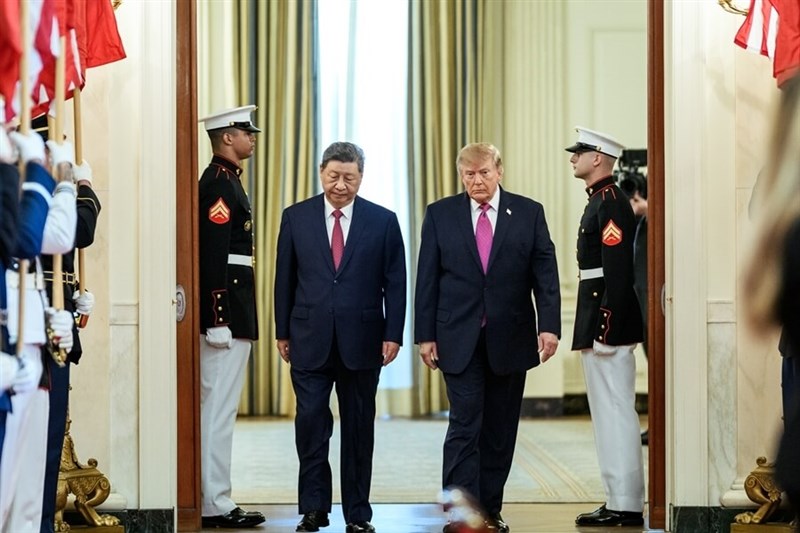
American President Donald Trump and Chinese President Xi Jinping (習近平) met during Xi's three-day state visit to the United States, their second face-to-face meeting this year following a summit in Beijing in May.
In a readout issued shortly after Thursday's closed-door talks, China's Foreign Ministry said Xi urged Washington to oppose "Taiwan independence" and "prudently handle the Taiwan question."
A statement and fact sheet issued by the White House on Friday, Washington time, meanwhile, made no mention of Taiwan.
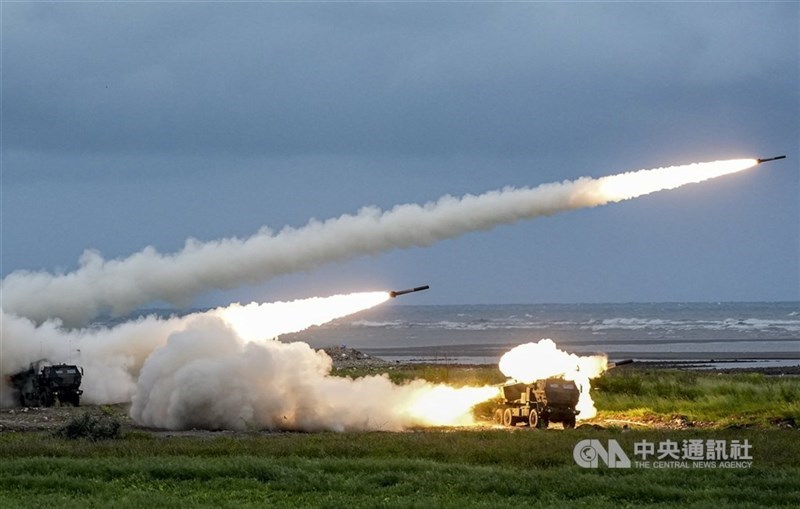
Taiwan was among the closely watched issues ahead of Thursday's meeting, as a US$14 billion arms package remains under review by the Trump administration amid calls from both Republican and Democratic lawmakers and Taipei for the sale to proceed.
Trump said after Xi's departure Friday that the two would meet again in China in November and at the G20 summit in Miami in December.
When could the arms sale happen?
Zack Cooper, a senior fellow at the American Enterprise Institute specializing in U.S. strategy in Asia, said he was skeptical that an arms package would be approved between Thursday's meeting and the two leaders' next meetings later this year.
"I cannot imagine Donald Trump allowing an arms sales package to go through this month or next month with those visits looming," Cooper told CNA in an interview on Friday.
The question, Cooper said, was whether Trump would try to approve an arms package between the December meeting and the end of the year or wait until 2027.
"My gut is that President Trump is more likely to wait until 2027 and maybe do an arms sales package then," he said, adding that Trump could potentially break the existing package into several smaller sales and announce them separately over a period of weeks or months.
Cooper said Xi's remarks on Taiwan during Thursday's meeting reflected China's longstanding position and contained "nothing really new."
"But what we're seeing is that China is basically saying that if the U.S. does an arms sales package, that's going to threaten the whole U.S.-China relationship," he said.
"What's different is that the U.S. side seems to be respecting this now and sort of giving a lot of leverage to Beijing," Cooper said.
Change or no change?
U.S. Ambassador to China David Perdue said Friday that Trump remained committed to the U.S. "one China" policy, the Taiwan Relations Act, the three joint communiqués and the Six Assurances, and that "there's no change in the Taiwan policy here."
Cooper, however, questioned the Trump administration's assertion that U.S. policy toward Taiwan has not changed.
During Trump's first term, Washington sought to routinize arms sales to Taiwan so they occurred more frequently and in smaller amounts, preventing each package from becoming a major political issue, Cooper said.
The current Trump administration has "turned that on its head," he said, with "every arms sales issue" now becoming a major political discussion and the focus of months of talks with Beijing.
"I appreciate that the White House and others close to the president continue to say that there's been no change in policy, but I do think if you look closely, that it certainly seems that the approach right now is different," Cooper said.
Arms sales as leverage
Ken Moriyasu, a senior fellow at the Washington-based Hudson Institute, meanwhile, told CNA that Taiwan arms sales remain a source of leverage Trump can use in dealing with Xi, particularly as Washington may seek Beijing's cooperation in efforts to end the wars in Iran and Ukraine.
Moriyasu said Trump could move forward with arms sales to Taiwan if such cooperation fails to materialize by the end of December, adding that there was no immediate need to approve a new package after his administration authorized US$11 billion in arms sales to Taiwan in December 2025.
He also noted that both Washington and Beijing understand that the United States will eventually approve further arms sales to Taiwan, estimating that the next sale could come in December or later.
Despite that understanding, Beijing was still trying to give the impression that it could influence U.S. decisions on arms sales to Taiwan, including through earlier suggestions that Xi's September visit could be canceled if Washington approved a new package beforehand, Moriyasu said.
- Society
Champi expected to become typhoon within 24 hours; path remains uncertain
10/16/2026 07:40 PM - Politics
10 local election candidates fail eligibility review: CEC
10/16/2026 07:27 PM - Politics
Taiwan lawmakers pass health insurance premium subsidies for seniors
10/16/2026 07:24 PM - Politics
Taiwan should not rule out nuclear power as energy option: Lai
10/16/2026 06:59 PM - Sports
Taichung city government signs deal for 'Taiwan Dome'
10/16/2026 05:38 PM