When fantasy becomes reality: how Taiwan’s immersive theatre is reimagining the stage
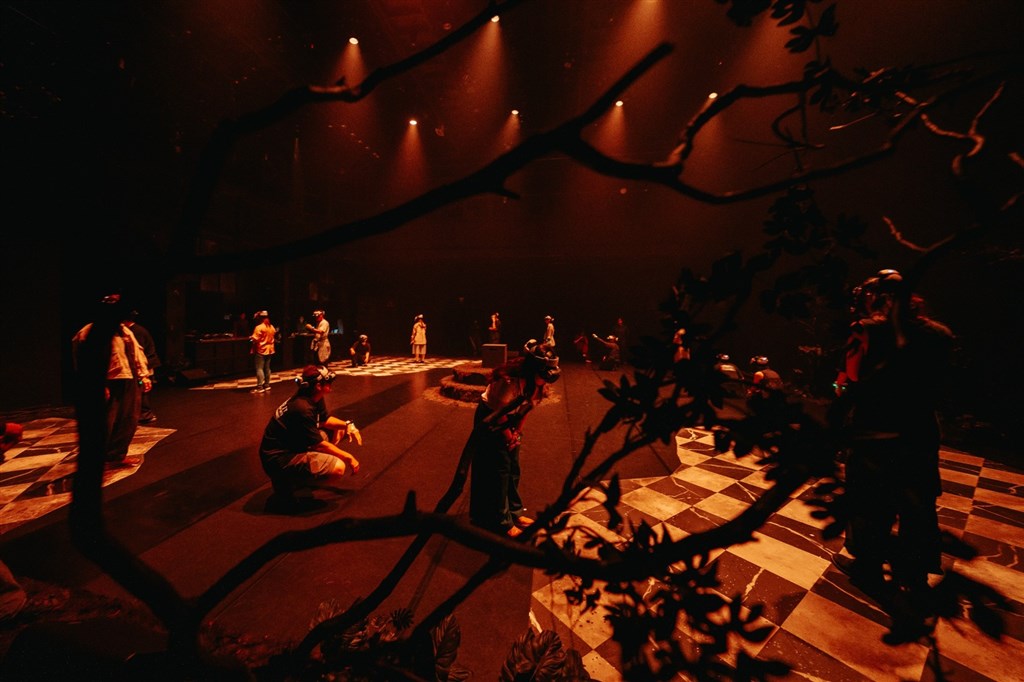
Adapted from a 770,000-character fantasy novel, Beastosis: Call of the Skull (《獸靈之詩:頭骨的召喚》)turns audiences into apprentices and asks what it means to imitate, create and remember.
What if a theatre audience could reach out and touch a clouded leopard? What if they could stand on the back of a whale as it travelled across a mountain range, enter the home of two brothers, or cross into a world where the dead might be brought back to life?
In Beastosis: Call of the Skull(《獸靈之詩:頭骨的召喚》), these are not images projected onto a screen. They are experiences that unfold around the audience as they move through a world where mixed reality and live performance converge.
Adapted from Taiwanese writer Chiu Chang-ting(邱常婷)’s 770,000-character fantasy novel Beastosis(《獸靈之詩》), the production is a collaboration between theatre company House Peace(僻室), digital arts collective ET@T(在地實驗) and interactive design studio Ankh IxD(安卡互動設計). Combining virtual reality, mixed reality and live performance, it asks audiences to cross the boundary between the physical and the virtual — and, in doing so, to reconsider the distance between imitation and creation.
After a 70-performance run in Taipei, the production was presented as part of the National Taichung Theater’s 2026 NTT Arts NOVA programme(臺中國家歌劇院2026藝想春天系列)in May, where all 28 performances sold out.
From a 770,000-character novel to a world you can enter
The original novel contains a vast mythology of parallel worlds, mythical creatures and a mysterious power known as “imitation”.
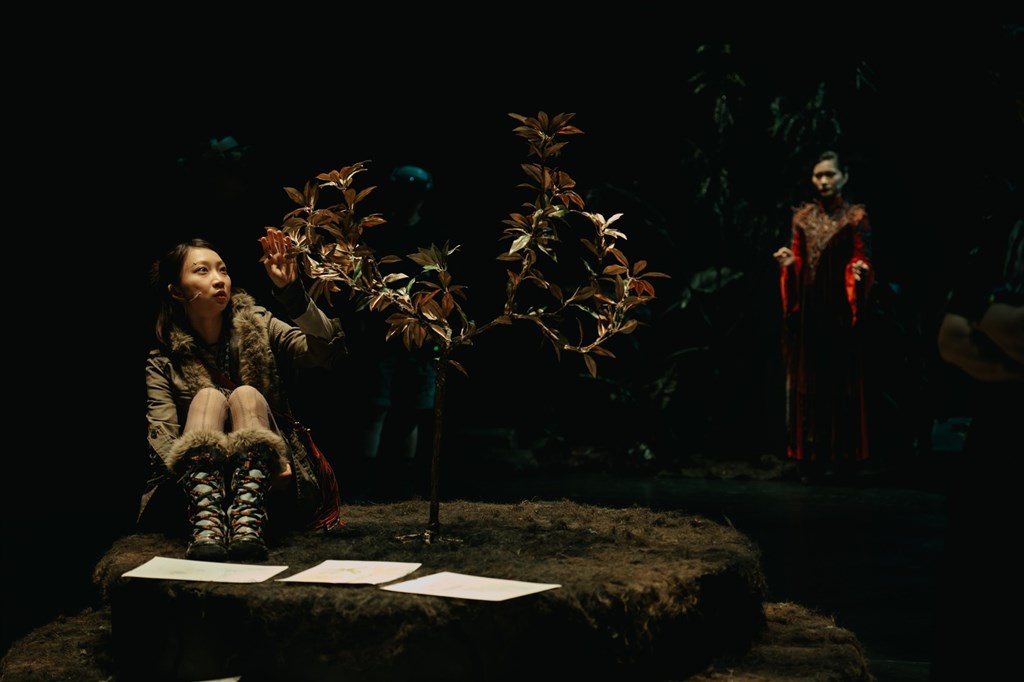
Its story begins with Luan(璐安), whose brother Taibang(泰邦)dies as a new infectious disease devastates the human world. Summoned by his brother’s skull, Luan discovers a passage into another world and returns to the settlement where the two brothers once lived. Determined to bring Taibang back to life, he trains a group of apprentices in the art of imitation, searching for its highest form: the power of resurrection.
But translating such an expansive fictional universe into theatre was never going to be a straightforward exercise.
The adaptation took years and went through dozens of versions. Rather than attempting to reproduce the novel literally, director Wu Tzu-ching(吳子敬)and his collaborators gradually arrived at another question: how can an audience experience this world for themselves?
The answer was to build a passage into it.
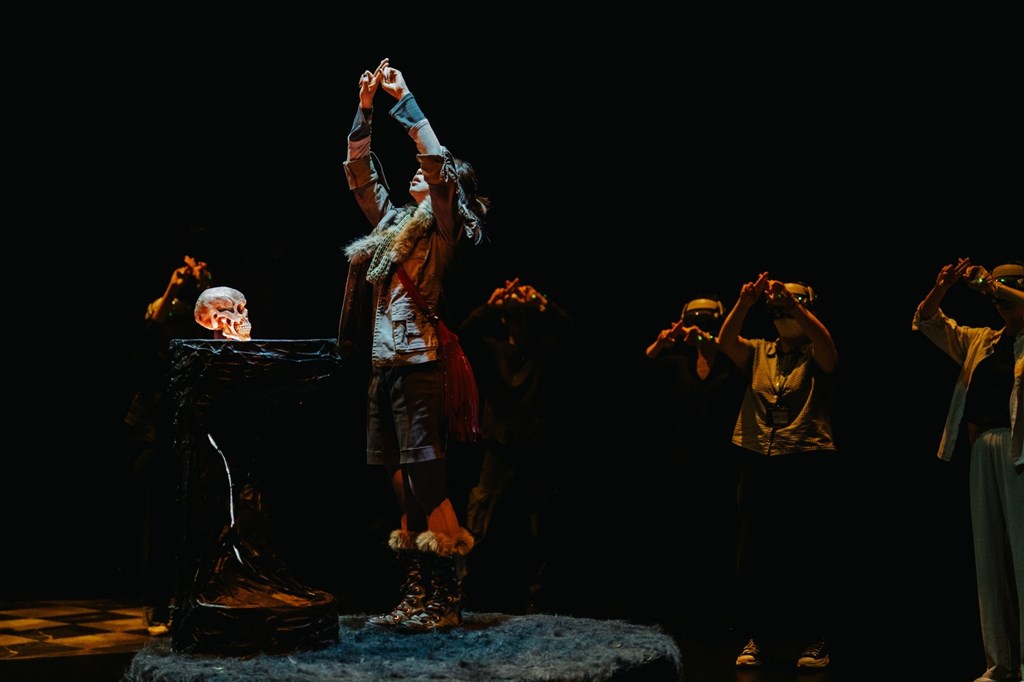
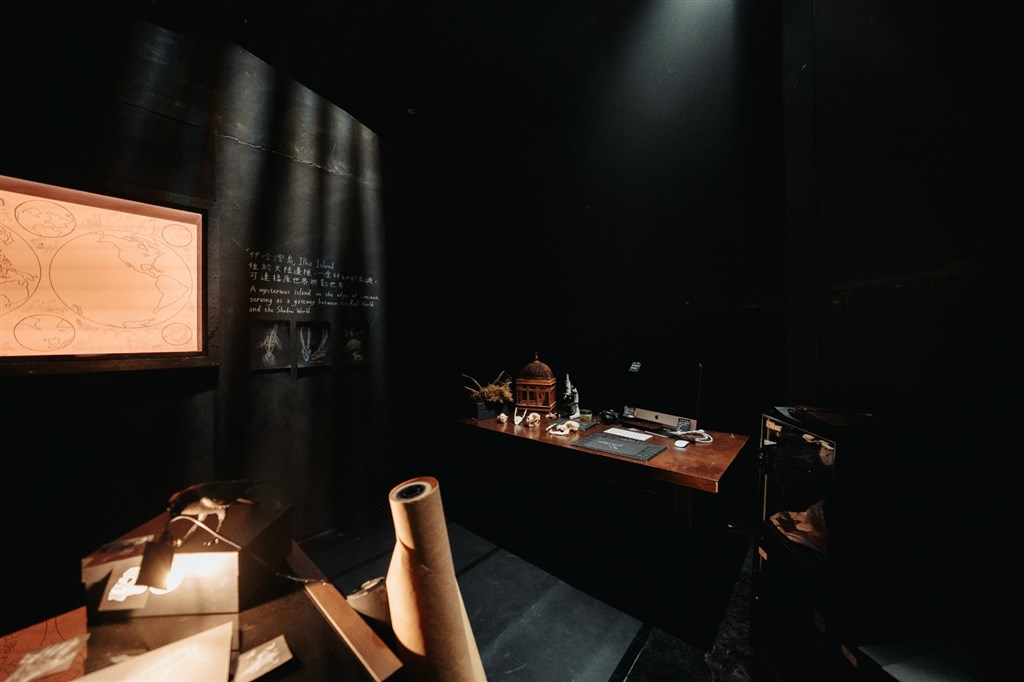
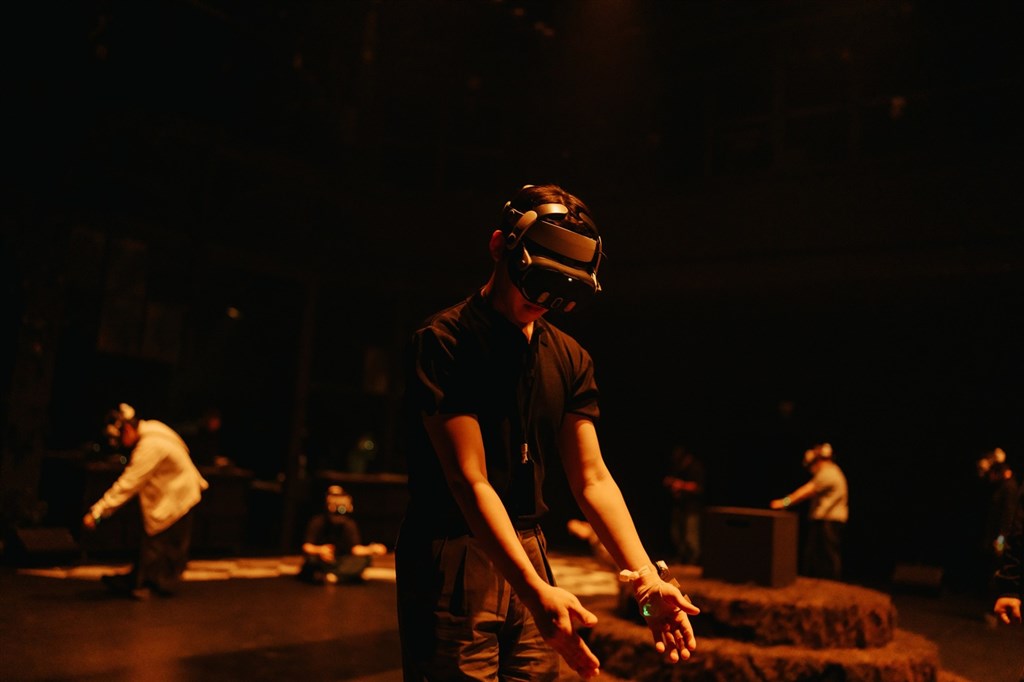
Audiences begin in a room resembling an archaeological research laboratory, surrounded by records of cave paintings and mythical creatures. They are then given a wristband and a head-mounted display, becoming apprentices of Luan and learning to perform the basic gestures of imitation.
From there, the theatre becomes a landscape to be explored.
Audiences can enter the brothers’ cabin, pick up objects, encounter mythical creatures and travel through forests, post-apocalyptic ruins and otherworldly landscapes. In one scene, a viewer can reach out and touch the virtual fur of a clouded leopard; in another, they can find themselves standing on the back of a whale, looking out over the mountains.
The experience is deliberately different from conventional theatre. Each audience member moves at a slightly different pace, choosing where to look, what to touch and how long to remain. The performers and technicians, meanwhile, observe and respond to the audience in real time. The result is a performance that is never entirely identical from one showing to the next.
Imitation as creation
The production’s most intriguing idea may lie in its treatment of “imitation”.
In the world of Beastosis(《獸靈之詩》), imitation does not mean simply copying something that already exists. It progresses through different stages — from creating and dismantling to resurrection — moving ever closer to the possibility of creating reality itself.
That idea became the conceptual engine for the adaptation.
Director Wu Tzu-ching(吳子敬)has described “imitation” as the smallest building block of the fictional world, almost like an atom: both a creative force and the starting point of creation. The question then becomes unexpectedly close to the work of the artists themselves.
When a director turns words on a page into a physical and virtual world, is the result an imitation of the original — or the creation of something new? The production does not attempt to answer the question definitively. Instead, it allows audiences to experience the question physically.
This is where the technology becomes more than a visual effect. XR gives audiences an opportunity to perform the very act of imitation described in the novel: to use their bodies, rather than simply their imagination, to interact with a world that does not physically exist.
Yet the production is careful not to dissolve the distinction between the virtual and the real completely.
Why the theatre still matters when the world is virtual
For Wu, the challenge is not to make audiences forget that they are in a theatre. At certain moments, the production deliberately allows the illusion to break. Performers guide audiences between scenes, while the physical stage remains visible beneath the virtual world.
There is an almost paradoxical quality to this arrangement. Inside the headset, an audience member might see a mythical creature or an expansive landscape. From the performer’s perspective, however, the physical stage may contain little more than a skull prop and a group of people wearing headsets.
The performer becomes the bridge between the two worlds. As Wu puts it, actors have a particular ability to complete what technology cannot show: they use imagination to make an invisible world present.
It is this tension — rather than the disappearance of reality — that gives the production its theatrical character.
More than a venue: building Taiwan’s technology-art ecology
For the National Taichung Theater (臺中國家歌劇院), Beastosis: Call of the Skull(《獸靈之詩:頭骨的召喚》)represents more than the presentation of a technologically ambitious production.
As part of 2026 NTT Arts NOVA programme(臺中國家歌劇院2026藝想春天系列), the theatre’s programme for exploring new forms of performance and technology, the work entered a context where experimentation could meet audiences. The theatre also became part of the longer creative conversation surrounding the work, with NTT Deputy Director Wang Po-wei(王柏偉)serving as its artistic adviser.
That role reflects a broader question facing Taiwan’s performing arts sector: what does it take to sustain work at the intersection of art and technology? “The next era will be an era of integrating the virtual and the real,” says Wang.
But that integration requires much more than sophisticated equipment. Behind the apparently seamless experience of Beastosis: Call of the Skull(《獸靈之詩:頭骨的召喚》)is a complex network of collaboration between performers, sound designers, interactive designers, engineers and technicians. Such work creates a growing need for people who can move between the languages of technology and the performing arts — a hybrid form of expertise that remains relatively uncommon in Taiwan.
For NTT, this points to a role that extends beyond presenting finished productions. The theatre can provide a space in which artists and technologists experiment, test ideas with audiences and allow new forms to develop over time.
In the case of Beastosis: Call of the Skull(《獸靈之詩:頭骨的召喚》), the work emerged through years of rewriting, prototyping and testing, with the script, technology, spatial design and performance constantly reshaping one another.
But experimentation also raises a more difficult institutional question: how can experimental art survive within a real cultural ecosystem? For an institution such as NTT, that means not simply responding to existing audience preferences, but also creating opportunities for audiences to encounter unfamiliar forms and gradually develop new ways of watching.
From Taichung to Tainan
The production now moves south to the 2026 Tainan Arts Festival(2026臺南藝術節), where it will be presented at the Tainan Cultural Center Performance Hall (2臺南文化中心演藝廳)from 29 October to 4 November.
It is an appropriate next step for a work that has itself been shaped by movement — between literature and theatre, between technology and the body, and between the worlds of the real and the imagined.
- Culture
Taiwan wins 3 golds, 3 silvers, 7 bronzes at WorldSkills Competition
09/28/2026 02:58 PM - Politics
Morocco resumes Taiwanese tourism visa applications: MOFA
09/28/2026 02:35 PM - Politics
Lai marks Teachers' Day, highlights AI teacher training plan
09/28/2026 02:15 PM - Society
Dead passenger found on bus days after boarding; operator fined
09/28/2026 01:53 PM - Sports
High jumper Fu Chao-hsuan finds his stride with Asian Games gold
09/28/2026 12:56 PM