By Sean Lin, CNA staff reporter
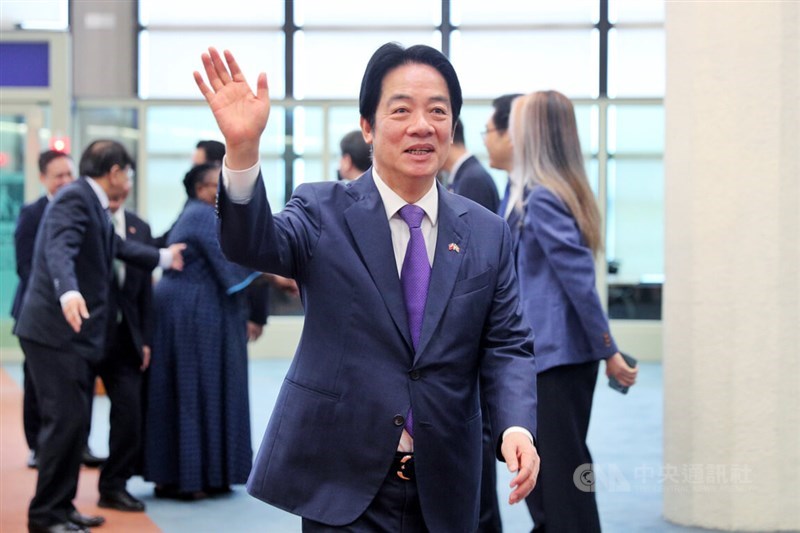
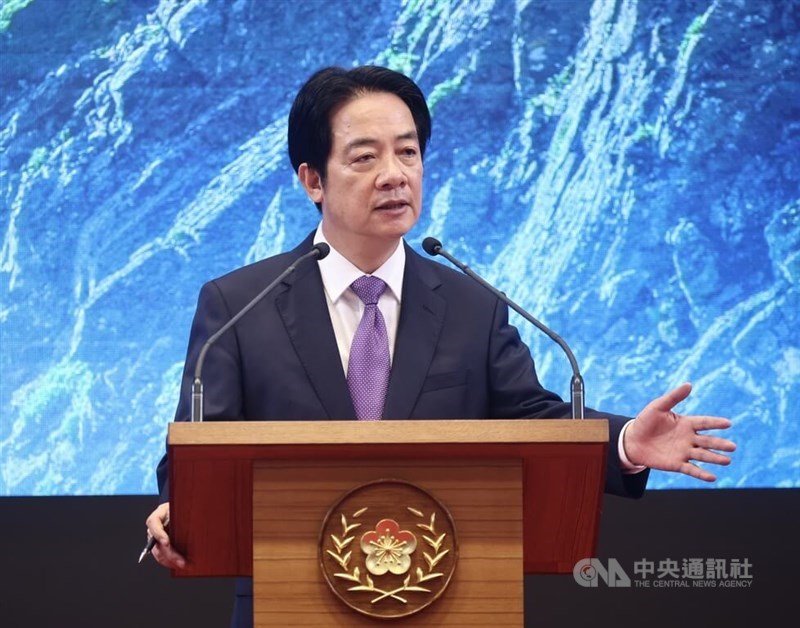
Beijing is unlikely to again block an overseas trip by President Lai Ching-te (賴清德) as it did when he tried to visit Eswatini, but Lai may not secure a stopover in the contiguous United States anytime soon, analysts said at the halfway mark of Lai's first term in office.
Personal visits by Taiwan's president to any of the country's 12 diplomatic allies remain one of the few tools Taiwan has to project its sovereignty in the international community, but Lai has faced more travel barriers than his predecessors.
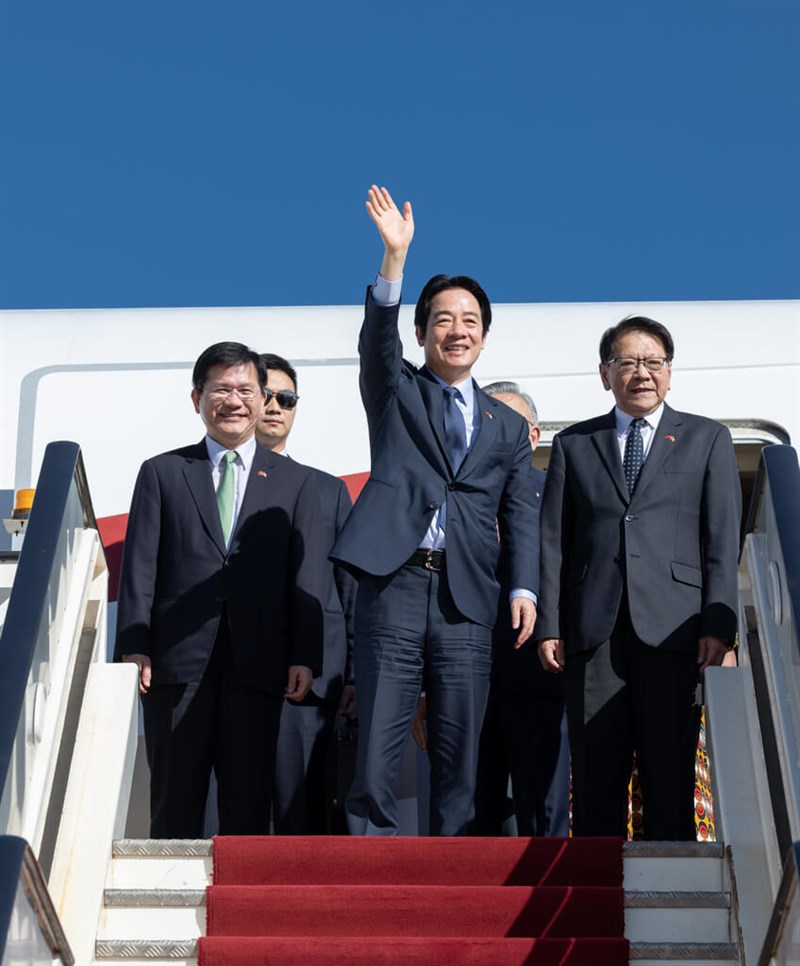
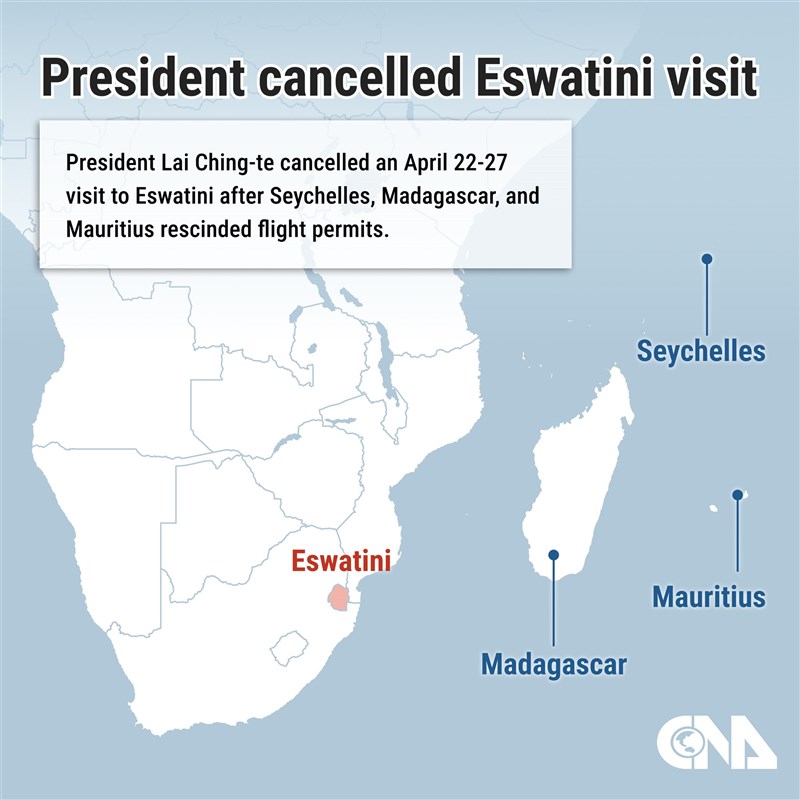
Most recently in late April, he was forced to cancel a planned state visit to Eswatini, Taiwan's sole formal diplomatic ally in Africa, after Beijing allegedly pressured three African countries along his flight route to revoke overflight permissions.
Lai eventually made it to Eswatini 10 days later aboard King Mswati III's royal jet but only announced the trip after landing. He returned to Taiwan on the same aircraft after concluding the three-day visit.
While Lai, of the independence-leaning Democratic Progressive Party (DPP), said the visit showed that "Taiwanese have the right to engage with the world," Beijing responded angrily, accusing Lai of "stowing away" to Eswatini.
Likely just a one-off
Yen Chen-shen (嚴震生), a political science professor at National Chengchi University, said China would likely not resort to the same tactic again.
"This was probably both the first and last time President Lai will face this kind of situation," Yen told CNA.
Aside from Eswatini, only two of Taiwan's other 11 diplomatic allies -- the Vatican and Paraguay -- are landlocked and would require Lai to fly over countries that maintain diplomatic ties with Beijing to reach them.
Taiwan's president is unlikely to visit the Holy See except for such occasions as a papal inauguration or funeral, Yen said, and he did not think China would block such nonpolitical visits.
Though he would have to fly over countries aligned with Beijing to get to Paraguay, Yen said those countries are within the U.S.' traditional sphere of influence, making China less likely to directly challenge Washington there.
Dennis Weng (翁履中), an associate professor of political science at Sam Houston State University, cautioned that while Lai eventually found a way to get to Eswatini despite Chinese pressure, such extraordinary arrangements should not become routine.
"It's fine to use these innovative methods once or twice, but if used too often, it would suggest Taiwan is increasingly being squeezed," he said.
"A better approach would be to seek support from democratic partners and encourage them to speak up for Taiwan," Weng said. "That would give Taiwanese people greater confidence."
Prospects of U.S. stopovers
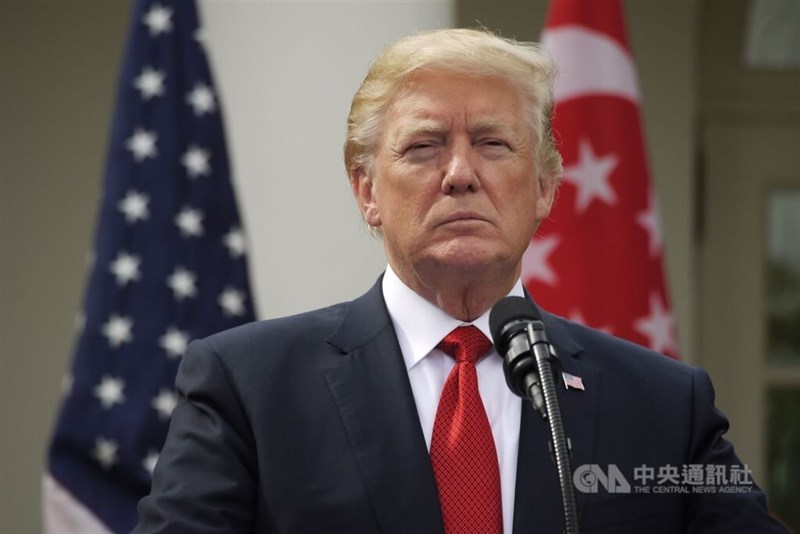
Visiting diplomatic allies in Central and South America and the Caribbean, however, might be more complicated for Lai, Yen said, because U.S. President Donald Trump might not approve future stopovers in the contiguous U.S. during those trips.
Yen argued that Trump might decide against the stopovers, which all of Taiwan's democratically elected presidents since 2000 have made, because he wants to see progress in trade talks with Beijing.
"They want to maintain good relations, and Trump knows this is the easiest thing to do," Yen said.
One possible compromise, he said, would be allowing Lai's aircraft to refuel in the U.S. without the president disembarking.
Weng noted that Lai has already spent longer in office without a transit stop in the contiguous U.S. than any previous Taiwanese president since 2000.
"Taiwan is dealing with a U.S. president who, at least publicly, has been relatively restrained in expressing support for Taiwan," Weng said.
He also voiced concern that Lai could face "downgraded treatment" from Washington if the Trump administration prioritized favorable trade arrangements with Beijing.
Roy Lee (李淳), Taiwan's former representative to the European Union, meanwhile, said it remained "very possible" that Trump would eventually allow Lai to transit through the U.S., though he declined to predict when.
"As Trump engages with Beijing, he likely does not want Taiwan and other Asia-Pacific partners to feel the U.S. is tilting entirely toward China," Lee said.
"He is likely to pursue a balanced approach, and that could include allowing Lai to transit through the United States," Lee argued.
Why Lai?
Asked why Beijing was more aggressive in blocking Lai's travel than that of past Taiwanese presidents, Lee said China's economic influence and technological capabilities are in an "entirely different league" compared with when former President Chen Shui-bian (陳水扁) took office in 2000.
China also has a more "confident" and "aggressive" leader in Xi Jinping (習近平), who has become increasingly relentless in opposing any attempt by Taiwan to expand its international space, he said.
Another factor, both Yen and Weng said, was Lai's longstanding image as a supporter of Taiwan independence, including his 2017 self-description as a "pragmatic worker for Taiwan independence" while serving as premier.
"Beijing views Lai as a hardline pro-independence leader and therefore cannot tolerate him," Yen said.
Weng said the DPP administration would need to adopt a less confrontational approach toward China if it hoped to reduce cross-strait tensions.
"The two sides maintain extensive trade ties, but the rhetoric remains tough," Weng said, adding that the disconnect has made Beijing reluctant to ease restrictions on Taipei.
"Cross-strait problems are often signaling problems," he said. "And so far, the signals from both governments have remained quite tough."
Enditem/ls
![DPP at 40: Founders reflect on risk, rise, reckoning]() DPP at 40: Founders reflect on risk, rise, reckoningFour decades after the Democratic Progressive Party (DPP) was founded under martial law, its pioneers recall the risks they took, the democratic changes they helped bring about and the challenges facing the party today.09/28/2026 11:10 AM
DPP at 40: Founders reflect on risk, rise, reckoningFour decades after the Democratic Progressive Party (DPP) was founded under martial law, its pioneers recall the risks they took, the democratic changes they helped bring about and the challenges facing the party today.09/28/2026 11:10 AM!['Umpire strikes back': Taiwanese ump sets U.S. pro baseball milestone]() 'Umpire strikes back': Taiwanese ump sets U.S. pro baseball milestoneIn her younger days, Sophiyah Liu (劉柏君) was a spiritual medium, serving as a bridge between the mortal plane and that of the unknown.09/18/2026 04:44 PM
'Umpire strikes back': Taiwanese ump sets U.S. pro baseball milestoneIn her younger days, Sophiyah Liu (劉柏君) was a spiritual medium, serving as a bridge between the mortal plane and that of the unknown.09/18/2026 04:44 PM![Made in Taiwan, sovereign in Europe: France's different chip strategy]() Made in Taiwan, sovereign in Europe: France's different chip strategyDuring a May visit to a high-performance computing center operated by the French Alternative Energies and Atomic Energy Commission (CEA) in Bruyères-le-Châtel, south of Paris, French President Emmanuel Macron was photographed holding a sample of Rhea1.09/05/2026 05:27 PM
Made in Taiwan, sovereign in Europe: France's different chip strategyDuring a May visit to a high-performance computing center operated by the French Alternative Energies and Atomic Energy Commission (CEA) in Bruyères-le-Châtel, south of Paris, French President Emmanuel Macron was photographed holding a sample of Rhea1.09/05/2026 05:27 PM

- Politics
- Politics
Major cities in Taiwan hold flag-raising ceremonies for National Day
10/10/2026 03:28 PM - Politics
Lai urges respect for WWII history, Taiwan's 'right to exist'
10/10/2026 02:44 PM - Politics
Taiwan needs a 'chain of guardian mountains' across industries: Lai
10/10/2026 01:19 PM - Business
New ECCT chair urges greater agility in Taiwan's software, energy sectors
10/10/2026 12:36 PM