By Chao Yen-hsiang, CNA staff reporter
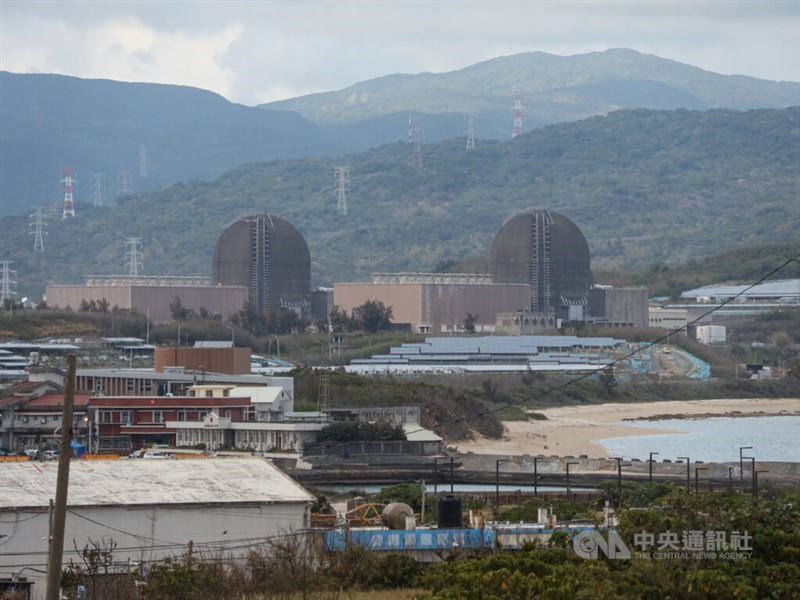
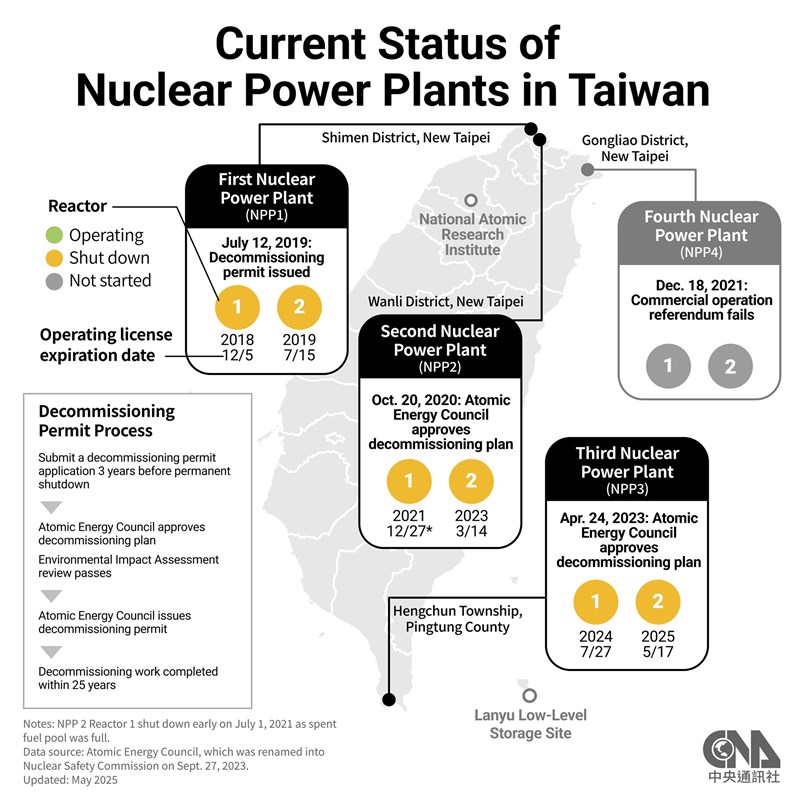
When Taiwan's last active nuclear reactor at the Maanshan Nuclear Power Plant was shut down on May 17, 2025, Taiwan officially became a "non-nuclear homeland," a longtime goal of the ruling Democratic Progressive Party (DPP).
The DPP had pledged since its founding in 1986 to phase out nuclear power, a stance often regarded as one of its core tenets alongside the pursuit of Taiwan's formal independence.
Less than a year after achieving the goal, however, President Lai Ching-te (賴清德) of the DPP reversed course.
On March 21, Lai said the government and state-run utility Taiwan Power Co. had launched a process that could lead to restarting not only the Maanshan plant but also the No. 2 Nuclear Power Plant in Wanli District in New Taipei.
Lai's policy change stunned environmental groups, long a key pillar of support for a "non-nuclear homeland," but there has otherwise been little political fallout from within his own party.
Scholars were split on whether the reversal was justified, but there was a sense the DPP has shifted, if cautiously, toward favoring the use of nuclear power.
Why the reversal?
In presenting the new approach, Lai said Taiwan had achieved its nuclear-free goal in 2025 but now faced new challenges, a statement derided by environmental groups.
"So does that mean a person who goes a day without smoking can say he achieved his goal to quit smoking only to continue to smoke the next day?" Citizen of the Earth, Taiwan (CET) wondered.
Lai cited rising electricity demand driven by AI development, the European Union's Carbon Border Adjustment Mechanism and growing geopolitical risks as reasons for a change in policy while affirming his ongoing support for rolling out green energy.
Chang Chun-hao (張峻豪), a political scientist at Tunghai University, described Lai's moves as a "huge U-turn" driven by real-world constraints.
Chang said Taiwan's heavy reliance on imported energy -- which accounted for 95.8 percent of total supply in 2024, according to Energy Administration data -- had made the issue increasingly pressing, particularly amid global instability.
Though some have said the United States exerted pressure on the DPP government to back nuclear energy, Chang said there was no evidence of that. He believed the shift was better seen in light of Taiwan's structural energy challenges.
"It gave us an opportunity to re-examine the DPP government's policy on alternative energy," he said.
Renewable energy the better choice?
Chao Chia-wei (趙家緯), research director of the Taiwan Climate Action Network (TCAN), disagreed, arguing that nuclear power offered limited benefits to Taiwan's energy resilience.
He pointed to developing renewable energy, expanding natural gas storage capacity from the current 11 days to 24 days, and focusing on demand-side management as more effective solutions.
Chao estimated that if the government could meet its goal of producing 30 percent of its power from renewable sources by 2030 -- a questionable proposition given that it only achieved two-thirds of its goal set for 2025 -- it would boost renewable power generation to 100 billion kWh a year, up from 37.8 billion kWh in 2025.
Building natural gas storage to 24 days could also extend natural gas availability to about 15 billion kWh if supply were cut off.
That additional power would go much farther than restarting the No. 3 Nuclear Power Plant, which would generate about 15 billion kWh a year, in satisfying Taiwan's additional power needs, he argued.
In 2025, natural gas already accounted for 47.8 percent of Taiwan's electricity mix, coal 35.4 percent, and renewables about 13.1 percent, well short of the DPP's 20 percent target, according to Energy Administration figures.
The No. 2 and No. 3 nuclear plants would each account for about 5.5 percent of Taiwan's electricity generation if restarted.
Chao also contended that "the No. 3 Nuclear Power Plant cannot be restarted by 2030," meaning it would be of no help in the near future, and that continued expansion of renewable energy could help bring down electricity costs.
Political implications
Though environmental groups were critical of Lai's move, voices within his own party that had previously excoriated opposition parties for proposing to restart nuclear power plants were silent.
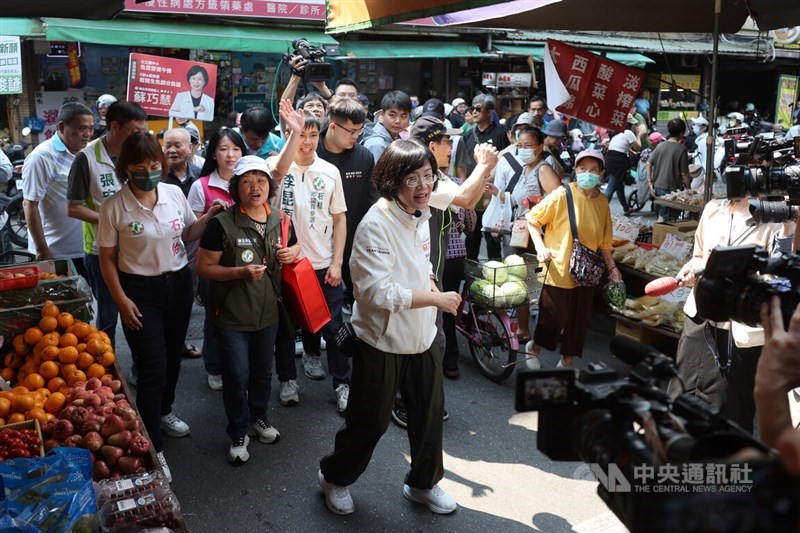
For example, DPP lawmaker Su Chiao-hui (蘇巧慧), who is set to represent the party in New Taipei's mayoral race in November, said she supported what she called "new nuclear power" but opposed making New Taipei a final disposal site for nuclear waste.
If there is a genuine shift on nuclear power within the party, it may be because of growing popular backing for nuclear power, especially among DPP supporters.
A my-formosa.com.tw poll conducted in late March found 63.2 percent support for nuclear power.
Among respondents, 47.7 percent of those who identified themselves as pro-DPP said the pros of nuclear power outweigh the cons, up 13.8 percentage points from March 2021.
Only 29.4 percent of DPP supporters said the cons outweigh the pros, down 21.3 percentage points from five years ago.
Lee Yung-teng (李永騰), a professor of public administration at National Open University, offered another possibility, that the U.S. has hoped Taiwan can generate its own power and has informed Taiwan's government that it could help address the problem of disposing its nuclear waste.
"I think the DPP actually highly values the U.S.' opinions a lot," he said.
Lee cautioned, however, that while those who oppose nuclear power may now be in the minority in Taiwan, the government "cannot ignore them" and "should work on persuading them."
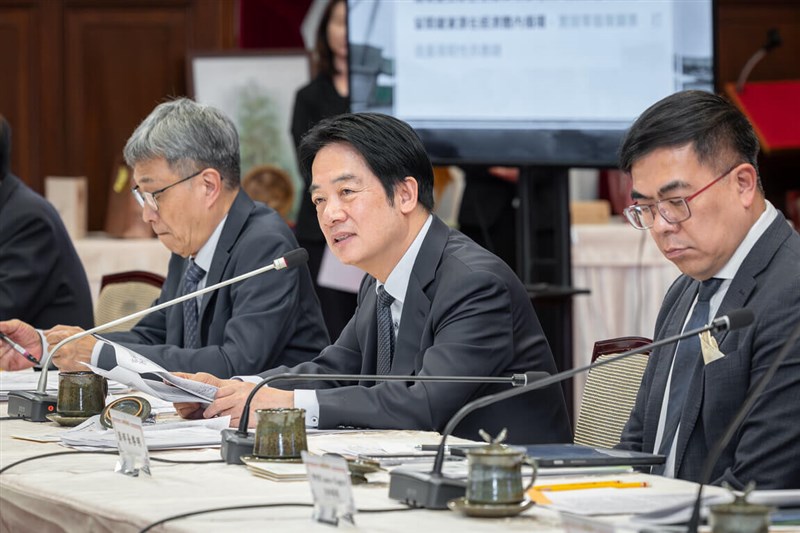
That was evident on April 21, when Lai hosted an annual meeting of environmental groups ahead of Earth Day.
Initial media reports indicated that Lai told the groups that his government was under pressure to restart nuclear power plants because of Taiwan's rapid economic growth, slower-than-expected green energy development, and the deployment of the AI sector.
A day later, however, the Presidential Office and an environmentalist who attended the meeting denied that Lai had made that argument or said nuclear power would be restarted based on public opinion.
The Presidential Office simply reiterated that Lai stressed that any decision to restart nuclear power needed to be handled responsibly and professionally, a sign the administration still feels it needs to tread carefully on the issue.
Tunghai University's Chang argued, however, that while the issue may fade from immediate attention, the DPP should clarify its stance as the debate is likely to resurface ahead of local elections at the end of 2026.
"This is the political cost President Lai must pay," he said.
Enditem/ls
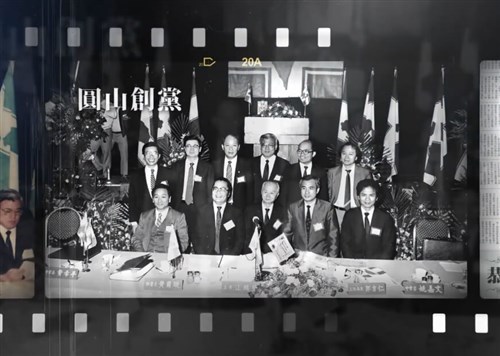
![DPP at 40: Founders reflect on risk, rise, reckoning]() DPP at 40: Founders reflect on risk, rise, reckoningFour decades after the Democratic Progressive Party (DPP) was founded under martial law, its pioneers recall the risks they took, the democratic changes they helped bring about and the challenges facing the party today.09/28/2026 11:10 AM
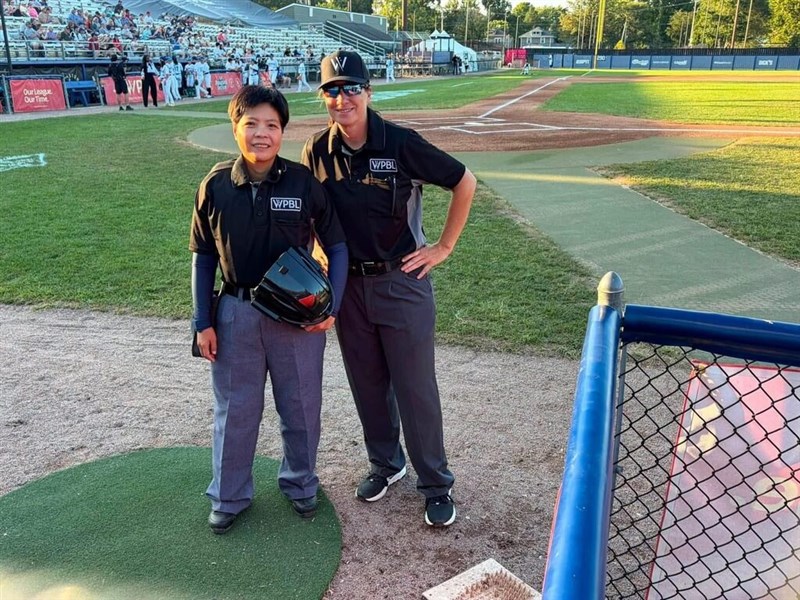
DPP at 40: Founders reflect on risk, rise, reckoningFour decades after the Democratic Progressive Party (DPP) was founded under martial law, its pioneers recall the risks they took, the democratic changes they helped bring about and the challenges facing the party today.09/28/2026 11:10 AM!['Umpire strikes back': Taiwanese ump sets U.S. pro baseball milestone]() 'Umpire strikes back': Taiwanese ump sets U.S. pro baseball milestoneIn her younger days, Sophiyah Liu (劉柏君) was a spiritual medium, serving as a bridge between the mortal plane and that of the unknown.09/18/2026 04:44 PM
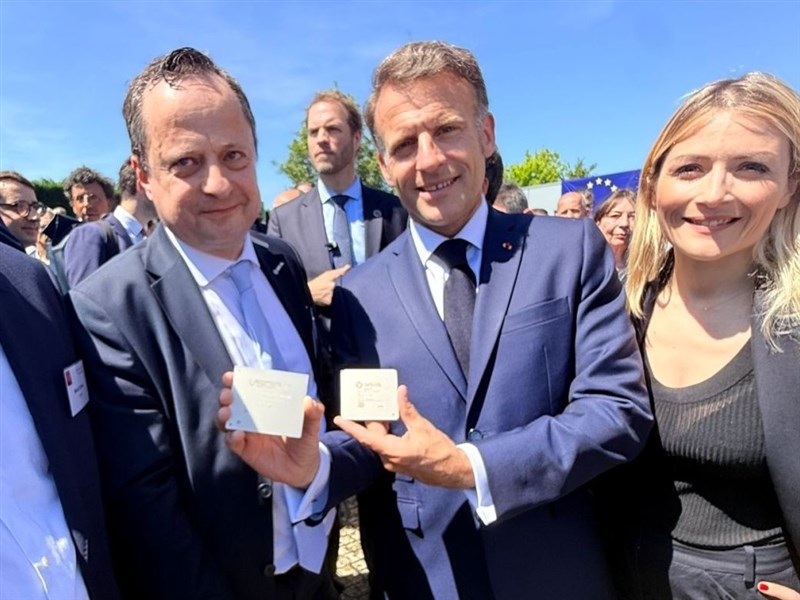
'Umpire strikes back': Taiwanese ump sets U.S. pro baseball milestoneIn her younger days, Sophiyah Liu (劉柏君) was a spiritual medium, serving as a bridge between the mortal plane and that of the unknown.09/18/2026 04:44 PM![Made in Taiwan, sovereign in Europe: France's different chip strategy]() Made in Taiwan, sovereign in Europe: France's different chip strategyDuring a May visit to a high-performance computing center operated by the French Alternative Energies and Atomic Energy Commission (CEA) in Bruyères-le-Châtel, south of Paris, French President Emmanuel Macron was photographed holding a sample of Rhea1.09/05/2026 05:27 PM
Made in Taiwan, sovereign in Europe: France's different chip strategyDuring a May visit to a high-performance computing center operated by the French Alternative Energies and Atomic Energy Commission (CEA) in Bruyères-le-Châtel, south of Paris, French President Emmanuel Macron was photographed holding a sample of Rhea1.09/05/2026 05:27 PM
- Politics
Lai's WWII remarks warn of China's bid to reshape world order: Analysts
10/10/2026 07:27 PM - Business
Gasoline, diesel prices to remain unchanged next week: CPC
10/10/2026 06:09 PM - Politics
Opposition leaders criticize DPP, Lai in National Day remarks
10/10/2026 04:48 PM - Politics
Ex-President Tsai calls for deeper ties between Taiwan, Silicon Valley
10/10/2026 04:25 PM - Society
Filipino worker hospitalized, over 300 evacuated in Tainan dorm fire
10/10/2026 03:59 PM