FEATURE/Former Chiayi 'wasteland' becomes hub for Taiwan drone ambitions
By Tsai Su-jung, Tseng Yun-ting, Chang Chien-chung and Wu Kuan-hsien, CNA staff reporters and writer
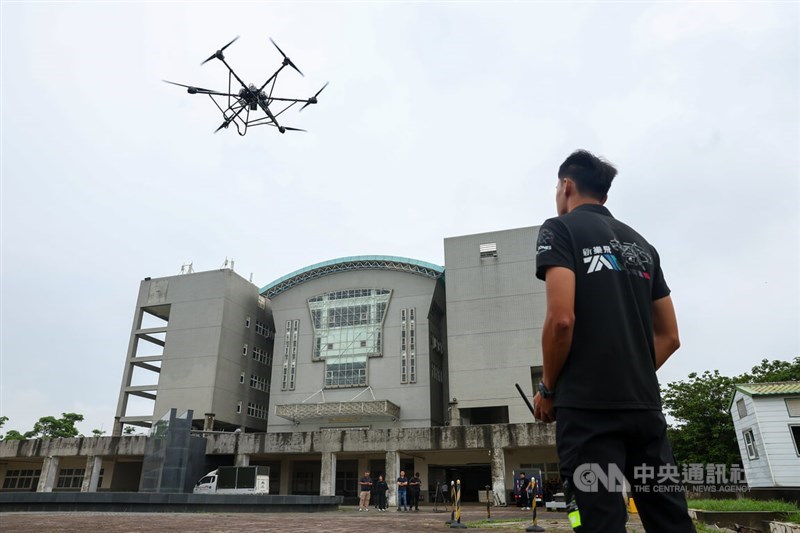
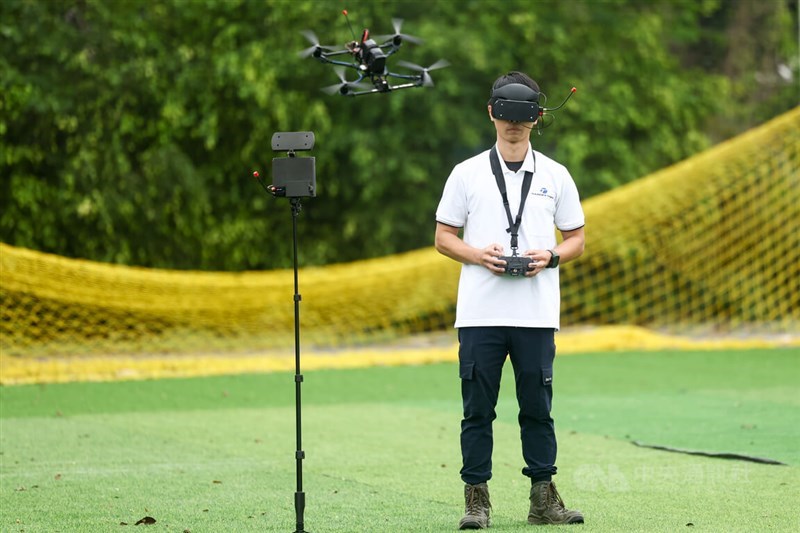
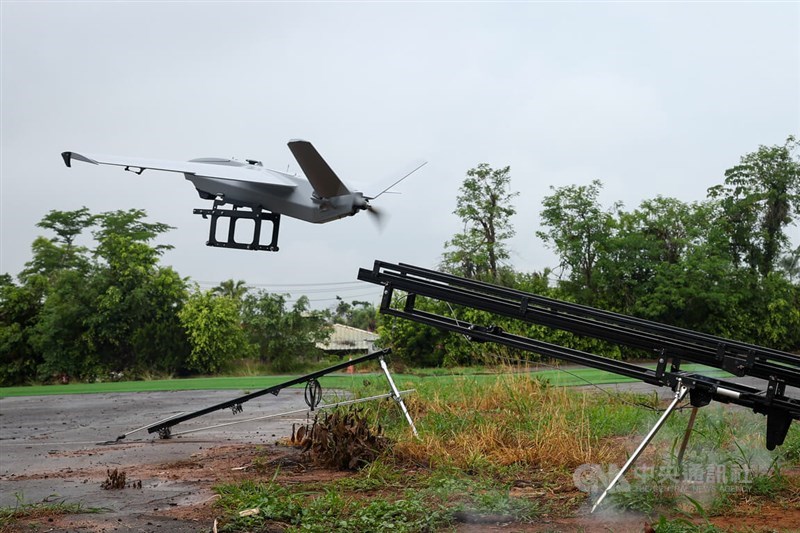
On a stretch of open land in southern Taiwan, an engineer from Thunder Tiger Corp. wearing first-person view goggles guides an unmanned aerial vehicle (UAV) through a series of sharp turns before bringing it down for a controlled landing.
Nearby, at the Asia UAV AI Innovation Application R&D Center in Chiayi County, Taiwanese drone maker 7A Drones Co., Ltd. is testing a multirotor drone with engineers from French company Parrot Drones SAS.
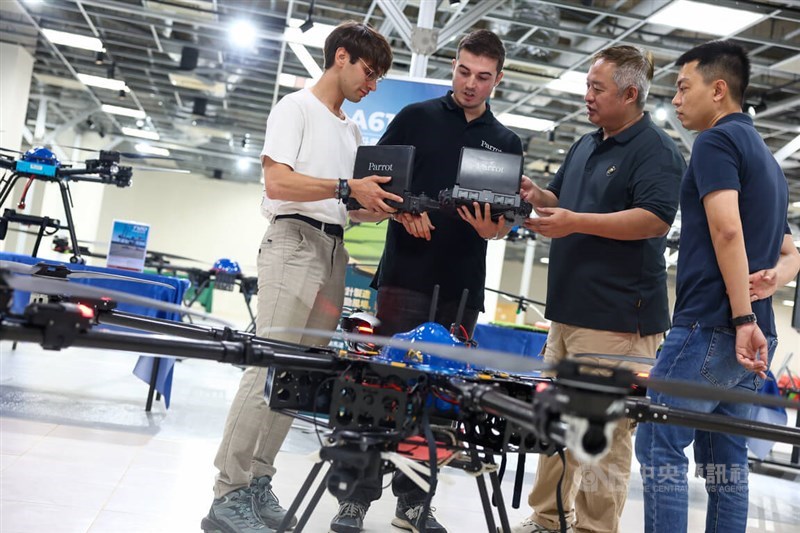
As the aircraft hovers overhead, the teams monitor flight data on laptops and discuss design adjustments aimed at improving stability and maneuverability.
The center, once a vacant site described by local officials as a "wasteland," has become a key base for Taiwan's push to develop a trusted drone supply chain at a time of rising demand for alternatives to Chinese-made UAVs.
It now hosts more than 50 drone companies and institutions and has received representatives from 36 companies around the world for exchanges with Taiwanese firms based at the site.
From idle campus to drone cluster
Chiayi County Magistrate Weng Chang-liang (翁章梁) recalled to CNA how the center was established in Puzi City.
The 5,000-ping (16,528-square-meter) site had been vacant since the National Taiwan University of Sport's Chiayi campus moved out in 2015, prompting the county government to look for ways to reactivate the land.
A drone center, however, was not the original plan, Weng said.
According to the county chief, after taking office in 2018, he began encouraging drone companies to set up operations there after learning that the National Chung-Shan Institute of Science and Technology planned to build a drone-focused facility in nearby Minxiong Township.
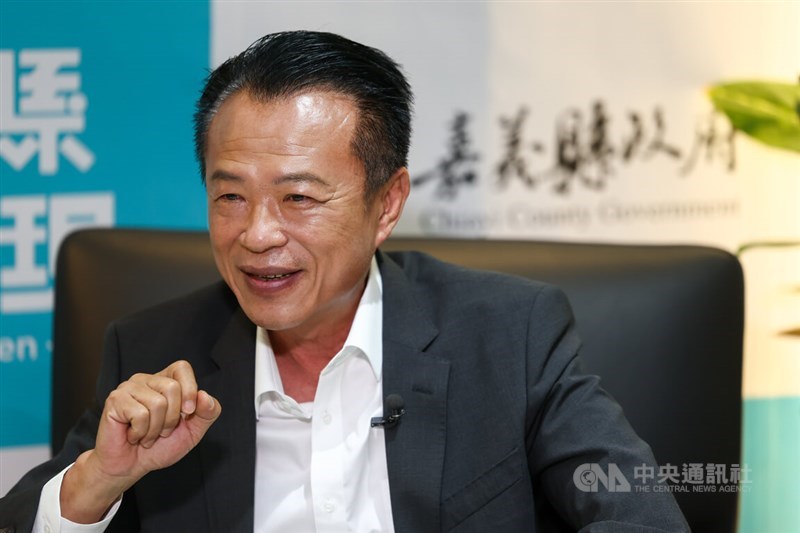
Weng said he was unsure whether companies would accept the invitation, as the site had been idle for years and "looked like a wasteland."
At the time, Taiwan's drone industry was still in its early stages, with local governments competing to attract companies and no clear policy direction from the central government, making funding difficult to secure, he said.
Still, several companies moved in and gradually formed a cluster. They later told Weng the site's spaciousness and clear airspace made it ideal for test flights.
"What we saw as a disadvantage was in fact an advantage for drone companies," he said. That became the foundation of the county government's R&D center project in 2020.
When inaugurating the Asia UAV R&D Center in August 2022, then-President Tsai Ing-wen (蔡英文) announced plans for a Taiwan drone alliance integrating the public, private and research sectors, and expressed hope that Chiayi could become a new aerospace hub.
The policy direction boosted confidence among companies and institutions, attracting support from the Ministry of Economic Affairs (MOEA), the Civil Aviation Administration and certification bodies, Weng said.
Building a trusted supply chain
Taiwan's drone industry gained new urgency after Russia invaded Ukraine in February 2022.
Ukraine relied heavily on drones in asymmetric warfare, initially sourcing many from China-based DJI. However, cybersecurity concerns grew after reports that DJI's AeroScope system could track the positions of drone operators, fueling demand for trusted, non-Chinese supply chains.
Economics Minister Kung Ming-hsin (龔明鑫) told CNA that Taiwan has signed memorandums of understanding with France, the United States, Poland and the Czech Republic, all of which are seeking alternatives to Chinese supply chains.
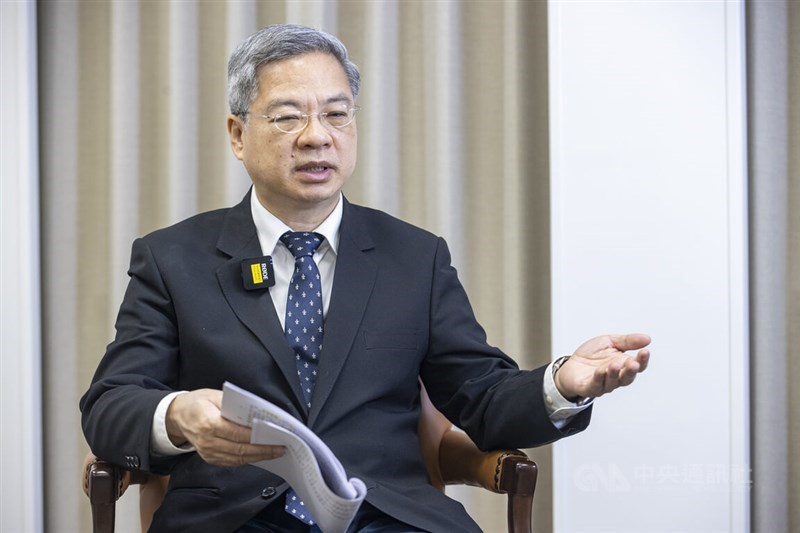
Eastern European countries located near authoritarian powers have especially pressing needs, he said.
After taking office in May 2024, President Lai Ching-te (賴清德) named drones one of Taiwan's five "trustworthy industries" aimed at strengthening ties with democratic partners.
More importantly, Kung said, drones are essentially "flying computers."
If Taiwan succeeds in developing drones free of Chinese-made components, it could drive growth across other unmanned systems industries, including land and marine vehicles, as well as low-orbit satellites, he said.
Expanding the industry
Industrial Technology Research Institute Chairman Wu Tsung-tsong (吳政忠) said the institute is seeking partnerships with startups around the world to complement Taiwan's hardware strengths and improve its software capabilities and system integration.
The U.S.-based Association for Uncrewed Vehicle Systems International is also planning to establish its first overseas Green UAS certification mechanism in Taiwan, Wu said.
That would allow Taiwanese firms to obtain certification without traveling to the U.S., he added.
Green UAS certification verifies that commercial drones meet cybersecurity and supply chain standards under U.S. defense regulations.
Kung said Taiwan also needs to develop unmanned systems to strengthen national defense and resilience.
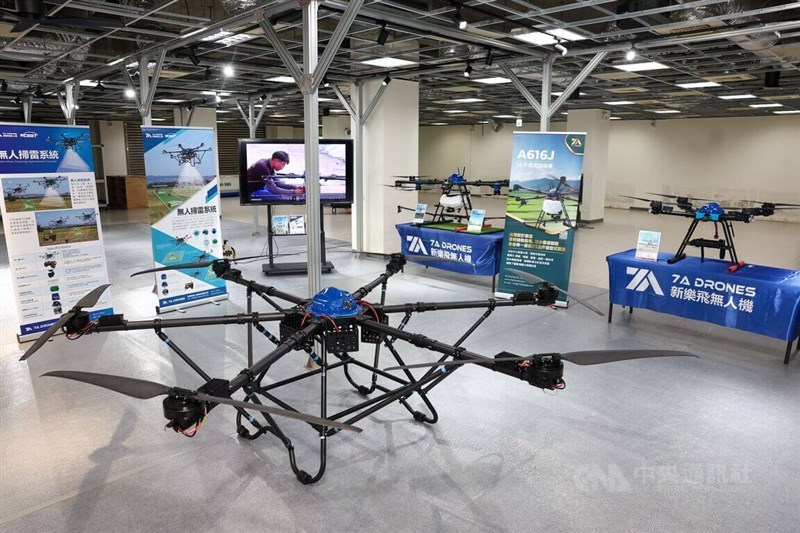
Commercial drones also have broad civilian applications, including infrastructure inspection, flood monitoring, disaster rescue and agricultural spraying, he said.
Government agencies are planning to purchase tens of thousands of drones over the next three years to support smart city initiatives, Kung added.
Several Taiwanese firms have also begun expanding internationally.
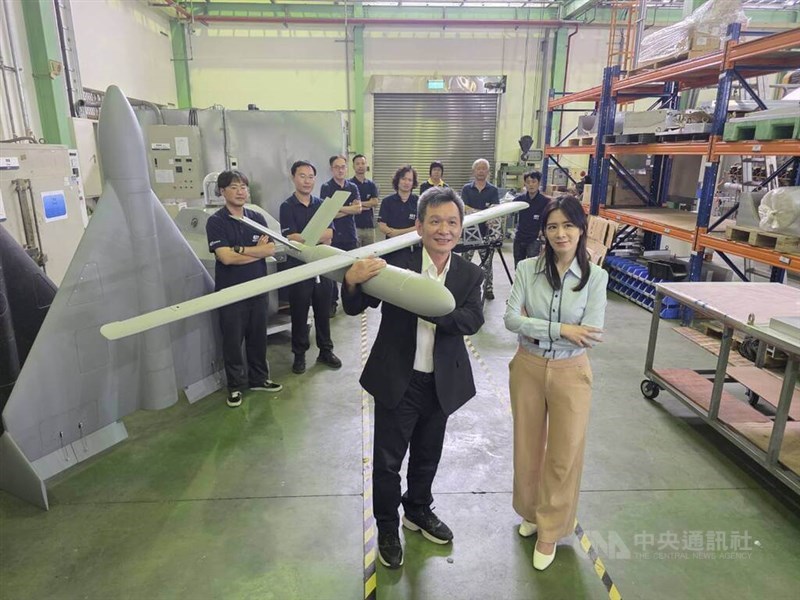
Carbon Based Technology Inc., previously focused on military drones for the National Chung-Shan Institute of Science and Technology, is now developing dual-use drones for both defense and commercial markets.
Thunder Tiger, originally a remote-controlled aircraft maker, has transformed into a drone company and was added in February to the U.S. Department of Defense Blue UAS list, which covers drones that meet cybersecurity standards.
Both companies, along with 7A Drones, which deployed drones during the Hualien County Matai'an Creek barrier lake disaster, have established operations at the Chiayi R&D Center.
Weng said the county government has acquired land in nearby Taibao City for a second base to meet growing demand from companies seeking to join the cluster.
The National Chung-Shan Institute of Science and Technology has also announced plans for an aerospace and drone industrial park in Minxiong.
The park is scheduled for completion in 2028 and is expected to host more than 100 companies.
Meanwhile, the Cabinet has established an "unmanned vehicle project conference" led by Vice Premier Cheng Li-chiun (鄭麗君) to coordinate inter-agency resources and elevate the Chiayi center into a national strategic project.
According to MOEA data, the industry's output value reached NT$12.9 billion (US$407.72 million) in 2025, a 2.5-fold increase from 2024, while exports totaled NT$2.95 billion.
Growth has continued into 2026, with first-quarter exports already surpassing the total for all of 2025.
Over the past few years, Taiwan's drone sector has grown from scattered startups into a government-backed supply chain aimed at serving both domestic needs and overseas markets looking for trusted alternatives to Chinese-made UAVs.
Enditem/kb
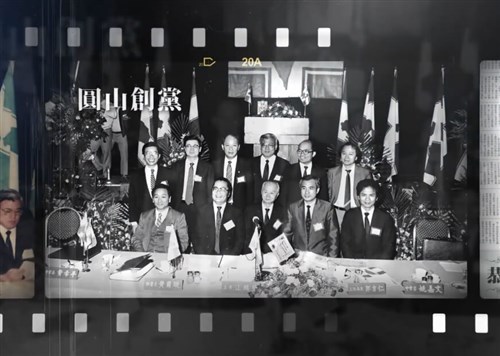
![DPP at 40: Founders reflect on risk, rise, reckoning]() DPP at 40: Founders reflect on risk, rise, reckoningFour decades after the Democratic Progressive Party (DPP) was founded under martial law, its pioneers recall the risks they took, the democratic changes they helped bring about and the challenges facing the party today.09/28/2026 11:10 AM
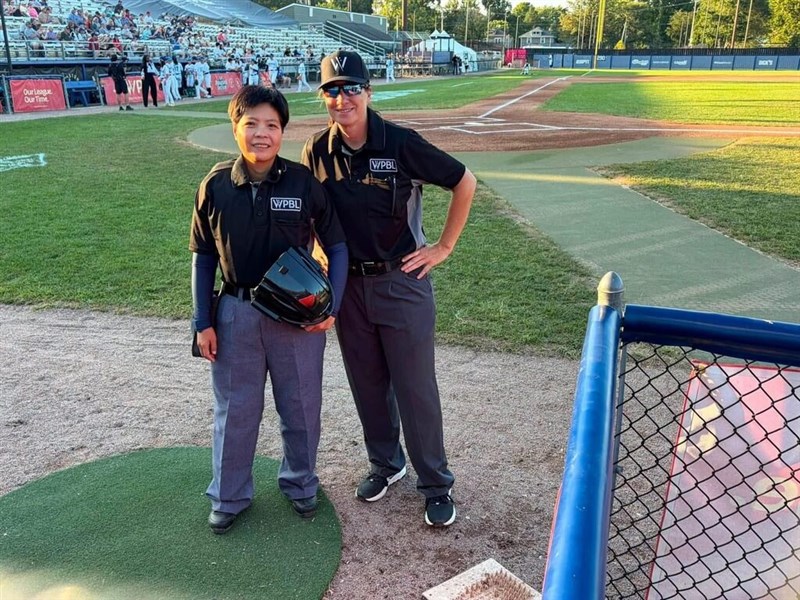
DPP at 40: Founders reflect on risk, rise, reckoningFour decades after the Democratic Progressive Party (DPP) was founded under martial law, its pioneers recall the risks they took, the democratic changes they helped bring about and the challenges facing the party today.09/28/2026 11:10 AM!['Umpire strikes back': Taiwanese ump sets U.S. pro baseball milestone]() 'Umpire strikes back': Taiwanese ump sets U.S. pro baseball milestoneIn her younger days, Sophiyah Liu (劉柏君) was a spiritual medium, serving as a bridge between the mortal plane and that of the unknown.09/18/2026 04:44 PM
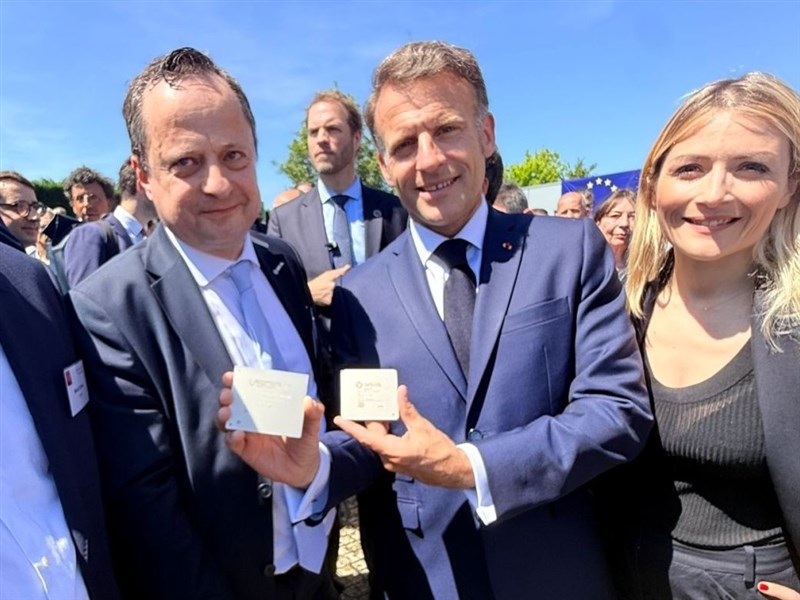
'Umpire strikes back': Taiwanese ump sets U.S. pro baseball milestoneIn her younger days, Sophiyah Liu (劉柏君) was a spiritual medium, serving as a bridge between the mortal plane and that of the unknown.09/18/2026 04:44 PM![Made in Taiwan, sovereign in Europe: France's different chip strategy]() Made in Taiwan, sovereign in Europe: France's different chip strategyDuring a May visit to a high-performance computing center operated by the French Alternative Energies and Atomic Energy Commission (CEA) in Bruyères-le-Châtel, south of Paris, French President Emmanuel Macron was photographed holding a sample of Rhea1.09/05/2026 05:27 PM
Made in Taiwan, sovereign in Europe: France's different chip strategyDuring a May visit to a high-performance computing center operated by the French Alternative Energies and Atomic Energy Commission (CEA) in Bruyères-le-Châtel, south of Paris, French President Emmanuel Macron was photographed holding a sample of Rhea1.09/05/2026 05:27 PM
- Politics
Full text of President Lai Ching-te's National Day address
10/10/2026 11:10 AM - Society
Taiwan headline news
10/10/2026 10:08 AM - Society
National Day celebrations kick off with parades, flyovers
10/10/2026 09:10 AM - Sports
Taiwan's Chen Yi-fan wins artistic skating gold at World Skate Games
10/09/2026 07:21 PM - Politics
Lai's National Day address to focus on Taiwan's economy, global role
10/09/2026 07:07 PM