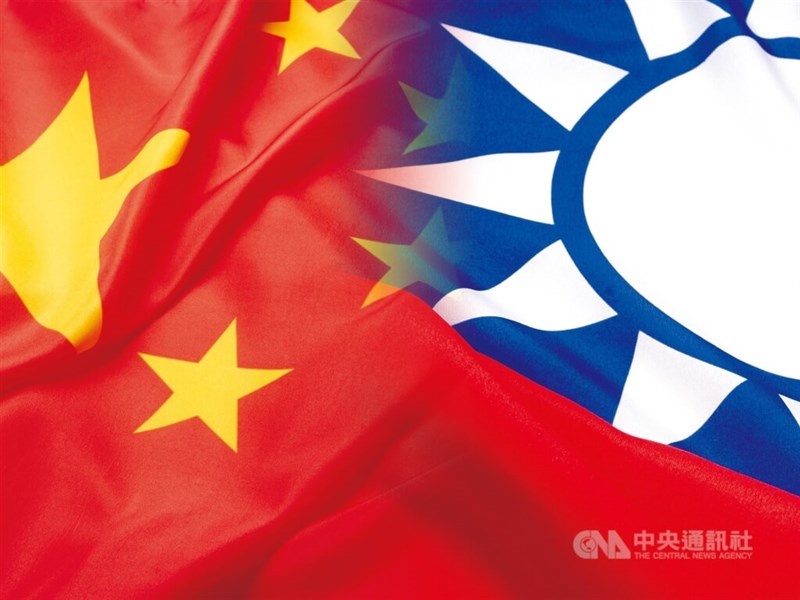
Taipei, May 20 (CNA) President Lai Ching-te (賴清德), who also chairs the Democratic Progressive Party (DPP), and the main opposition Kuomintang (KMT) traded barbs on Wednesday over the two parties' cross-strait policies, with Lai accusing the KMT of undermining Taiwan's sovereignty and the KMT criticizing Lai for engaging in a smear campaign.
During a question-and-answer session following a press event marking the second anniversary of his presidency, Lai was asked to comment on KMT chairwoman Cheng Li-wun's (鄭麗文) approach to keeping Taiwan safe.
Taiwan's national security should be based on a two-pronged approach -- strong defense capabilities and stable cross-strait peace -- Cheng said on May 8.
In response, Lai said Cheng's argument was not feasible, contending that the KMT had blocked passage of a Cabinet-proposed supplementary budget bill intended to fund major United States arms sales packages and domestic weapons production, which he said has seriously impacted the nation's self-defense capabilities.
Lai said Cheng's meeting with Chinese President Xi Jinping (習近平) last month compromised Taiwan's sovereignty, referring to Cheng and the KMT's acceptance of the "1992 Consensus," which facilitated the meeting.
Lai also reiterated his position that the Republic of China (ROC), Taiwan's official name, and the People's Republic of China (PRC) are "not subordinate to each other."
Taiwan is willing to engage in healthy and orderly exchanges with China under the principles of parity and dignity, he added.
In response, the KMT accused Lai of "maliciously distorting Cheng's propositions."
The KMT said Lai's administration has smeared its advocacy of peace and dialogue across the Taiwan Strait as "pro-China," adding that it is Lai who has escalated tensions across the Strait, according to a party press release.
The KMT further accused Lai of refusing to address people's needs and of failing to resume normal cross-strait exchanges.
Such actions do not protect Taiwan but instead sacrifice the safety and livelihoods of the Taiwanese for the DPP's political gain, the KMT said.
Regarding relations between the ROC and the PRC, the KMT reiterated its position that cross-strait relations are "not state-to-state."
The party also said the 1992 Consensus, within the framework of the ROC Constitution, is the "cornerstone that allows for dialogue, reduces hostility and avoids war between the two sides."
The "1992 Consensus" refers to a tacit understanding reached in 1992 between Taiwan's then-KMT government and the Chinese government, under which both sides acknowledge there is "one China" while maintaining different interpretations of its meaning.
The KMT has upheld that framework, while the ruling DPP rejects it, arguing that Beijing leaves no room for interpreting "China" as the Republic of China.
Meanwhile, the smaller opposition Taiwan People's Party (TPP) slammed Lai for blaming his administration's inability to solve the domestic political deadlock, an energy crisis, and shifts in geopolitics on the checks and balances provided by democratically elected opposition lawmakers.
The TPP urged Lai to stop political confrontation and truly deliver on his promises of "unity, safeguarding democracy, pursuing peace, and creating prosperity."
- Society
Taiwan headline news
10/03/2026 10:22 AM - Sports
'Hao-yu like that?' A deep dive into Lee's rookie MLB season
10/03/2026 10:00 AM - Sports
Taiwan boosts medal haul in multiple events at Asian Games on Friday
10/02/2026 08:55 PM - Society
Workers at Taiwan snack maker Kuai Kuai extend strike over relocation
10/02/2026 08:45 PM - Business
Chain businesses association seeks more foreign workers
10/02/2026 08:04 PM