By Chang Chien-chung, Charlotte Yang and Chao Yen-hsiang, CNA staff reporters
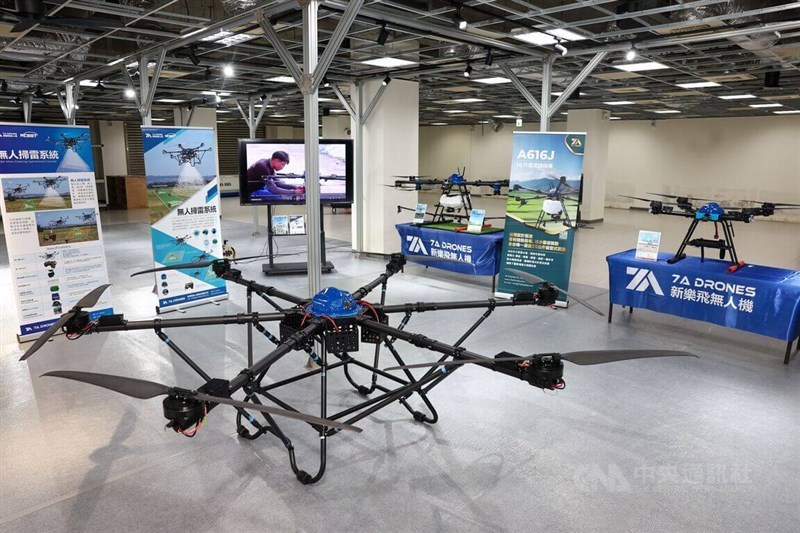
Taiwan's exports of finished drones to Europe surged more than 40-fold in 2025 and continued rising in early 2026, as Western countries moved to reduce reliance on Chinese-made unmanned aerial vehicles amid concerns over cybersecurity and supply chain resilience.
Taiwan exported 107,433 finished drones to Europe in 2025, up from 2,574 units a year earlier, according to reports released in April by the Research Institute for Democracy, Society and Emerging Technology under the Cabinet-level National Science and Technology Council.
The momentum carried into 2026, with exports to Europe reaching 136,010 units in the first quarter alone, already surpassing the total for all of 2025, the reports indicated.
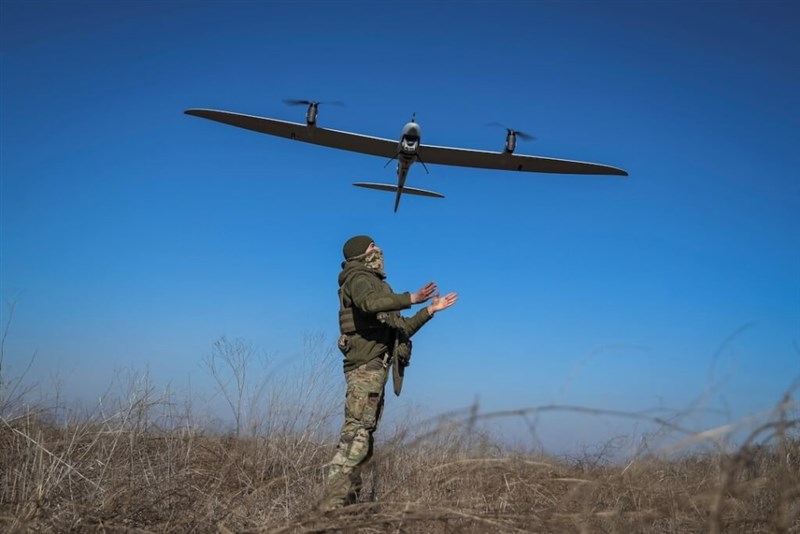
The rapid growth comes as Taiwan seeks to carve out a role in an emerging "non-red" drone supply chain, shaped by geopolitical tensions, lessons from the Russia-Ukraine war and efforts by the United States and Europe to reduce dependence on Chinese manufacturers.
• FEATURE / Former Chiayi 'wasteland' becomes hub for Taiwan drone ambitions
Moving beyond OEM
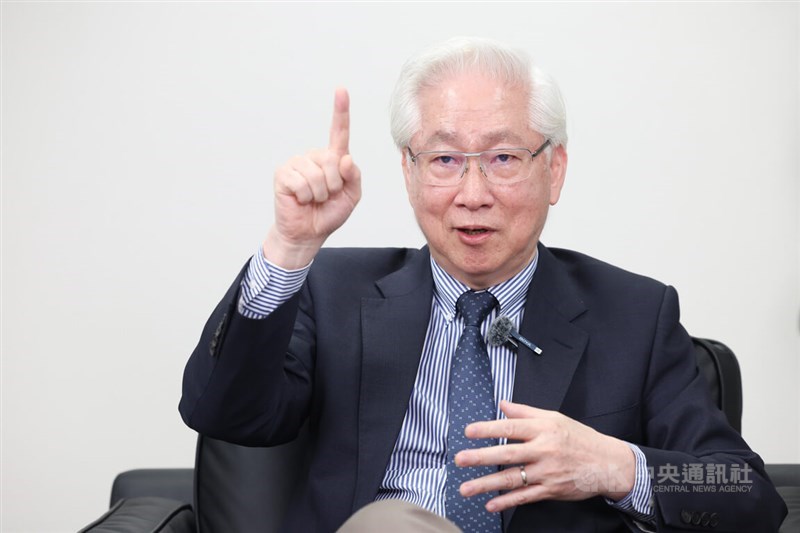
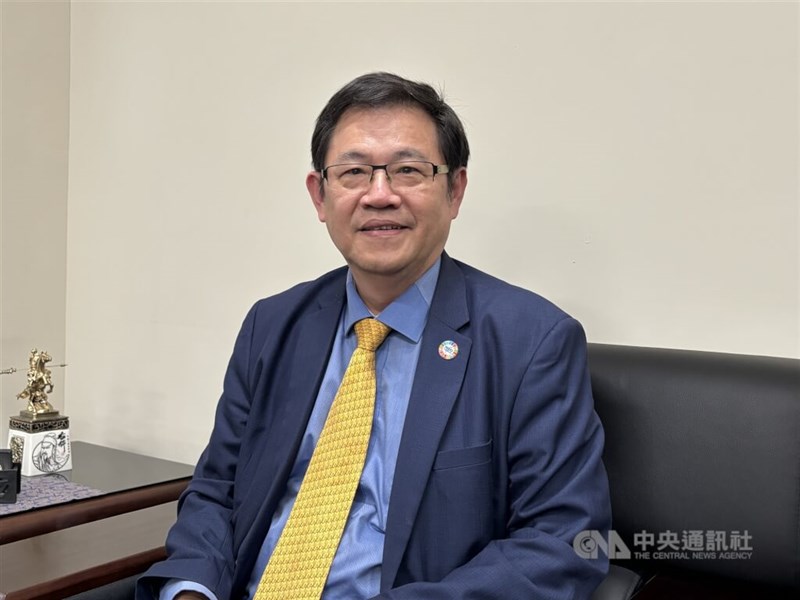
"Taiwan cannot just continue down the old contract manufacturing, or OEM, path," Industrial Technology Research Institute (ITRI) Chairman Wu Tsung-tsong (吳政忠) told CNA in a recent interview.
Wu said Taiwan has an opportunity to play a larger role in trusted drone supply chains because of its semiconductor capabilities, manufacturing efficiency and reputation as a democratic partner.
That push gained ground in January, when ITRI became the only overseas certification site in the United States-led Green UAS program, which focuses on cybersecurity and trusted sourcing for commercial drones.
The Green UAS program, led by the U.S.-based Association for Uncrewed Vehicle Systems International (AUVSI), aims to establish certification standards for commercial drone systems as governments and companies reassess their reliance on Chinese-made products and suppliers.
However, Taiwan's strengths in semiconductors and manufacturing alone would not be enough, Wu said, describing drones as "flying computers" that combine chips, communications and software systems.
He estimated Taiwan still trails the U.S. and Europe in software and system integration by roughly two to three years.
To close that gap, ITRI is seeking partnerships with overseas startups while building a domestic alliance linking drone, electronics, semiconductor and inspection-related companies, Wu said.
Building a drone ecosystem
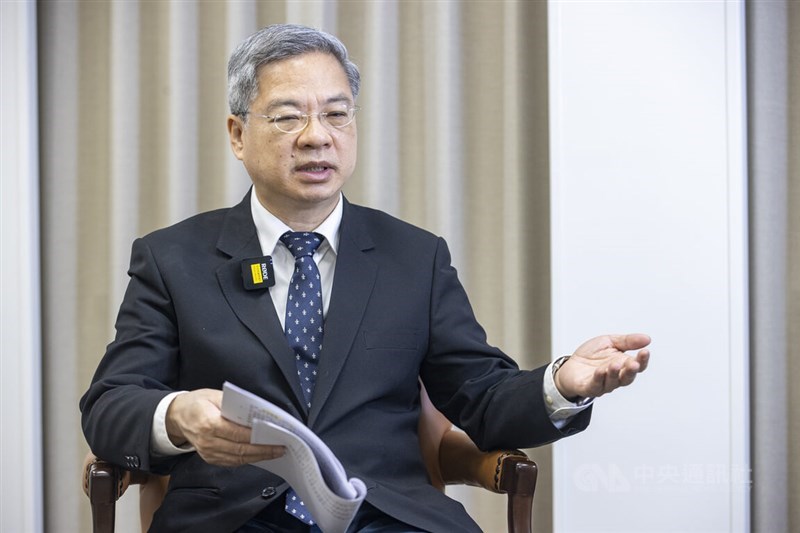
Meanwhile, Economics Minister Kung Ming-hsin (龔明鑫) said that the government has expanded investment in the sector as it seeks to strengthen Taiwan's drone industry across development, testing, procurement and certification.
According to Kung, the Cabinet has allocated NT$44.2 billion (US$1.4 billion) over six years for drone-related infrastructure, research, procurement and cybersecurity certification systems.
The funding includes investments in testing facilities and research bases in southern Taiwan, as well as support for key technologies such as communications, flight control, satellite positioning chips and ground control software.
The government also plans to procure around 50,000 drones for public-sector use over the next three years, with applications ranging from disaster response and bridge inspection to reservoir monitoring and agricultural spraying, Kung said.
Taiwan's drone industry output value rose from around NT$5 billion in 2024 to NT$12.9 billion in 2025, while exports climbed from about US$4.4 million to US$93 million over the same period, government figures showed.
The Cabinet has estimated that the sector's total output value will exceed NT$40 billion by 2030, with civilian applications expected to account for a larger share of the market as the technology matures.
Drone diplomacy ambitions
Beyond industrial policy, Taiwan's government increasingly views drones as part of the country's broader geopolitical strategy.
Chiang Zhen-wei (江振瑋), founder of the Chiayi-based Asia UAV AI Innovation Application R&D Center and executive chief of the Ministry of Foreign Affairs' drone diplomacy task force, told CNA in a recent interview that Taiwan hopes to leverage drones in a manner similar to its "semiconductor diplomacy."
"Developed countries need supply chains, while Taiwan's diplomatic allies need drones," he said. "This is where Taiwan's drone diplomacy can play a role."
Because foreign companies often struggle to identify suitable Taiwanese partners, the drone diplomacy task force can play an important matchmaking role, Chiang said.
Chiang also said that the task force aims to connect Taiwanese manufacturers with overseas demand while promoting Taiwan as what he described as an "Asian center for democratic drone supply chains."
Challenges
Still, Taiwan faces stiff competition, particularly from Chinese drone giant DJI, whose low-cost products continue to dominate much of the global commercial drone market.
ITRI Chairman Wu Tsung-tsong said the global drone industry's standards and industrial networks are still taking shape, giving Taiwan a limited window to expand its role before market rules become harder to influence.
"If specifications are set before Taiwan enters the market, we will only end up doing OEM or ODM work," he said.
Enditem/kb
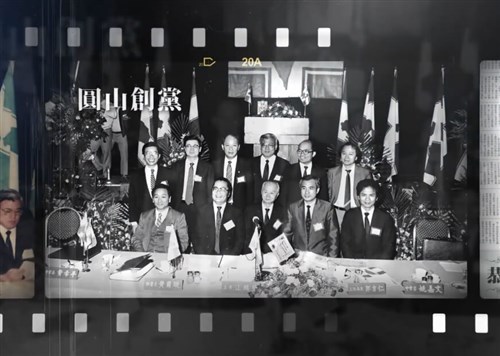
![DPP at 40: Founders reflect on risk, rise, reckoning]() DPP at 40: Founders reflect on risk, rise, reckoningFour decades after the Democratic Progressive Party (DPP) was founded under martial law, its pioneers recall the risks they took, the democratic changes they helped bring about and the challenges facing the party today.09/28/2026 11:10 AM
DPP at 40: Founders reflect on risk, rise, reckoningFour decades after the Democratic Progressive Party (DPP) was founded under martial law, its pioneers recall the risks they took, the democratic changes they helped bring about and the challenges facing the party today.09/28/2026 11:10 AM!['Umpire strikes back': Taiwanese ump sets U.S. pro baseball milestone]() 'Umpire strikes back': Taiwanese ump sets U.S. pro baseball milestoneIn her younger days, Sophiyah Liu (劉柏君) was a spiritual medium, serving as a bridge between the mortal plane and that of the unknown.09/18/2026 04:44 PM
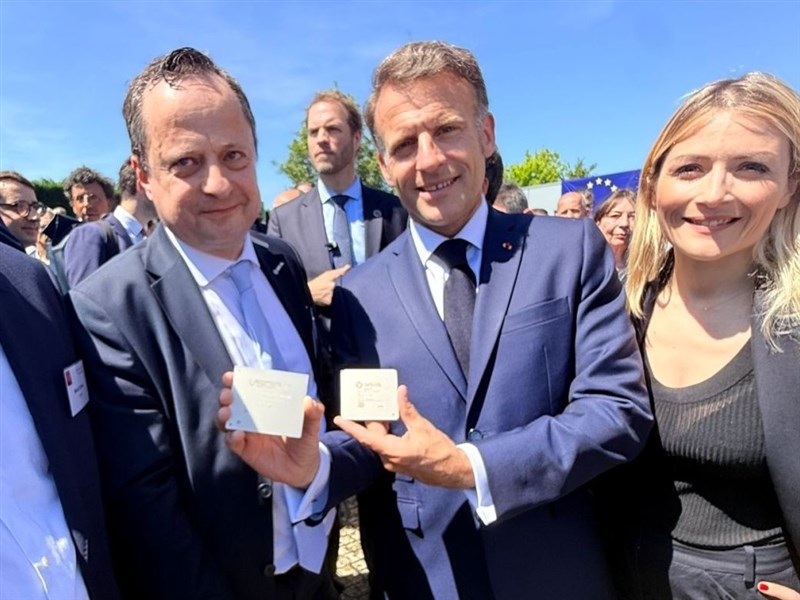
'Umpire strikes back': Taiwanese ump sets U.S. pro baseball milestoneIn her younger days, Sophiyah Liu (劉柏君) was a spiritual medium, serving as a bridge between the mortal plane and that of the unknown.09/18/2026 04:44 PM![Made in Taiwan, sovereign in Europe: France's different chip strategy]() Made in Taiwan, sovereign in Europe: France's different chip strategyDuring a May visit to a high-performance computing center operated by the French Alternative Energies and Atomic Energy Commission (CEA) in Bruyères-le-Châtel, south of Paris, French President Emmanuel Macron was photographed holding a sample of Rhea1.09/05/2026 05:27 PM
Made in Taiwan, sovereign in Europe: France's different chip strategyDuring a May visit to a high-performance computing center operated by the French Alternative Energies and Atomic Energy Commission (CEA) in Bruyères-le-Châtel, south of Paris, French President Emmanuel Macron was photographed holding a sample of Rhea1.09/05/2026 05:27 PM

- Society
Taiwan headline news
10/10/2026 10:08 AM - Society
National Day celebrations kick off with parades, flyovers
10/10/2026 09:10 AM - Sports
Taiwan's Chen Yi-fan wins artistic skating gold at World Skate Games
10/09/2026 07:21 PM - Politics
Lai's National Day address to focus on Taiwan's economy, global role
10/09/2026 07:07 PM - Politics
Japanese lawmakers visit Taiwan for National Day celebrations
10/09/2026 07:02 PM