INTERVIEW/From Red Guard to prisoner: Chinese dissident reflects on Cultural Revolution
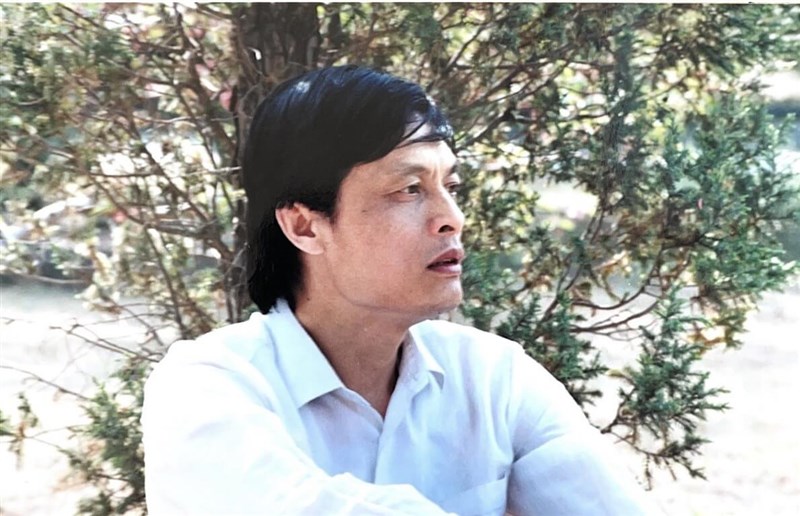
By Lu Chia-jung and Sunny Lai, CNA staff reporters
When Jiang Qisheng (江棋生) looks back on the Cultural Revolution, he sees more than a decade of political chaos that upended China and derailed his own generation.
For the former Red Guard turned dissident, the deeper lesson of that era is that any meaningful rejection of the Cultural Revolution must also be a rejection of the trampling of human rights.
"There will only be hope if rejecting the Cultural Revolution leads to rejecting privilege and putting human rights first," Jiang told CNA in a recent phone interview ahead of the 60th anniversary of the start of the decade-long political campaign.
Red Guard
Born in 1948, Jiang was among a generation of students whose education was disrupted by the Cultural Revolution, launched by Mao Zedong (毛澤東), then chairman of the Chinese Communist Party (CCP), on May 16, 1966.
At the time, Jiang was a high school student in Jiangsu Province and chairman of his school's student association.
Mao framed the Cultural Revolution as a revolutionary campaign to attack the "Four Olds" -- old ideas, old culture, old customs and old habits -- and purge bourgeois influences and perceived counterrevolutionaries through struggle sessions and house searches.
Historians have offered different explanations for why Mao launched the Cultural Revolution, including his stated goal of preventing China from taking a "revisionist" path, as well as what some scholars describe as an effort to mobilize the masses against political rivals and reassert his authority within the party.
Like many who believed in Mao's mission, Jiang joined struggle sessions against teachers, traveled to other cities to read "big-character posters" denouncing perceived enemies, and took part in the nationwide "link-up" movement that brought students from across China to Beijing.
Such activities were typical of the Red Guards, the student-led groups that became one of the most visible forces of the early Cultural Revolution.
One of Jiang's most vivid memories was seeing Mao's motorcade during the eighth and final mass reception of Red Guards in Beijing in 1966.
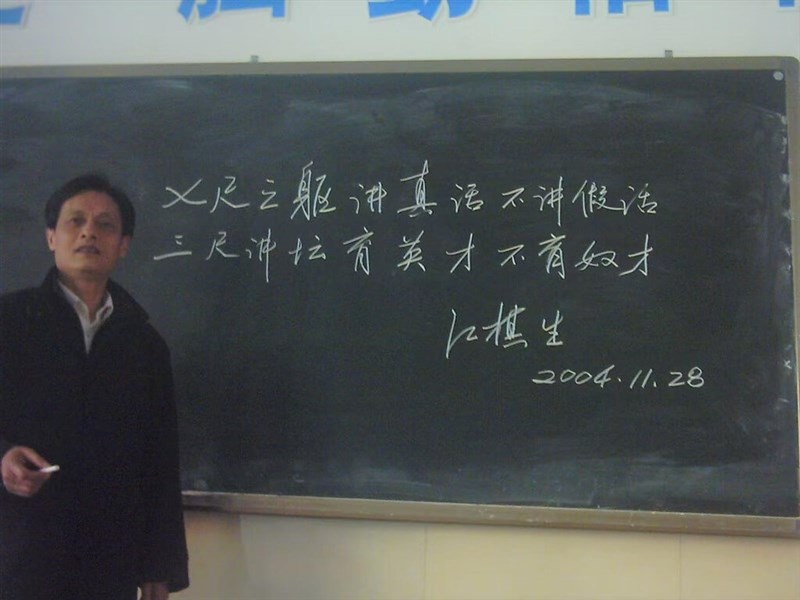
Standing at an airport amid the dust raised by the passing vehicles, Jiang recalled, he caught only a glimpse of Mao, but still shouted from the heart: "The great leader is here!"
From August to November 1966, Mao received Red Guards from across China eight times, with the total number of participants exceeding 11 million.
The mass mobilization helped spread the Cultural Revolution across the country, fueling violence and persecution, including the "Red August" killings in Beijing, during which many intellectuals and perceived class enemies were attacked or killed.
Educated youth
As the Cultural Revolution spread from schools into broader society in 1967, political struggle escalated into armed clashes between different factions.
By 1968, with universities still closed, many urban high school graduates were sent to the countryside as "educated youth."
Jiang spent the years from 1968 to 1972 farming in rural Jiangsu, later worked as a film projectionist from 1973 to 1976, and eventually took a propaganda job at a meat processing plant.
By then, his view of Mao and the Cultural Revolution had already begun to shift.
A key turning point, Jiang said, was the 1971 Lin Biao (林彪) incident, when Lin, Mao's designated successor, died in a plane crash in Mongolia while allegedly fleeing after plotting against Mao.
Jiang's years in the countryside also forced him to confront the hardship and absurdity experienced by a generation of young people whose lives had been derailed by politics.
He also recalled being deeply affected by the April 5 Tiananmen incident in 1976, when mass mourning for the late Premier Zhou Enlai (周恩來) at Tiananmen Square turned into a protest against the Gang of Four, a radical political faction led by Mao's wife, Jiang Qing (江青).
Jiang Qisheng said he firmly sided with the demonstrators at the time, as the country was economically poor, cultural life was barren, and "there was no freedom of any kind."
"How were people supposed to live like that?" he added.
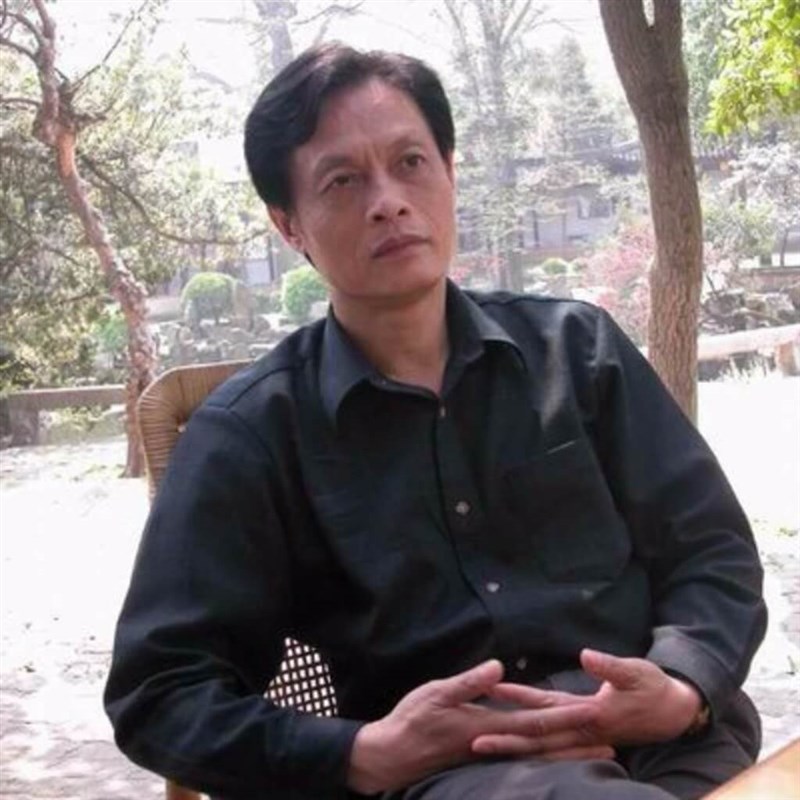
After China restored the national university entrance examination in 1977, Jiang took the exam and was admitted to Beihang University in March 1978, then known as the Beijing Institute of Aeronautics, where he studied an engineering-related field.
At university, Jiang said he gained access to information that had previously been unavailable to him, including accounts of the Kuomintang's role in the war against Japan, the origins of the Korean War, and Western political thought.
That process of intellectual liberation would eventually lead him to become involved in another movement centered on Tiananmen Square in 1989.
Dissident
Then a Ph.D. student at Renmin University of China, Jiang served as one of the student representatives during the 1989 Tiananmen Square pro-democracy movement.
Following the military crackdown in Beijing on June 4, 1989, Jiang was arrested and detained in a prison in Beijing. He was released in early 1991 after prosecutors decided not to indict him, but was expelled from the university later that year.
Over the following years, Jiang was detained or imprisoned two more times for his continued activism.
He also became one of the signatories of Charter 08, a 2008 manifesto calling for constitutional government, human rights and political reform in China. The manifesto's initiators included Liu Xiaobo (劉曉波), who was later awarded the Nobel Peace Prize.
Having experienced both the Cultural Revolution and the June 4 Tiananmen crackdown, Jiang said that as a Chinese person, he hopes his country and its people can live with more dignity and freedom.
"To move China from its current system toward a constitutional democracy is my wish and my aspiration, but it is extremely difficult," Jiang said, adding that Taiwan nevertheless offers an example.
"Chinese people in Taiwan have already successfully moved toward a constitutional democratic system," Jiang said. "This is a remarkable achievement in the 5,000-year history of the Chinese nation."
Jiang said he believes that "one day, we will also build such a good system on the Chinese mainland."
He added that Taiwan's way of life and the freedoms its people enjoy are not hard for Chinese people to understand.
"Any Chinese person who is willing to understand it can understand it," he said. "People are not stupid."
Enditem/AW
For more CNA features marking the 60th anniversary of the Cultural Revolution, produced by CNA reporters in Taipei, Beijing and Shanghai, please refer to this Chinese-language special report series: https://www.cna.com.tw/topic/newstopic/4941.aspx
![Taiwan, democracies must build resilience against China, Russia: Scholar]() Taiwan, democracies must build resilience against China, Russia: ScholarTaiwan and other democracies must strengthen their resilience against the "sharp power" wielded by authoritarian regimes such as China and Russia to defend their shared democratic values, a visiting American scholar said Monday.09/21/2026 04:39 PM
Taiwan, democracies must build resilience against China, Russia: ScholarTaiwan and other democracies must strengthen their resilience against the "sharp power" wielded by authoritarian regimes such as China and Russia to defend their shared democratic values, a visiting American scholar said Monday.09/21/2026 04:39 PM![European Parliament vice president praises Hsiao as 'role model' for women]() European Parliament vice president praises Hsiao as 'role model' for womenEuropean Parliament Vice President Pina Picierno on Saturday praised Taiwanese Vice President Hsiao Bi-khim (蕭美琴) as a role model for freedom-loving women around the world and told CNA that she would soon begin planning a trip to Taipei after accepting Hsiao's invitation to visit.09/13/2026 01:08 PM
European Parliament vice president praises Hsiao as 'role model' for womenEuropean Parliament Vice President Pina Picierno on Saturday praised Taiwanese Vice President Hsiao Bi-khim (蕭美琴) as a role model for freedom-loving women around the world and told CNA that she would soon begin planning a trip to Taipei after accepting Hsiao's invitation to visit.09/13/2026 01:08 PM![VP Hsiao flags funding, oversight gaps in opposition drone bills]() VP Hsiao flags funding, oversight gaps in opposition drone billsVice President Hsiao Bi-khim (蕭美琴) has questioned key elements of military drone procurement bills sponsored by opposition lawmakers, saying the omissions would hurt the industry and Taiwan's preparedness.08/26/2026 10:21 AM
VP Hsiao flags funding, oversight gaps in opposition drone billsVice President Hsiao Bi-khim (蕭美琴) has questioned key elements of military drone procurement bills sponsored by opposition lawmakers, saying the omissions would hurt the industry and Taiwan's preparedness.08/26/2026 10:21 AM

- Society
Taiwan headline news
10/03/2026 10:22 AM - Sports
'Hao-yu like that?' A deep dive into Lee's rookie MLB season
10/03/2026 10:00 AM - Sports
Taiwan boosts medal haul in multiple events at Asian Games on Friday
10/02/2026 08:55 PM - Society
Workers at Taiwan snack maker Kuai Kuai extend strike over relocation
10/02/2026 08:45 PM - Business
Chain businesses association seeks more foreign workers
10/02/2026 08:04 PM