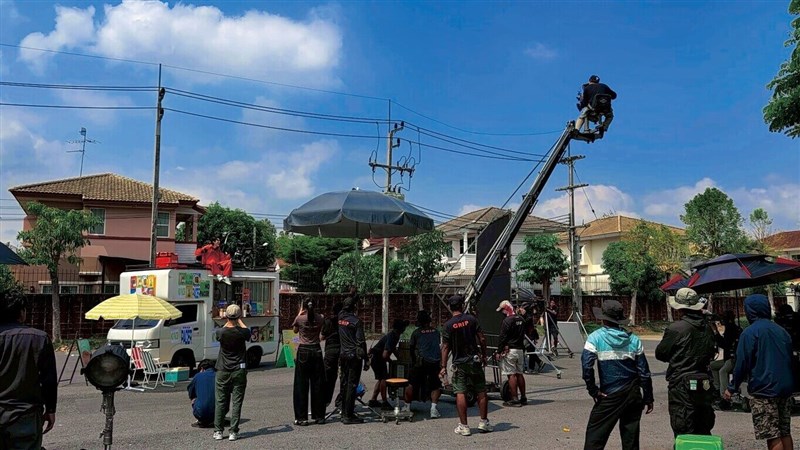
Bangkok, May 16 (CNA) When Thai popstar Krissanapoom Pibulsonggram came out with a new video for his latest single "No Pacer" on YouTube at the end of April, the key creative force behind it was Taiwanese music video director Pinbo Huang (黃品柏).
In the video, Pibulsonggram, better known by his online aliases Jaylerr and JJ, can be seen singing, dancing, and acting to Huang's signature video colorization and editing style that are prominent in the Taiwanese director's music video works.
It has proved to be a draw among Jaylerr's fans, garnering over a million views since being uploaded to YouTube at the end of April.
In an interview with CNA, Huang talked about how he got the job to direct the video for the popular 29-year-old Thai actor, singer and model, and what that and other experiences have taught him about Thailand's entertainment industry and how it compares to Taiwan's.
The opportunity to work with Jaylerr came because of another music video he shot in Thailand with a Taiwanese boy band.
"After the project was completed, it caught the eye of Jaylerr," Huang said. "They were the ones who contacted us over social media with a proposal to work together."
When discussing the project with Jaylerr's music company, it was obvious that they wanted to showcase creativity through a foreign lens, which was likely why the Thai company reached out to him, Huang said.
International credibility
Huang has worked on international production projects in Thailand, Cambodia, Vietnam and Japan in his seven years directing music videos, commercials and microfilms, giving him a good perspective on how different countries operate.
The project with Jaylerr left him impressed with Thailand's entertainment industry. He said the film and music sectors have highly specialized divisions of labor, and the logistical support was excellent and demonstrated a high level of professionalism.
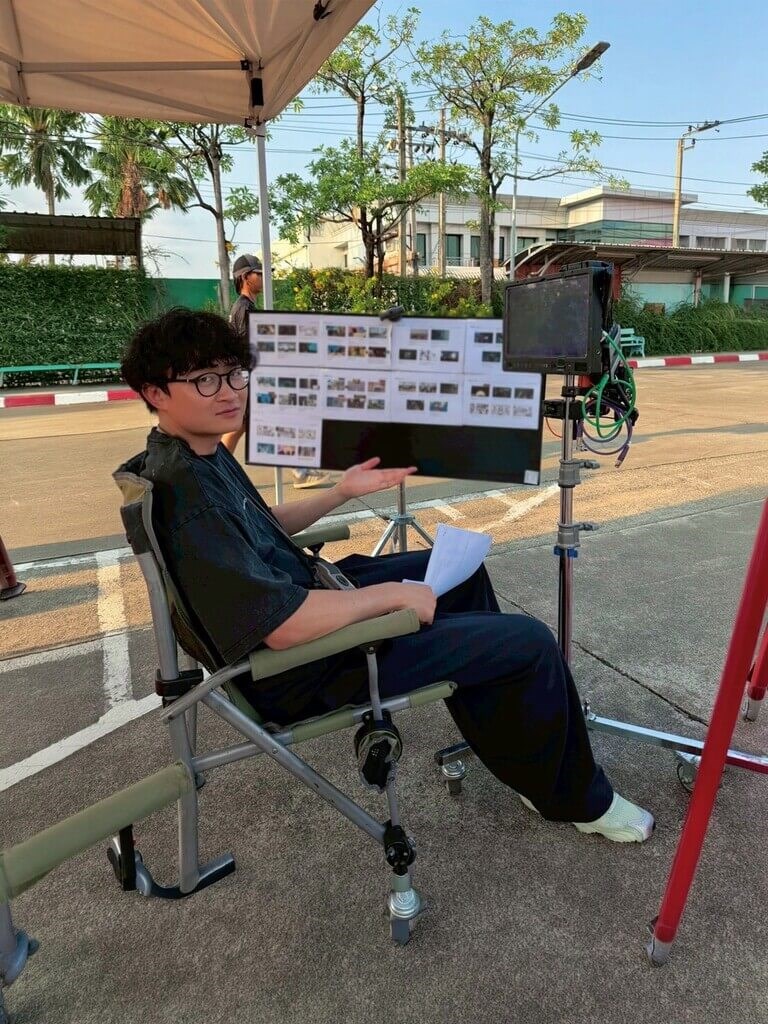
"The Thai production team manages time very precisely, and post-production is very fast," Huang said. "Editing, special effects and lighting can all be completed in a short time."
Conversely, Huang said Taiwan's production process can be less organized, often requiring one person to do the work of two, which can lead to repeated revisions and increased costs.
One factor helping Thailand's pop music and film industries in recent years is the high level of interaction and connection between artists and fans, Huang said.
From record company events and fan support culture to artist training, Thailand demonstrates a level of sophistication approaching that of the trainee system observed in South Korea's entertainment industry, he said.
In contrast, Huang observed that Taiwan's smaller market meant audiences are more dispersed, causing the local music sector to lag behind in terms of resource investment and systematization.
"Fundamentally, it's still a market issue, and whether or not we have enough cultural identity ourselves," Huang said.
Taiwanese creators still have advantages, however, especially in terms of creativity and narrative flexibility.
That his own work was seen by Thai artists, leading to an invitation to direct a music video in Thailand, proves that Taiwanese video creators still possess a level of creativity that is in demand internationally, he said.
*A correction was made on May 18, 2026: An earlier version of this article inadvertently left out the name of the single "No Pacer" and misstated that the singer was 19 years old.
- Society
Taiwan headline news
10/03/2026 10:22 AM - Sports
'Hao-yu like that?' A deep dive into Lee's rookie MLB season
10/03/2026 10:00 AM - Sports
Taiwan boosts medal haul in multiple events at Asian Games on Friday
10/02/2026 08:55 PM - Society
Workers at Taiwan snack maker Kuai Kuai extend strike over relocation
10/02/2026 08:45 PM - Business
Chain businesses association seeks more foreign workers
10/02/2026 08:04 PM