ANALYSIS/China military drills' disruption of air travel had a purpose: Expert
01/02/2026 04:38 PM
The disruption of 941 flights in and out of Taiwan due to China's recent large-scale military exercises was no accident but rather the result of a "quasi-blockade" used to simulate creating air and sea routes needed for an amphibious landing, a military expert said.
(Full text of the story is now in CNA English news archive. To view the full story, you will need to be a subscribed member of the CNA archive. To subscribe, please read here.)
More in ANALYSIS
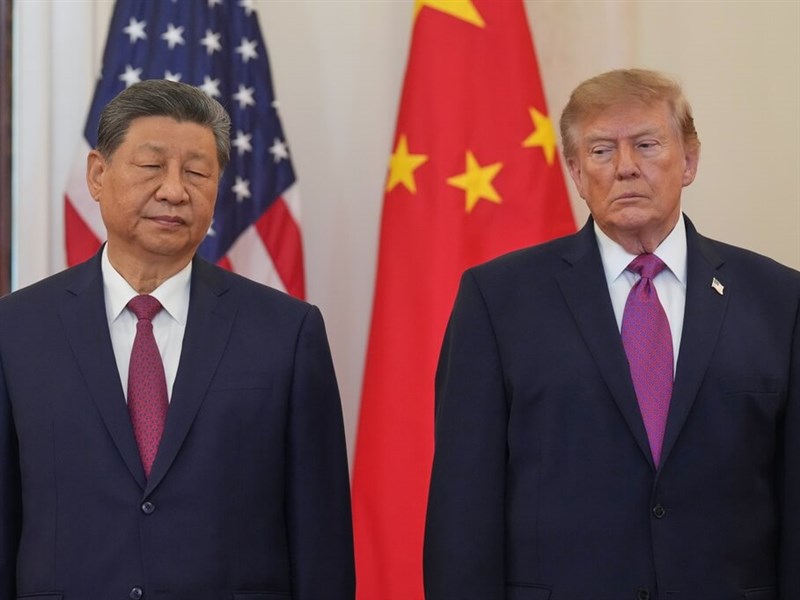
![Xi's WWII account obscures ROC role, evokes Japan tensions: Scholars]() Xi's WWII account obscures ROC role, evokes Japan tensions: ScholarsWhen Chinese President Xi Jinping (習近平) recalled U.S.-China cooperation during World War II at a White House state dinner Thursday, he left out a name central to that history: the Republic of China (ROC).09/29/2026 04:30 PM
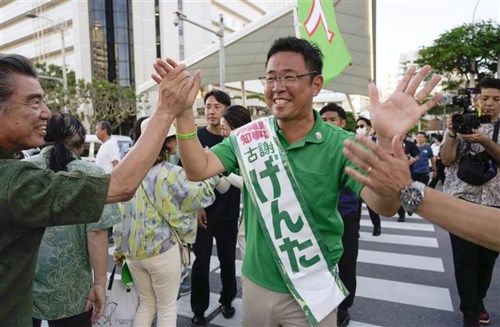
Xi's WWII account obscures ROC role, evokes Japan tensions: ScholarsWhen Chinese President Xi Jinping (習近平) recalled U.S.-China cooperation during World War II at a White House state dinner Thursday, he left out a name central to that history: the Republic of China (ROC).09/29/2026 04:30 PM![Okinawa vote likely to boost Japan's defense buildup, Taiwan security: Scholars]() Okinawa vote likely to boost Japan's defense buildup, Taiwan security: ScholarsThe anti-Henoko "All Okinawa" camp's 12-year hold on the Okinawa governorship ended Sunday when former Naha Deputy Mayor Genta Koja unseated two-term incumbent Denny Tamaki in a six-candidate race.09/15/2026 09:34 PM
Okinawa vote likely to boost Japan's defense buildup, Taiwan security: ScholarsThe anti-Henoko "All Okinawa" camp's 12-year hold on the Okinawa governorship ended Sunday when former Naha Deputy Mayor Genta Koja unseated two-term incumbent Denny Tamaki in a six-candidate race.09/15/2026 09:34 PM![Taiwan, U.S. must counter China gray-zone pressure: Stanford scholar]() Taiwan, U.S. must counter China gray-zone pressure: Stanford scholarTaiwan and the United States need to prepare for a crisis triggered by China's intensifying gray-zone pressure rather than focus only on deterring a full-scale conflict, a Stanford University scholar said Wednesday at a symposium in Taipei.09/09/2026 07:50 PM
Taiwan, U.S. must counter China gray-zone pressure: Stanford scholarTaiwan and the United States need to prepare for a crisis triggered by China's intensifying gray-zone pressure rather than focus only on deterring a full-scale conflict, a Stanford University scholar said Wednesday at a symposium in Taipei.09/09/2026 07:50 PM

Latest
- Sports
Men's archery, esports give Taiwan 2 more bronzes at Asian Games
09/30/2026 08:32 PM - Society
Cooler, wetter weather forecast in northern Taiwan next week
09/30/2026 07:25 PM - Politics
Taiwan, Belize sign agreements to enhance collaboration during FM's visit
09/30/2026 07:08 PM - Society
AGC Display Glass employees protest at MOL ahead of 10/5 strike
09/30/2026 06:53 PM - Culture
CNA to relaunch Spanish-language Focus Taiwan with AI assistance
09/30/2026 05:59 PM