Language, culture initiatives seen as crucial to U.S.-Taiwan semiconductor cooperation
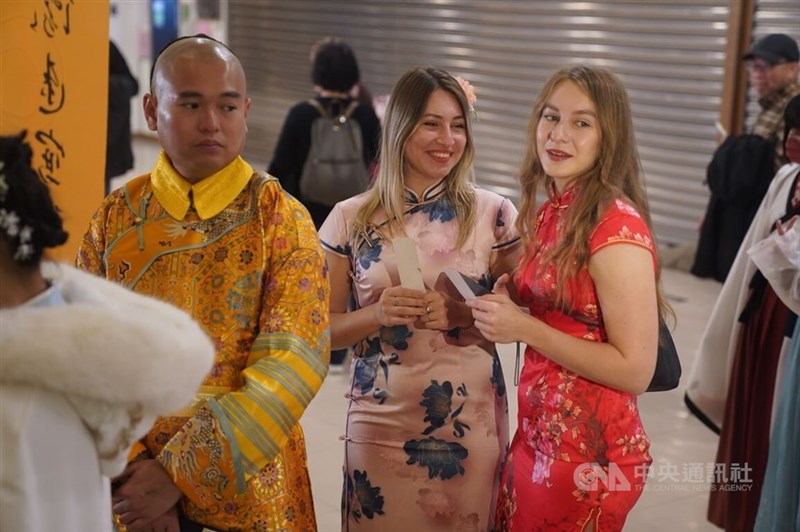
Taipei, Jan. 22 (CNA) Language education and cultural exchange featured prominently in the latest dialogue between Taiwan and the United States on Thursday, as Taipei and Washington sought to deepen bilateral cooperation on semiconductor development.
"Preparing talent in critical and emerging technologies, including semiconductors, advanced manufacturing and AI, requires sustained investment in education and exchange," American Institute in Taiwan (AIT) Deputy Director Karin Lang said at a press event in Taipei later the same day.
Language learning and cross-cultural competence are "essential skills for a workforce that must operate effectively in global high-tech environments," she added.
The event took place after Taiwan and the U.S. held their fifth round of high-level dialogue under the U.S.-Taiwan Education Initiative, during which Lang was joined by AIT Managing Director Ingrid Larson, Taiwan's Deputy Minister of Foreign Affairs Chen Ming-chi (陳明祺), and Deputy Minister of Education Liu Kuo-wei (劉國偉).
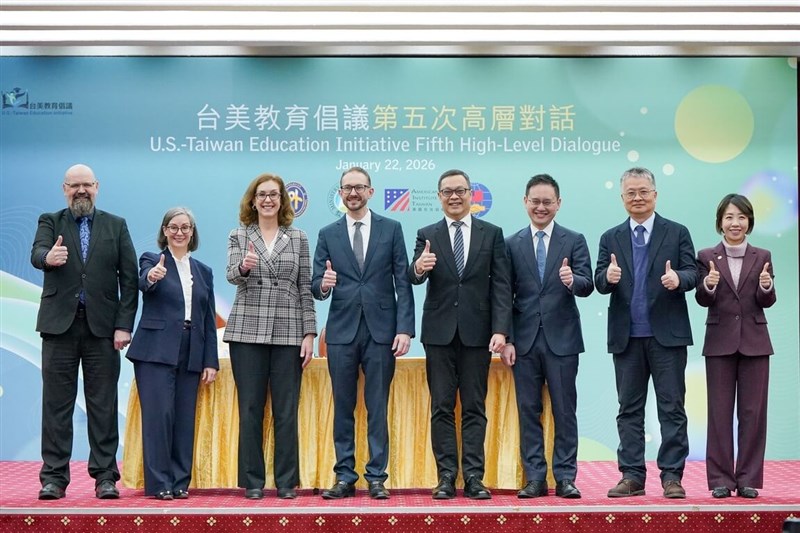
Chen said the two sides will work together to build bilateral talent cultivation frameworks, strengthening Mandarin and cross-cultural education, improving English education in line with Taiwan's bilingual policy, and expanding platforms for U.S.-Taiwan educational cooperation.
"Recognizing the rapid advancement of AI, we are particularly excited about working with our U.S. partners to expand AI applications in Mandarin language teaching and to collaborate on the development and deployment of trustworthy Traditional Chinese corpora in large language models," Chen said.
According to Chen, such efforts will not only contribute to global language technology standards but also help ensure that Mandarin learning worldwide remains free from authoritarian censorship and control.
Meanwhile, Larson said when states and communities invest in language learning, cultural understanding and educational collaboration, "they create durable ties that continue to grow over time, while generating tangible opportunities for learners and institutions."
Thursday's dialogue marked the first U.S.-Taiwan Education Initiative meeting during President Donald Trump's second term, following its launch in late 2020 during his first term.
The meeting took place about one week after Taipei and Washington reached a tentative consensus on tariffs imposed by the U.S., under which Taiwanese companies are expected to invest at least US$250 billion in the U.S., primarily in the semiconductor industry.
-
Society
2 detained in alleged hidden camera case at Dr. Shine cosmetic clinic chain
05/09/2026 10:02 PM -
Society
Taiwan's first 3-in-1 home test for COVID, flu to hit pharmacies by late May
05/09/2026 09:47 PM -
Society
Taiwan inaugurates Danjiang Bridge, showcases engineering ambition
05/09/2026 09:31 PM -
Politics
New defense bill threatens payment deadline for U.S. HIMARS: President
05/09/2026 07:22 PM -
Society
Owner faces NT$4,500 fine after pet snake escape on Taipei MRT
05/09/2026 06:31 PM