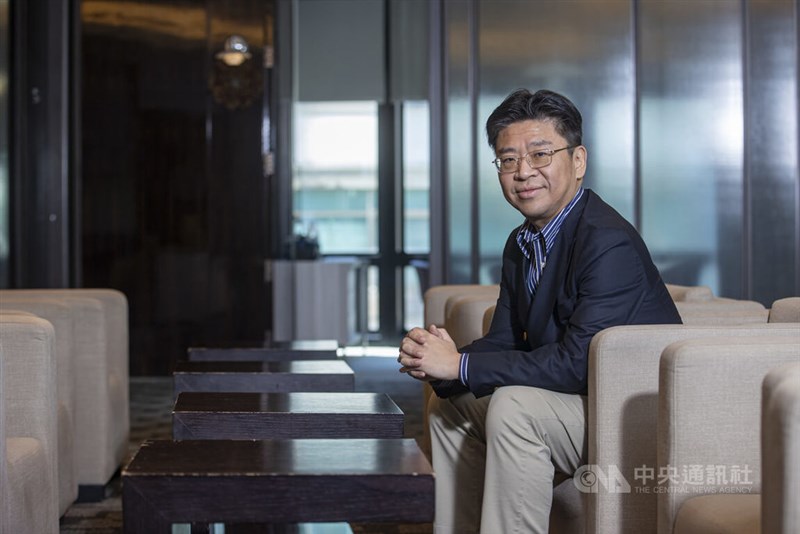
Taipei, Feb. 13 (CNA) An economist said Friday that the Agreement on Reciprocal Trade (ART) signed between Taiwan and the United States Thursday (U.S. time) marks the formal inclusion of Taiwan into the U.S. high-tech security supply chain.
In a Facebook post, Li Chen-yu (李鎮宇), chief economist at TS Financial Holding Co., said one of the most important aspects of the ART is that Taiwanese semiconductors and related tech products will be granted the Most-Favorable-Nation (MFN) treatment under Section 232 of the Trade Expansion Act.
Li said semiconductors and information and communications products accounted for about 76 percent of Taiwan's exports to the U.S. market, adding that MFN status indicated Washington had formally included Taipei in its national security and industrial security framework.
Under the ART, U.S. tariffs on Taiwanese goods have been capped at 15 percent, down from 20 percent, putting Taiwan on an equal footing with Japan, South Korea, and the European Union.
• Taiwan signs trade deal with U.S. to cut tariffs, open markets
Meanwhile, 2,072 Taiwanese items will also be exempt from reciprocal tariffs and will be subject only to the MFN tariff rate when imported into the U.S.
Li said the talks were "very successful" as Taiwan will see tariffs falling to 15 percent from 20 percent, as well as the 32 percent for certain items announced by U.S. President Donald Trump in April 2025.
According to the Cabinet, tariffs on Taiwanese imports to the U.S. market will be reduced by 12.33 percent on average. Li said the current average tariff stands at almost 36 percent, and the cut is expected to boost Taiwanese exporters' competitive edge.
More importantly, Li said, Taiwan has secured a status as a strategic partner of the U.S. "The issues of national security, industry, and geopolitics are more critical than the tariff numbers."
Under the deal, Li said Taiwanese auto parts and aviation components, in addition to semiconductors, have secured the MFN status, while Washington has agreed to provide assistance for Taiwanese investors to obtain land, wafer and electricity when they set up production sites there.
These terms indicated "the U.S. has upgraded its ties with Taiwan from a trading partner to a strategic partner. Taiwan has become a member of the U.S. security system in stead of just an exporter," Li said.
In addition, Taiwan has agreed to grant preferential market access for U.S. agricultural exports, including ground beef. However, sensitive beef items -- including skulls, brains, eyes, and spinal cords from cattle aged 31 months and older -- remain prohibited, along with mechanically separated beef and other specified organs.
• Taiwan to allow U.S. ground beef; U.S. lifts tariffs on 261 farm exports
Li said Taiwan did not make any concessions regarding products such as rice, chicken and garlic, noting that the ban on sensitive beef products remains and genetically modified products will still be kept off school campuses.
To reduce a trade surplus with the U.S., Taiwan has promised in the trade deal to make purchases valued at almost US$85 billion by 2029, including US$44.4 billion in LNG and crude oil, US$15.2 billion in aircraft and engines, and US$25.2 billion in equipment used in electricity grid networks, power generators and steel manufacturing.
Chung-Hua Institution for Economic Research President Lien Hsien-ming (連賢明) said energy was a major part of the purchases, which is expected to help Taiwan enhance energy security and diversify its energy imports.
Lien said Taiwan imports 96 percent of its energy, with the U.S. now accounting for 10-15 percent of the total imports. Through mass purchases, the U.S. is estimated to eventually make up 30-35 percent of Taiwan's total imports, he said.
Lien added that the US$15.2 billion in aircraft and engine purchases indicated Taiwan could buy an average of about 12 airplanes per year and that, for Taiwan's four international carriers -- China Airlines, EVA Airways, Starlux Airlines and Tigerair Taiwan -- which are keen to expand their fleets, the purchases would not become a significant financial burden.
The trade deal is pending approval from the Legislative Yuan before taking effect.
-
Politics
Candlelight vigil held in Taipei to commemorate Tiananmen crackdown
06/04/2026 09:18 PM -
Society
Heavy rain continues Friday as tropical system nears Taiwan
06/04/2026 09:05 PM -
Society
Taipei Zoo to receive two red pandas on Saturday: Officials
06/04/2026 08:38 PM -
Politics
Gov't pledges new fund to enhance trade with the Czech Republic
06/04/2026 07:57 PM -
Science & Tech
AI boom pushes server makers beyond traditional assembly role: Wistron
06/04/2026 07:37 PM