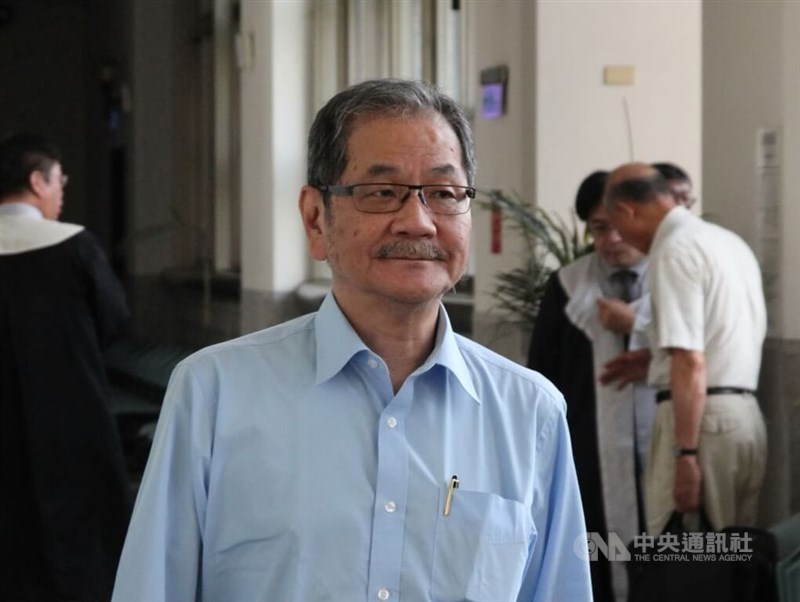
Taipei, June 3 (CNA) Court officers were unable to bring in former Democratic Progressive Party (DPP) Secretary-General and ex-Taiwan Sugar Corp. (Taisugar) Chairman Wu Nai-jen (吳乃仁) for questioning over a Taisugar land sale scandal dating back to the early 2000s after Taipei District Court issued a warrant Wednesday.
The court officers were unable to locate Wu, and his whereabouts are currently unknown.
Wu, 78, was convicted of breach of trust in connection with the land sale by Taichung District Court in 2013 and was later ordered in a civil case to pay approximately NT$170 million (US$5.7 million) in damages to the state-owned company.
The court has previously requested that the Taipei District Court seize Wu's assets as his household registration is in Taipei.
Wu was convicted of changing Taisugar's "lease-only" policy to allow the sale of state-owned land to Chun Lung Co., a company that supported former DPP lawmaker Hung Chi-chang (洪奇昌). The court found that the transaction caused losses of more than NT$200 million to the company.
In 2012, Taisugar filed a lawsuit asking Wu to repay NT$120 million in losses relating to the land deal.
Following a retrial, Taiwan High Court sentenced Wu to 18 months in prison though this was reduced on appeal to nine months, which he served in 2014.
In a concurrent civil case, Wu and other defendants were ordered to pay NT$110 million in damages in 2015.
In 2020, Taichung District Court issued a final judgment determining that the debt owed to Taisugar with accrued interest came to NT$170 million.
In early 2025, Taiwan People's Party lawmaker Huang Kuo-chang (黃國昌) raised the issue in the Legislature asking why no further action had been taken to enforce the court ruling.
Prosecutors revealed in 2024 that the Taichung court, which is overseeing enforcement of the judgment, asked Taipei District Court to assist in seizing Wu's assets. After that, NT$17 million in assets were seized, allowing Taisugar to recover NT$7 million of the outstanding debt.
The Taichung court has also requested that the Taipei court execute an arrest warrant to compel Wu's appearance at enforcement proceedings. However, authorities failed to find him in 2024, 2025 or when visiting his registered address Wednesday.
Legal experts said such warrants are a procedural measure used to ensure compliance with court-ordered enforcement, particularly when a debtor is suspected of evading proceedings.
Under Taiwan's Compulsory Enforcement Act, a court can order a debtor's arrest if the person fails to appear without a legitimate reason or is deemed likely to evade enforcement. However, such arrest warrants are only valid for a limited period of time.
- Society
Taiwan headline news
10/03/2026 10:22 AM - Sports
'Hao-yu like that?' A deep dive into Lee's rookie MLB season
10/03/2026 10:00 AM - Sports
Taiwan boosts medal haul in multiple events at Asian Games on Friday
10/02/2026 08:55 PM - Society
Workers at Taiwan snack maker Kuai Kuai extend strike over relocation
10/02/2026 08:45 PM - Business
Chain businesses association seeks more foreign workers
10/02/2026 08:04 PM