AI shifts semiconductor competition toward system integration: Experts
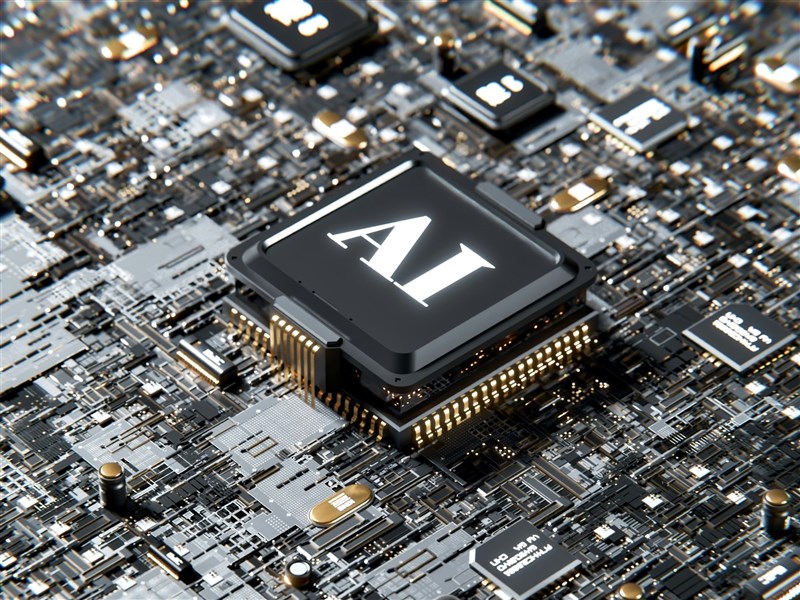
Taipei, Aug. 3 (CNA) Artificial intelligence is reshaping competition in the semiconductor industry, shifting the focus beyond transistor scaling to advanced packaging, materials and system-level integration, experts said at a Taiwan-Japan semiconductor forum on Monday.
Taiwan Semiconductor Research Institute (TSRI) Deputy Director General Tsai Hann-huei (蔡瀚輝) said advances in process-node technology were slowing while AI-driven demand for bandwidth continued to surge.
"Leadership will come from system-level co-optimization, not transistor scaling alone," Tsai said at the 2026 Taiwan-Japan Semiconductor Technology Forum.
Future semiconductor systems will increasingly need to combine computing, sensing, power management and connectivity for applications such as automobiles, humanoid robots, AI glasses and drones, according to his presentation.
Tsai said TSRI provides a die-level heterogeneous integration and verification platform to help designers develop next-generation chip systems.
However, progress in advanced packaging and silicon photonics faces challenges involving the interaction of heat, electricity, optics and mechanical stress, as well as large-scale testing and coordination across the semiconductor ecosystem, he said.
Overcoming those barriers will require partnerships among industry, academia and research institutions, Tsai added.
According to his presentation, TSRI is already collaborating with Japanese partners on three-dimensional heterogeneous integration, advanced packaging, quantum computing, power devices and materials analysis.
Meanwhile, Dinos Huang (黃敏龍), senior director of corporate research and development at ASE Technology Holding Co., said the rapid expansion of AI models and applications was shifting pressure onto the physical infrastructure needed to run them.
"Hardware is becoming the new bottleneck," Huang said.
AI and high-performance computing systems require greater bandwidth and computing power while posing growing challenges in power consumption, latency, cooling and structural stability, he said.
Meeting those demands will require advances in packaging equipment, low-loss and heat-resistant materials, heterogeneous integration, inspection, testing and smart manufacturing, Huang added.
ASE is expanding from wafer-level to panel-level packaging, which offers a larger usable area and can improve material utilization as AI processors grow in size and complexity, he said.
The industry is also moving toward optical interconnects to replace electrical transmission between systems and chips, enabling higher speeds while reducing energy consumption.
The forum, organized by the Taiwan-Japan Semiconductor Technology Association, focused on opportunities for bilateral semiconductor collaboration in the AI era.
- Politics
Taipei Mayor Chiang agrees to at least one televised debate with Shen
10/13/2026 08:45 PM - Society
Animal groups renew push for referendum on full ban of wild boar snares
10/13/2026 08:36 PM - Science & Tech
NTHU study finds plant compound may help treat brain injuries
10/13/2026 07:50 PM - Business
Economists see AI boom sustaining Taiwan growth, urge diversification
10/13/2026 07:25 PM - Society
Northern Taiwan to see heavier rain Thursday before weather stabilizes
10/13/2026 07:04 PM