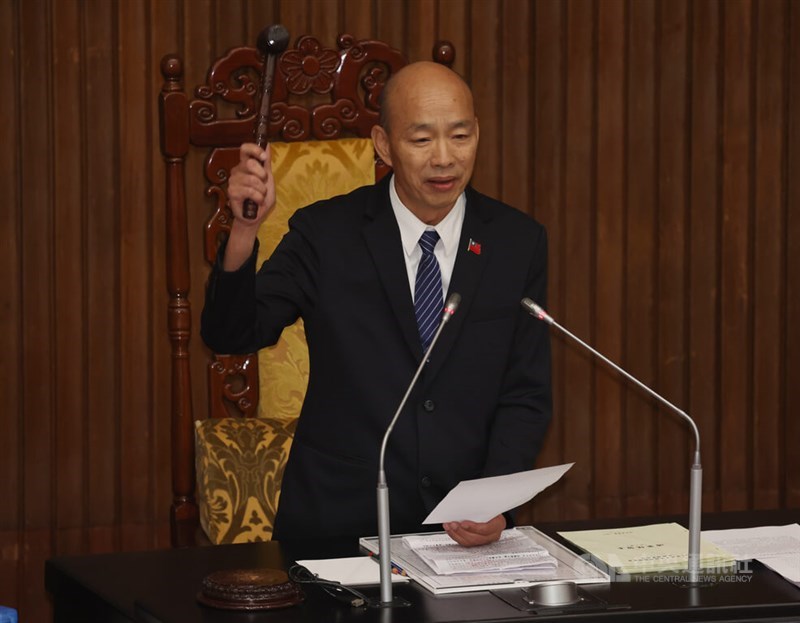
Taipei, Aug. 14 (CNA) Taiwan's Legislature on Friday approved three of four referendum proposals put forward by the opposition Kuomintang (KMT) and Taiwan People's Party (TPP), paving the way for the referendums to potentially be held alongside the Nov. 28 local elections.
The three approved proposals concern the use of traffic fines, the introduction of judicial caning as a criminal punishment, and the abolition of Taiwan's non-nuclear energy policy. A TPP proposal to legalize euthanasia failed to pass.
The traffic-fine proposal, initiated by the TPP legislative caucus, asks: "Do you agree that the government should use all revenue from traffic violation fines to improve road traffic safety and subsidize public transportation, rather than simply increasing the use of automated traffic enforcement equipment?" It passed 59-51, with 110 lawmakers present.
The KMT's proposal to introduce caning asks: "Do you agree that the government should establish a special criminal punishment system -- caning -- to be imposed by courts and carried out in accordance with the law for sexual assault, child abuse, high-value fraud and aggravated fraud involving multiple forms of fraud, in order to deter crime?" It passed 52-51.
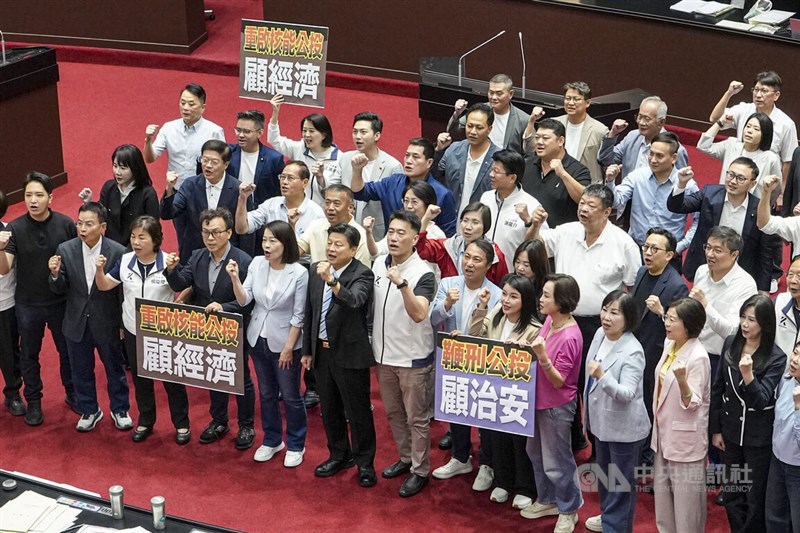
The KMT also proposed a referendum on abolishing Taiwan's non-nuclear energy policy. The question asks: "Do you agree that the government should abolish the 'nuclear-free homeland' energy policy to ensure public health, stable electricity supplies and affordable power prices, strengthen national defense resilience and support the development of artificial intelligence (AI) industries?" The proposal passed 59-51 with support from the TPP.
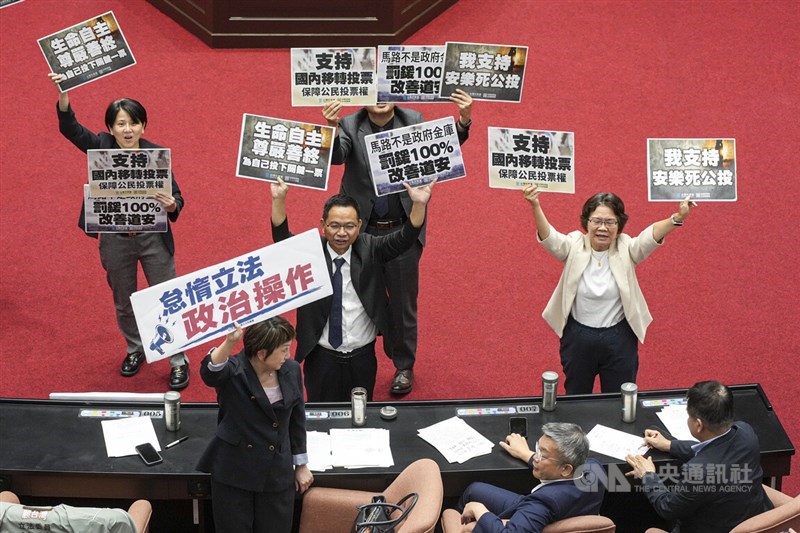
The fourth proposal, initiated by the TPP, sought to legalize euthanasia. Its question asks whether the government should legalize euthanasia under a regulatory framework for people suffering from incurable diseases and unbearable pain, with the aim of protecting their right to make decisions about their own lives and ensuring a dignified death. It failed 7-51 after KMT lawmakers abstained.
Under the Referendum Act, the three approved proposals must be sent to the Central Election Commission (CEC) within 10 days. The CEC must announce the referendum questions at least 90 days before polling day, meaning the proposals can be included in the Nov. 28 nine-in-one elections if the required procedures are completed in time.
In response, CEC Chairman Michael You (游盈隆) said the commission would review the proposals as soon as they are received. However, he said it was impossible to predict how many proposals would ultimately qualify, as the CEC makes decisions collectively and its current membership is particularly diverse.
If all three proposals are approved and held alongside the Nov. 28 elections, election-related spending is estimated to increase by about NT$1.4 billion (US$44.5 million), You said.
He estimated that adding one referendum would cost nearly NT$1.1 billion, while two would cost about NT$1.2 billion to NT$1.3 billion. Holding three would raise the additional cost to about NT$1.4 billion.
The Democratic Progressive Party (DPP), which controls the government but is in the legislative minority, criticized the KMT and TPP for seeking to use referendums instead of legislation.
DPP caucus chief Chuang Jui-hsiung (莊瑞雄) said the opposition parties hold a legislative majority but have failed to legislate on the issues themselves, instead seeking to put them directly to voters.
- Politics
Alaska LNG deal may boost Taiwan's energy resilience: U.S. scholar
10/15/2026 12:12 PM - Business
Taiwan shares plunge over 1,500 points Thursday morning
10/15/2026 11:22 AM - Business
U.S. dollar up sharply in Taipei trading
10/15/2026 10:12 AM - Society
Taiwan headline news
10/15/2026 10:06 AM - Business
Taiwan shares open lower
10/15/2026 09:06 AM