FEATURE/Taiwan seeking way to coexist with bears as they come closer to humans
By Tyson Lu, Wang Shu-fen, Lee Hsien-feng, Chao Li-yen and Elizabeth Hsu, CNA staff reporters and writer
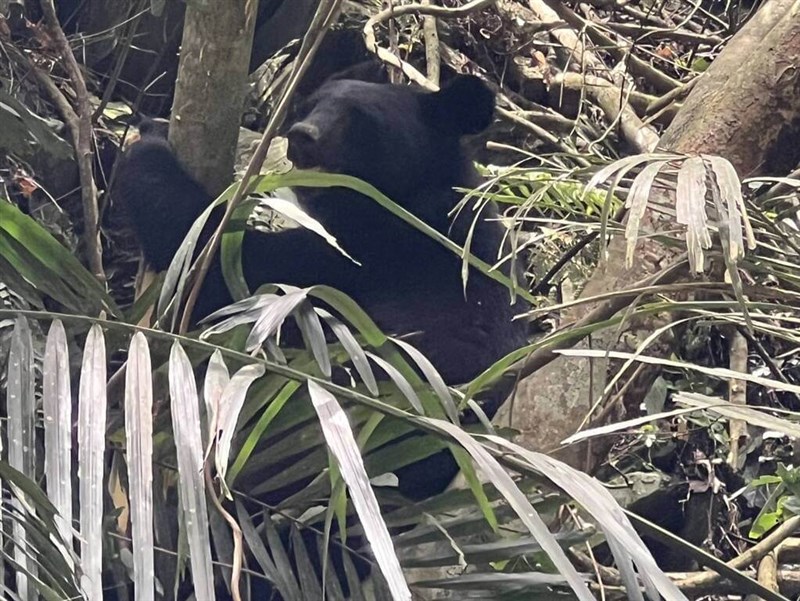
Formosan black bear encounters with humans are on the rise in Taiwan as the animal's population expands to habitats at lower elevations, leaving public agencies scrambling to figure out how ways to prevent such encounters from becoming more frequent.
To be fair, the problem is far less serious than in Japan, where 13 people died and 225 were injured in bear attacks in 2025.
But the uptick in reported bear encounters in the past few years, from an average of just over two per year from 2014 to 2022 to over 11 per year from 2023 to 2025 and five in the first four months of 2026, is concerning enough that the government is taking notice.
Lin Hwa-ching (林華慶), director-general of the Forestry and Nature Conservation Agency (FANCA), said the agency has been aware of the issue for years and has tried to address it with measures such as reward programs for voluntary reporting and patrol monitoring.
Now, however, more steps are needed to achieve the goal of "safe coexistence" between people and the endangered endemic animal, the largest native terrestrial carnivorous mammal in Taiwan, Lin said, and what to do and how to handle captured bears remain challenges.
Trend lines
Just getting a handle on the size of Taiwan's Formosan black bear population has been difficult, but there is evidence suggesting that the number of bears is on the rise.
According to an estimate by FANCA in March based on nationwide monitoring data, with images of the same bear seen more than once removed, there are roughly 1,200 Formosan black bears in Taiwan.
That is far higher than the 200-600 FANCA estimated existed in the wild about 10 years ago.
Also, from 2011 to 2017, black bears were recorded in 17 townships across 11 cities and counties nationwide, compared to sightings in 27 townships between 2018 and 2025, again suggesting a rising population, the agency said.
That is significant because the trend may be responsible for the increasing overlap between bear and human activity.
Moving into foothills
Pinpointing a specific reason for the growing number of encounters with bears at lower elevations is difficult, wildlife conservationist Chiang Po-jen (姜博仁), founder of the Formosan Wild Sound Conservation Science Center, said.
The number of bears in mountain areas has not increased to a point of saturation, meaning there should not be too many bears for too little food, said Chiang, who holds a doctorate in wildlife studies from Virginia Tech.

In theory, he said, there may have been a shortage of the bears' favorite food -- acorns -- in the mountains in recent autumns that sent them wandering toward human settlements.
More likely, Chiang said, is that young bears are naturally dispersing outward as the bear population in the mountains increases, even approaching areas near Provincial Highway 9.
"Black bears are highly mobile and can travel more than 10 kilometers in a single day," Chiang said, and "once they start moving, bears can quickly reach settlements and work sheds."
According to FANCA, sighting data shows that from 2018 to 2025, there were more sightings of bears both above and below 1,200 meters, indicating that dispersal patterns rather than food shortages may be behind the growing number of encounters.
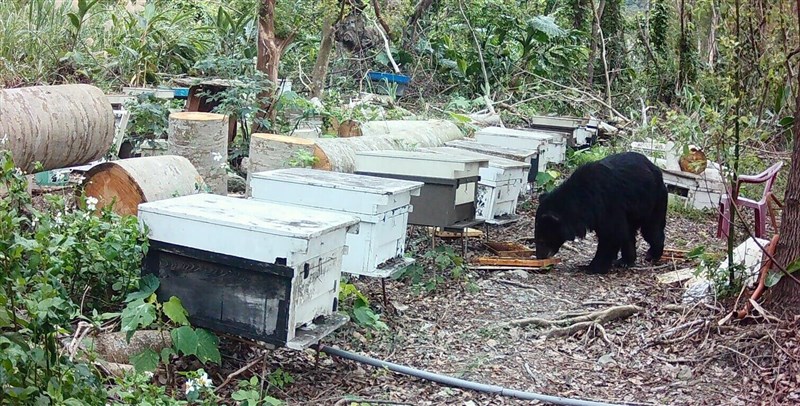
And once bears discover that workers' sheds, chicken coops, apiaries, and settlements provide food sources, they will return because "bears have very strong memories," Chiang said.
From 'cute' animal to 'pest'
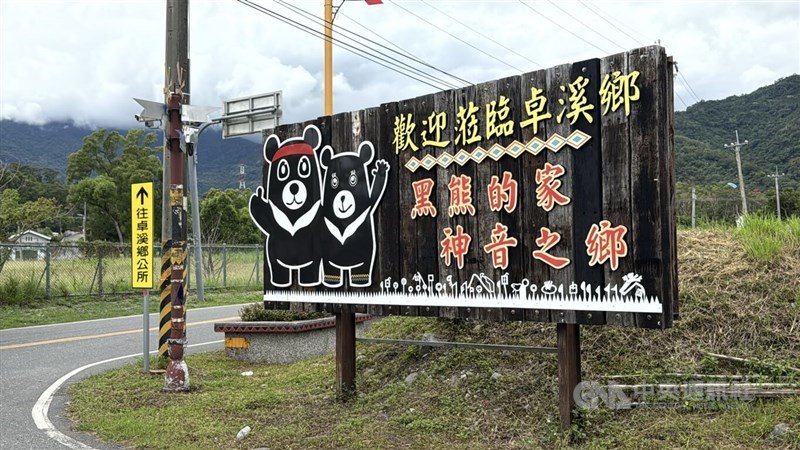
Though the Formosan black bear is protected by the law and seen by most Taiwanese as a "cute" animal and a national symbol, its presence in human settlements below 1,200 meters have some labeling them "pests."
When a cub nicknamed "Mei-zai" appeared on the Nanan Waterfall Trail in Zhuoxi Township, Hualien County, in 2018, it captured the public's heart and sparked a nationwide conservation movement that year.
In April 2025, however, a Formosan black bear, which was later identified as "BB02," was shot dead in the township by forest rangers after devouring chickens and preying on dogs and appearing to threaten people.
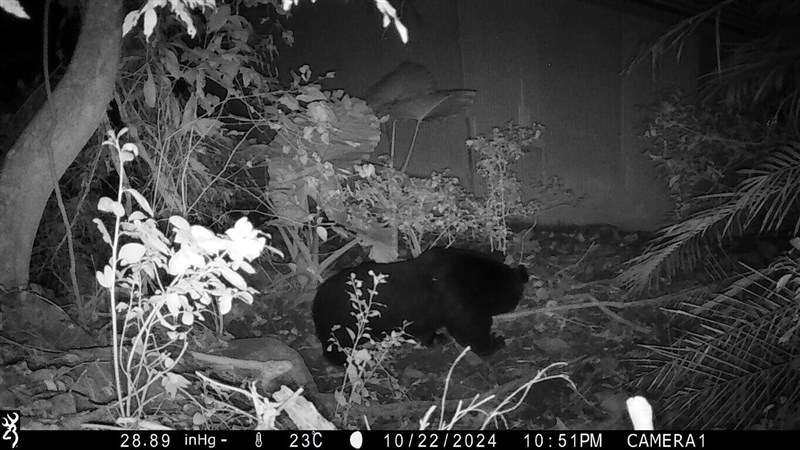
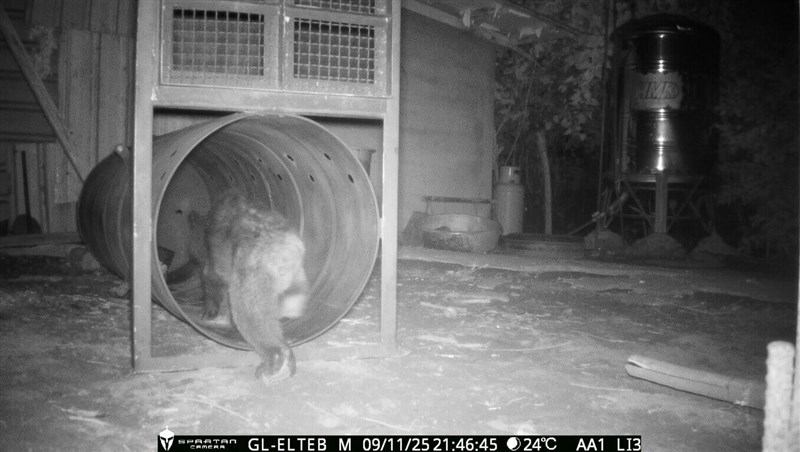
Also last year, a male Formosan black bear called "Alyman Siken" repeatedly raided chicken coops in the township, preying on large numbers of chickens.
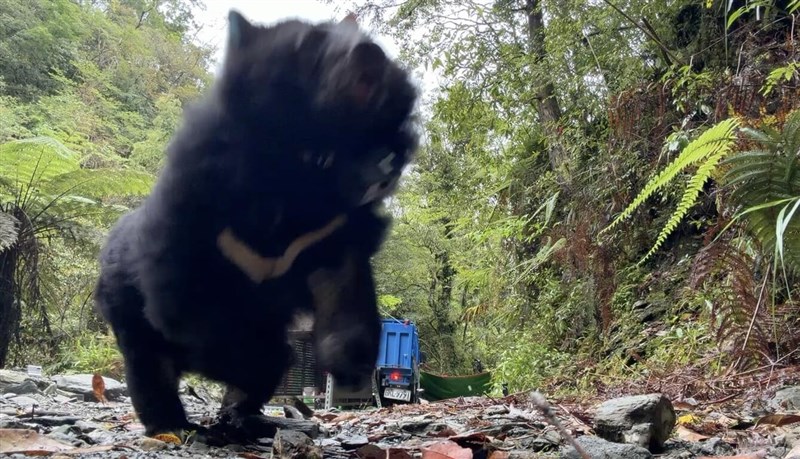
Despite being released back into the wild twice after its capture and subjected to deterrence measures, the bear continued to return intermittently to Indigenous communities to steal chickens.
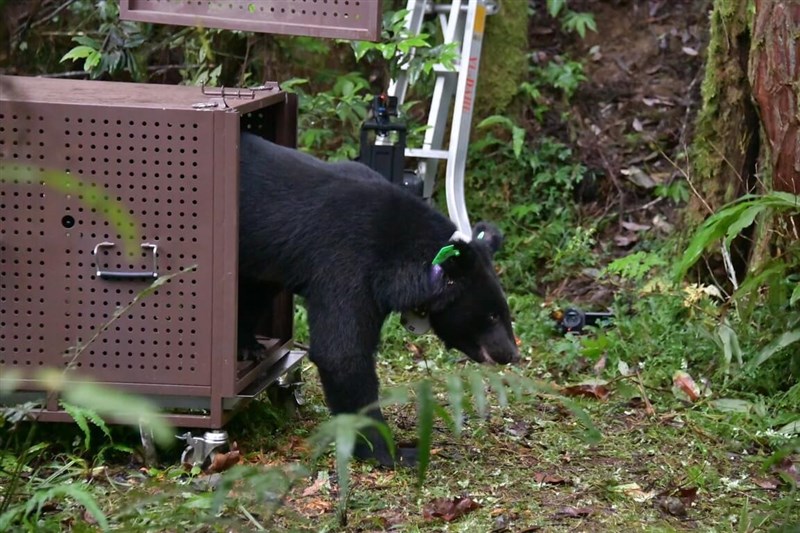
Alyman was again captured in January, when FANCA decided not to release it back into the wild and instead place it under the long-term care of the Taipei Zoo.
Dealing with bear incursions
From "Mei-zai" to "Aliman Siken" and "BB02," the shrinking distance between humans and bears was a reminder of the need to start taking the issue of "human-bear coexistence" seriously, which is challenging when decisions must be made between "wildlife conservation" and "human safety."
The current management of black bear incursions relies mainly on deterrence and habitat/environmental management, FANCA said. Bears are captured only when necessary, followed by a professional assessment and negative reinforcement before any release back into the wild.
FANCA's Lin said that since 2022, the agency has been promoting the "Taiwan Black Bear Ecosystem Service Payment Pilot Program," which uses an "ecological salary" model to encourage community participation in black bear conservation.
Under the program, financial incentives are provided to people who report incidents such as accidental captures or bear intrusions, and those who trap bears accidentally and report them are no longer prosecuted.
There are also incentives available to help protect potential black bear habitats, implement monitoring measures, remove attractants such as food waste, clear unidentified traps, and promote the use of improved trapping devices.
To date, 50 community black bear patrol teams have been established across Taiwan under the program, Lin said.
But Taiwan lacks clear guidelines on standards and protocols for releasing captured black bears into the wild, unlike in Europe, the United States, and Japan, FANCA Hualien Branch head Huang Chun-tse (黃群策) acknowledged.
Chiang, the conservationist, argued that more is needed, saying "only when both humans and bears are safe, and both can share and use the same space, can we truly call it human-bear coexistence."
If chicken farms or apiaries cannot be relocated, protective measures such as electric fencing must be properly installed, he suggested, and that "if a bear intrudes, it should be driven away; if deterrence is ineffective, it should be captured."
Chiang said the use of rubber bullets is recommended when soft deterrence measures fail. Also, whether or not to release the animal back to the wild depends on the frequency of their reappearance in human settlements, he said.
Lin Liang-kung (林良恭), a distinguished professor at Tunghai University's Center for Ecology and Environmental Studies, said, however, that it was challenging to stop and prevent bear incursions.

In the next five years, black bears could move to areas below 1,000 meters in elevation and could enter farms or livestock ranches and solutions needed to be established now.
"Issues such as whether black bears should be euthanized, the establishment of warning thresholds, and reporting mechanisms all require comprehensive supporting measures and effective implementation," he said.
Enditem/ls
![Made in Taiwan, sovereign in Europe: France's different chip strategy]() Made in Taiwan, sovereign in Europe: France's different chip strategyDuring a May visit to a high-performance computing center operated by the French Alternative Energies and Atomic Energy Commission (CEA) in Bruyères-le-Châtel, south of Paris, French President Emmanuel Macron was photographed holding a sample of Rhea1.09/05/2026 05:27 PM
Made in Taiwan, sovereign in Europe: France's different chip strategyDuring a May visit to a high-performance computing center operated by the French Alternative Energies and Atomic Energy Commission (CEA) in Bruyères-le-Châtel, south of Paris, French President Emmanuel Macron was photographed holding a sample of Rhea1.09/05/2026 05:27 PM![Beyond labels: How immigrant families reshape NCCU's Southeast Asia department]() Beyond labels: How immigrant families reshape NCCU's Southeast Asia department[Editor's Note: This is part two of a two-part series on a university department in Taiwan dedicated to Southeast Asian languages and regional studies, and the people behind it.]08/12/2026 12:12 PM
Beyond labels: How immigrant families reshape NCCU's Southeast Asia department[Editor's Note: This is part two of a two-part series on a university department in Taiwan dedicated to Southeast Asian languages and regional studies, and the people behind it.]08/12/2026 12:12 PM![Beyond language: Inside a Taiwan university's Southeast Asian department]() Beyond language: Inside a Taiwan university's Southeast Asian department[Editor's Note: This is part one of a two-part series about a university department in Taiwan dedicated to Southeast Asian languages and regional studies, and the people behind it.]08/12/2026 12:10 PM
Beyond language: Inside a Taiwan university's Southeast Asian department[Editor's Note: This is part one of a two-part series about a university department in Taiwan dedicated to Southeast Asian languages and regional studies, and the people behind it.]08/12/2026 12:10 PM



- Politics
Taiwan's hoops team crushes Qatar, advances to Asian Games quarterfinals
09/13/2026 02:55 PM - Society
Husband, friend arrested in non-fatal shooting of Chinese spouse
09/13/2026 02:34 PM - Society
Man arrested in airport after holding airline intern at knifepoint
09/13/2026 02:24 PM - Politics
European Parliament vice president praises Hsiao as 'role model' for women
09/13/2026 01:08 PM - Society
Taiwan headline news
09/13/2026 11:25 AM