FEATURE/Indonesian caregiver's 'double duties' at lunchbox shop raise rights concerns

By Mira Luxita and Sunny Lai, CNA staff reporters
When Indonesian caregiver Susi (a pseudonym) first came to Taiwan in April 2024, she hoped the job would allow her to support her child and ailing mother back home.
However, what awaited her in Taiwan was over a year of exhaustion and isolation, in circumstances human rights advocates say raise serious concerns and could amount to forced labor.
'Double duties'
Hired as a live-in caregiver for her employer's paralyzed father, Susi said she was soon ordered to take on "double duties," shuttling between bedside care and work at the family's lunchbox shop in the central Taiwan county of Changhua.
Such out-of-scope duties are illegal in Taiwan, where employers are barred from assigning migrant workers tasks not covered by their work permits.
At the direction of "Ama," the employer's mother, Susi said she was made to cook and clean for long hours at the shop and, despite being Muslim, to handle pork.
Typically working from 6 a.m. to midnight, with only a brief rest in the afternoon, Susi said caring the employer's elderly father and handling demanding duties at the shop left her physically drained.
The 25-year-old caregiver also said she endured constant mental stress and was "afraid" of Ama, whom she described as "harsh" and prone to shouting.
She was paid NT$20,000 (US$626) a month for caregiving and, in some months, received an additional NT$10,000 for work at the lunchbox shop.
Cut off, exhausted and afraid
For about 20 months, Susi said she lived in a shopfront home, with the lunchbox shop in the front and the employer's parents in the back, and was frequently barred from leaving the premises and forbidden from using her phone at work.
Asked if she had tried to contact anyone secretly, she said it was "very difficult" because she was "monitored and not allowed out."
Susi said she had reached out to her labor brokerage, but was told it could do nothing and was discouraged from calling Taiwan's 1955 labor hotline.
She recalled what her broker told her: "If I reported it, the employer would twist the facts, and it would become complicated for me."
A turning point came in mid-November 2025, when she was briefly allowed to go out to buy food and met an activist from Indonesian workers' solidarity group GANAS Community.
Encouraged not to be afraid, Susi filed a complaint with the 1955 hotline on Nov. 13.
Around 10 days later, Changhua County labor officials visited the shop and moved her to a government shelter.
She remained there until February this year, when she was transferred to a new employer through a new labor brokerage.
Response from local government
Changhua's Labor Affairs Department told CNA the employer had been fined for violating the Employment Service Act, but declined to disclose the amount.
According to Taiwanese law, employers who force foreign workers to perform tasks outside their work contracts face fines of NT$30,000 to NT$150,000.
If the employer commits a repeat offense with a future hire, authorities will ask the Ministry of Labor (MOL) to revoke the employer's recruitment or employment permits, the department noted.
On the other alleged abuses that could point to forced labor, including working over 16 hours a day, surveillance and confinement, the department said it did not find evidence of such conduct during its onsite inspection and interview with Susi.
If Susi wishes to pursue those allegations, "she can report them again via the 1955 hotline," it said.
As for brokerages, the department said they could face penalties if evidence shows they failed to fulfill entrusted duties or "improperly interfere with reporting mechanisms," but it did not say whether the brokerage involved in Susi's case has been investigated or penalized.
The tip of the iceberg
As of late May, MOL data showed that Taiwan had over 886,000 migrant workers.
The ministry told CNA that the number of cases involving foreigners working outside the scope of their employment permit has averaged around 350 a year over the past three years, without providing a breakdown by worker category or parties penalized.
GANAS chairperson Fajar said "there are still many cases" like Susi's, estimating that nine out of 10 Indonesian caregivers face some form of out-of-scope work, from minor tasks such as taking out trash for the employer's household to more serious cases like Susi's.
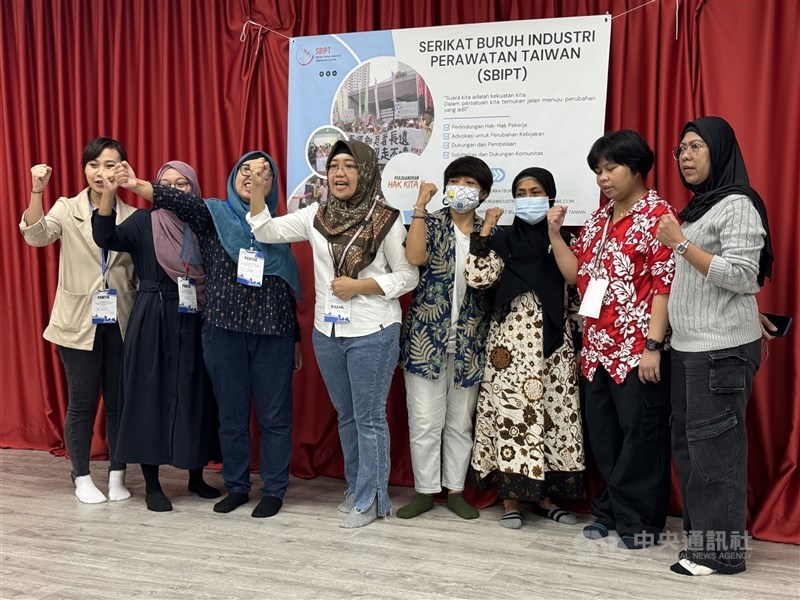
She told CNA her group handles "more than 30 cases a year" involving caregivers being made to work outside the scope of their contracts, while many others go unreported because workers are afraid or do not realize it is illegal.
Based on GANAS' casework, Fajar said about half of the cases involved caregivers being sent to work in their employers' businesses, such as factories and shops, on top of their caregiving duties, while the rest involved cleaning other households.
In the same vein, Taiwan International Workers' Association (TIWA) Chairperson Chen Hsiu-lien (陳秀蓮) said cases like Susi's are "very typical" among Taiwan's roughly 230,000 migrant caregivers.
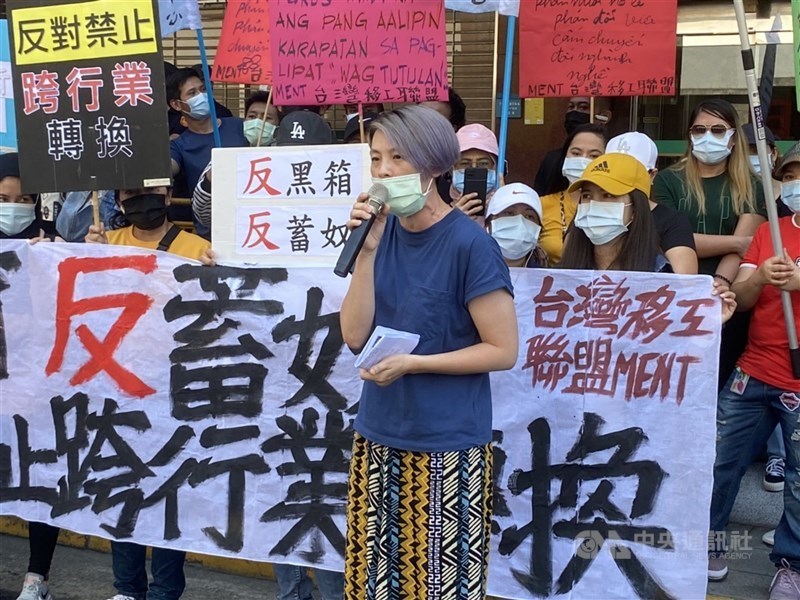
She described the situation as "the tip of the iceberg" in which only a small fraction becomes visible when a worker can no longer cope and seeks help.
Education, penalties and screening
Preventing cases like Susi's requires clearer pre-departure education by the Indonesian government so workers can recognize out-of-scope assignments as illegal, Fajar said.
Recruitment agencies in Indonesia sometimes normalize extra duties by "indoctrinating" workers that higher pay in Taiwan means they must do more, she added.
"I have not found a recruitment agency that says, 'You're a caregiver. Besides caring for the patient, don't do anything else,'" said Fajar, who has worked as a caregiver in Taiwan for 14 years.
She also argued current penalties do not deter repeat violations and called for tougher measures, including higher penalties and criminal sanctions, with possible jail terms for serious repeat offenders.
Fajar proposes screening or testing employers before they can hire caregivers, such as blacklisting those with a record of sexual violence and requiring them to pass a test on contract rules, including the ban on "double duties."
Asked whether current laws have sufficient deterrent effect on "double duties," MOL did not give a direct answer, but said it regularly conducts "legal outreach and education training" for both employers and migrant workers.
Reforms to prevent abuse
To address what she called a "major problem" rooted in the private labor brokerage system, Chen said TIWA advocates shifting job matching to the government and moving toward direct hiring.
"Only then will workers' complaints no longer be sidelined," she noted.
A MOL survey conducted in June 2024 found that while 29.4 percent of household employers were aware of the government-run direct-hiring service center, only 10.5 percent had ever used it to hire a foreign caregiver.
Chen also urged stronger education and training for local labor authorities and 1955 operators to recognize red flags such as restrictions on movement, and to proactively assess forced-labor risks rather than waiting for workers to "prove" it with recordings or other hard-to-obtain evidence.
Citing the International Labour Organization's forced labor indicators, Chen said caregiving cases often show multiple red flags, including excessive overtime, abusive working and living conditions and restrictions on movement -- all of which appeared in Susi's case.
Chen said Taiwan often promotes its human rights record internationally, but argued there is a "huge gap" when it comes to protecting migrant workers.
In practice, the government "does not want to deal with it," she added.
Enditem/AW
![DPP at 40: Founders reflect on risk, rise, reckoning]() DPP at 40: Founders reflect on risk, rise, reckoningFour decades after the Democratic Progressive Party (DPP) was founded under martial law, its pioneers recall the risks they took, the democratic changes they helped bring about and the challenges facing the party today.09/28/2026 11:10 AM
DPP at 40: Founders reflect on risk, rise, reckoningFour decades after the Democratic Progressive Party (DPP) was founded under martial law, its pioneers recall the risks they took, the democratic changes they helped bring about and the challenges facing the party today.09/28/2026 11:10 AM!['Umpire strikes back': Taiwanese ump sets U.S. pro baseball milestone]() 'Umpire strikes back': Taiwanese ump sets U.S. pro baseball milestoneIn her younger days, Sophiyah Liu (劉柏君) was a spiritual medium, serving as a bridge between the mortal plane and that of the unknown.09/18/2026 04:44 PM
'Umpire strikes back': Taiwanese ump sets U.S. pro baseball milestoneIn her younger days, Sophiyah Liu (劉柏君) was a spiritual medium, serving as a bridge between the mortal plane and that of the unknown.09/18/2026 04:44 PM![Made in Taiwan, sovereign in Europe: France's different chip strategy]() Made in Taiwan, sovereign in Europe: France's different chip strategyDuring a May visit to a high-performance computing center operated by the French Alternative Energies and Atomic Energy Commission (CEA) in Bruyères-le-Châtel, south of Paris, French President Emmanuel Macron was photographed holding a sample of Rhea1.09/05/2026 05:27 PM
Made in Taiwan, sovereign in Europe: France's different chip strategyDuring a May visit to a high-performance computing center operated by the French Alternative Energies and Atomic Energy Commission (CEA) in Bruyères-le-Châtel, south of Paris, French President Emmanuel Macron was photographed holding a sample of Rhea1.09/05/2026 05:27 PM


- Business
Amazon taking part in Taiwan PCB maker's private placement
09/29/2026 09:06 PM - Sports
Taiwan snatches 2 more silvers in shooting, Kurash at Asian Games
09/29/2026 08:42 PM - Business
Taiwan economic indicators stay strong for 9th straight month: NDC
09/29/2026 07:44 PM - Politics
AIDC, Corrections Agency hold counter-drone drill
09/29/2026 07:15 PM - Politics
KMT, TPP legislators reject all 27 of Lai's Control Yuan nominees
09/29/2026 06:55 PM