INTERVIEW/Patient care, perseverance, bold ideas key to cancer breakthroughs: Tang Prize laureates
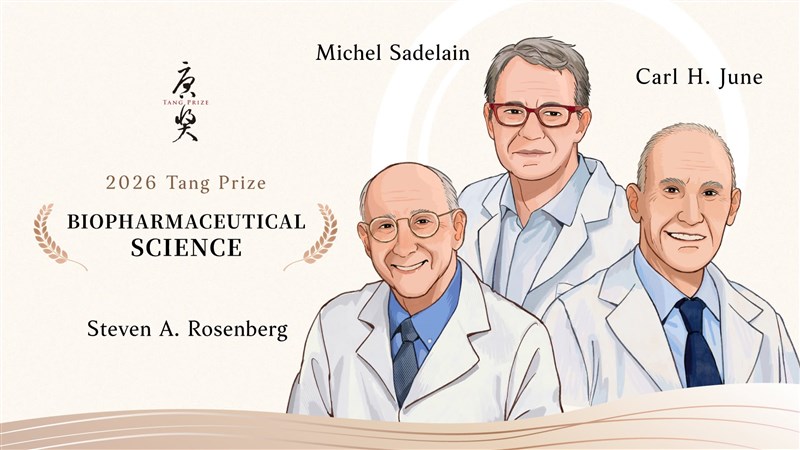
Taipei, June 16 (CNA) Perseverance, unconventional thinking, and a strong commitment to patients were among the forces behind decades of work that helped turn immune cells into cancer-fighting medicine, said the three 2026 Tang Prize laureates in Biopharmaceutical Science, who helped revolutionize cancer treatment.
Steven A. Rosenberg, Michel Sadelain, and Carl H. June were named winners of this year's prize on Tuesday for the discovery and development of tumor-infiltrating lymphocyte (TIL) and chimeric antigen receptor T-cell (CAR-T) therapies, which harness patients' own immune cells to fight cancer.
The Tang Prize Selection Committee said the three laureates' work in cancer immunotherapies has "revolutionized" treatment for blood cancers and solid tumors by helping transform the patient's immune system into "a powerful medicine."
In separate interviews with CNA in the United States before the official announcement, the three awardees reflected on the ideas, setbacks, and persistence behind their achievements.
Rosenberg: Learning from patients
Rosenberg, who heads the U.S. National Cancer Institute's Surgery Branch, said he began his work more than four decades ago, at a time when "there was no such thing as immunotherapy."
Cancer treatment then relied mainly on surgery, radiation therapy, and chemotherapy, he said, but many patients still died after their tumors spread.
"I realized we needed another way to treat cancer," he said.
One case in particular shaped his thinking: a kidney transplant recipient developed cancer from the donated organ, but surprisingly, the cancer regressed after the patient stopped taking immunosuppressive drugs.
To Rosenberg, the case suggested that the immune system, if properly activated, might be able to destroy cancer.
"You can learn a lot from patients and carefully observing them and understanding them that you can't get from any textbook," he said.
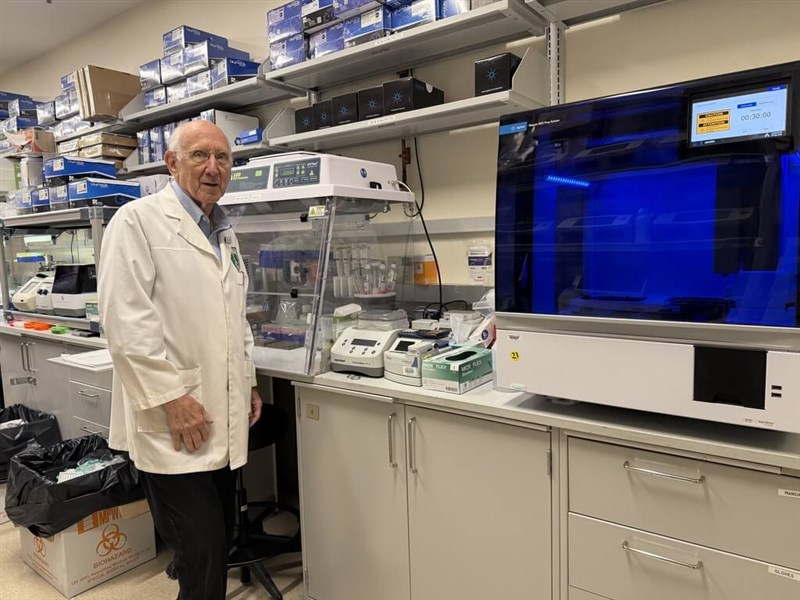
Rosenberg later tested high-dose interleukin-2 (IL-2), a protein that helps stimulate the growth of T cells, which are white blood cells that help kill infected or diseased cells.
In 1984, one patient with metastatic melanoma -- a type of skin cancer -- saw her tumor "completely disappear" after receiving the treatment, and the cancer remained gone after decades of follow-up, he said.
He then developed TIL therapy, which involves collecting immune cells that have already entered a tumor, expanding them in large numbers in a laboratory and returning them to the patient to attack cancer cells.
Rosenberg said his team has used the therapy to treat more than 400 patients, with studies showing tumor regression in 56 percent of patients and a complete, durable disappearance of disease in one-quarter of them.
Those findings, along with Rosenberg's later work in gene-modified T-cell therapies, helped establish the understanding that immune cells could cause cancer regression.
For Rosenberg, however, awards remain secondary to patient care.
"It's not the prize that I'm seeking, but rather the ability to effectively help people who can't be helped by today's medicine," he said.
Sadelain: Big ideas are often rejected first
Sadelain said the idea behind CAR-T cell therapy, which involves collecting a patient's T cells and genetically modifying them so they can better recognize cancer cells before infusing them back into the patient, emerged about three decades ago, when many scientists were focused on vaccines as a way to stimulate immune responses.
Sadelain, a professor of medicine at Columbia University, said he wanted to go further by "teaching" immune cells how to better recognize and destroy cancer cells.
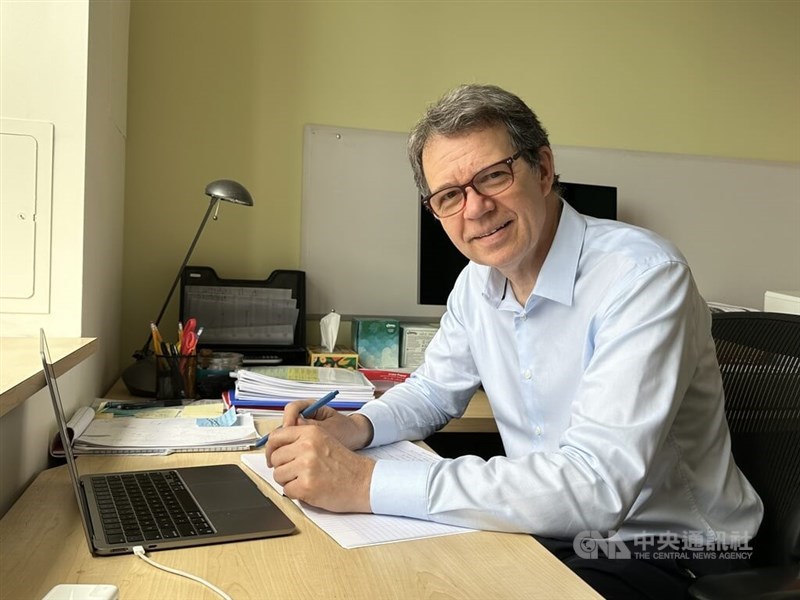
To do that, he said scientists needed to "deliver a genetic instruction" into T cells.
Those instructions came in the form of an artificial molecule called a chimeric antigen receptor (CAR), which Sadelain said his team had spent "many years" designing.
His team selected a molecule commonly found on certain blood cancer cells as a target, allowing CAR-T cells to recognize and attack those cells.
Sadelain said his team spent more than a decade studying the approach before moving into clinical trials, at a time when the pharmaceutical industry was used to producing chemical drugs or proteins, not living cells.
"So we became manufacturers inside a hospital," he said.
The work did not succeed immediately after clinical trials began in 2007, but when the first patients responded, the results were "remarkable," he said.
Sadelain described CAR-T cell therapy as a "living drug" because the treatment is made from living cells that can multiply in the body after being infused into a patient.
Asked what young scientists need to succeed, Sadelain said they must have "thick skin" and be able to accept failure and rejection, drawing on his own experience facing years of skepticism over his work.
"Every big idea is usually rejected before it succeeds," he added.
June: Perseverance over decades
June's team first treated patients with CAR-T cells in 2010, starting with leukemia.
One of the most striking aspects of the therapy, he said, is that the modified cells can continue to divide in the body after being infused, meaning that patients usually need only one treatment.
"It's a permanent living drug, and that had never happened before," said June, a professor of medicine at the University of Pennsylvania.
But the road to that point took decades.
Early on, funding was difficult to obtain because CAR-T cell therapy seemed very different from standard cancer treatment, according to June.
"One thing that all scientists share pretty much is perseverance," he said. "Usually experiments don't work. So you have to be able to accept that and try it again and modify something."
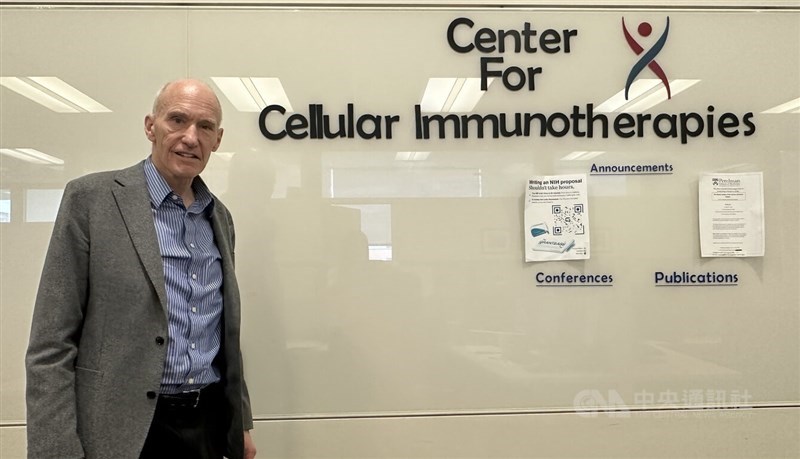
June recalled that the first adult patient treated with his team's CAR-T cells in 2010 had refractory end-stage leukemia.
After several difficult weeks, however, a biopsy showed the leukemia was gone.
"That was so surprising to me that I thought it was probably a mistake," he said.
The team later treated pediatric patients with leukemia, including Emily Whitehead, who later became one of the best-known examples of long-term remission after CAR-T therapy.
June said the field is still in its early stages, comparing today's CAR-T treatment to "Windows 95" in the history of computers.
There will be many generations of improved, more powerful and safer cell therapies, he added.
Tang Prize in Biopharmaceutical Science
The Tang Prize, established by the late Ruentex Group Chairman Samuel Yin (尹衍樑) in 2012, honors individuals who have made prominent contributions in four categories -- sustainable development, biopharmaceutical science, sinology, and the rule of law.
The Tang Prize laureates in each category will share a cash award of NT$40 million (US$1.26 million) and a research grant of NT$10 million.
![Strategic partnership key to Taiwan-U.K. cooperation: Deputy economics minister]() Strategic partnership key to Taiwan-U.K. cooperation: Deputy economics ministerTaiwan's Deputy Minister of Economic Affairs Cynthia Kiang (江文若), who has just concluded an annual economic and trade dialogue with her U.K. counterpart in London, said Friday that establishing a strategic partnership is key to bilateral cooperation.10/03/2026 01:53 PM
Strategic partnership key to Taiwan-U.K. cooperation: Deputy economics ministerTaiwan's Deputy Minister of Economic Affairs Cynthia Kiang (江文若), who has just concluded an annual economic and trade dialogue with her U.K. counterpart in London, said Friday that establishing a strategic partnership is key to bilateral cooperation.10/03/2026 01:53 PM![Taiwan, democracies must build resilience against China, Russia: Scholar]() Taiwan, democracies must build resilience against China, Russia: ScholarTaiwan and other democracies must strengthen their resilience against the "sharp power" wielded by authoritarian regimes such as China and Russia to defend their shared democratic values, a visiting American scholar said Monday.09/21/2026 04:39 PM
Taiwan, democracies must build resilience against China, Russia: ScholarTaiwan and other democracies must strengthen their resilience against the "sharp power" wielded by authoritarian regimes such as China and Russia to defend their shared democratic values, a visiting American scholar said Monday.09/21/2026 04:39 PM![European Parliament vice president praises Hsiao as 'role model' for women]() European Parliament vice president praises Hsiao as 'role model' for womenEuropean Parliament Vice President Pina Picierno on Saturday praised Taiwanese Vice President Hsiao Bi-khim (蕭美琴) as a role model for freedom-loving women around the world and told CNA that she would soon begin planning a trip to Taipei after accepting Hsiao's invitation to visit.09/13/2026 01:08 PM
European Parliament vice president praises Hsiao as 'role model' for womenEuropean Parliament Vice President Pina Picierno on Saturday praised Taiwanese Vice President Hsiao Bi-khim (蕭美琴) as a role model for freedom-loving women around the world and told CNA that she would soon begin planning a trip to Taipei after accepting Hsiao's invitation to visit.09/13/2026 01:08 PM
- Politics
228 foreign guests to attend 2026 ROC National Day celebrations: MOFA
10/08/2026 08:53 PM - Business
September exports hit record monthly high, extend growth to 35 months
10/08/2026 08:52 PM - Politics
MAC slams Beijing over threats tied to Kevin Tsai's campaign appearance
10/08/2026 08:29 PM - Politics
Taipei mayor candidates Chiang, Shen spar over Songshan Airport plan
10/08/2026 08:22 PM - Society
Northeasterly winds to bring rain to parts of Taiwan over holiday weekend
10/08/2026 07:20 PM