INTERVIEW/Boosting Taiwan's domestic defense capacity critical: Ex-U.S. official
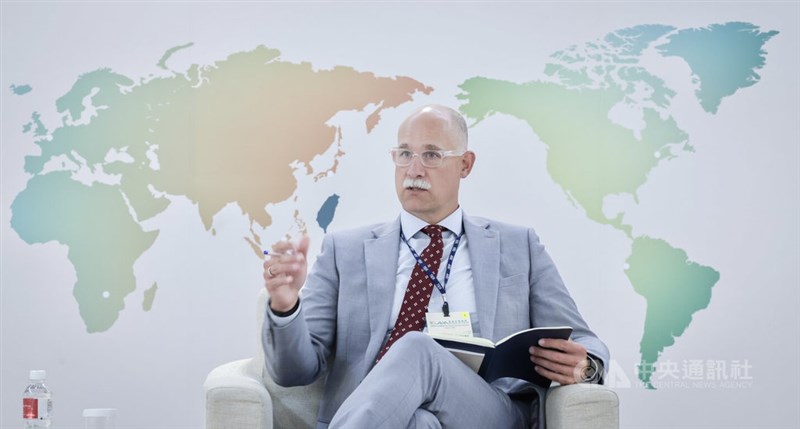
Taipei, Aug. 5 (CNA) Taiwan should urgently strengthen its domestic defense manufacturing capabilities to become more self-reliant in a crisis and give potential allies more time to respond, a visiting former United States defense official has said.
Jedidiah Royal, former principal deputy assistant secretary of defense for Indo-Pacific security affairs, told CNA in Taipei on Tuesday that developing Taiwan's indigenous defense industry is a time-sensitive priority.
Royal said many in Washington were disappointed after Taiwan's opposition-controlled Legislature passed a special defense budget in May that removed funding for domestic defense production originally proposed by the Cabinet.
The opposition's decision suggested some in Taiwan were not feeling "the same urgency that I feel right now of the importance of developing Taiwan's domestic defense manufacturing capacity," he said.
"But hopefully, we can see that rectified in the coming months," Royal said.
Following passage of the special budget approving NT$780 billion (US$24.2 billion) in funding to buy U.S.-made weapons, Taiwan's Cabinet proposed a separate six-year special budget totaling NT$210 billion to procure domestically produced drones.
The opposition Kuomintang (KMT) and Taiwan People's Party (TPP) countered by proposing a NT$240 billion budget for drones made in Taiwan, but they want the funding to come out of the general budget rather than from a separate special budget funded by issuing debt.
Royal said that in the event of a crisis or conflict along the First Island Chain -- which stretches from Japan through Taiwan to the Philippines and Malaysia -- U.S. forces would likely first deploy to Japan, the Philippines, South Korea and Australia before determining their next steps.
"We have to rely on the defense industrial capacity that exists in the region. We can't create that on the spot," he said.
"That's the forward defense industrial base that I think needs to continue to push the way that we communicate with allies and partners about our own national security requirements and what we're looking for out of this," according to Royal.
Taiwan should continue strengthening its ability to counter a potential joint amphibious landing campaign by China, slowing any invading force before it can advance farther inland, he said.
In addition, Taiwan needs to ensure it can maintain sea and air lines of communication and protect critical infrastructure, he said.
"So to me, Taiwan being able to create time with its military strategy is absolutely critical. And so long as Taiwan is focused on that, then I do think that you've given the rest of the world every opportunity to come and cooperate alongside you in that most challenging scenario," Royal said.
Royal is visiting Taiwan for the first time to speak at the 10th Ketagalan Forum, a one-day conference on Indo-Pacific security jointly organized Tuesday by the Ministry of Foreign Affairs and the Taiwan Institute of Economic Research.
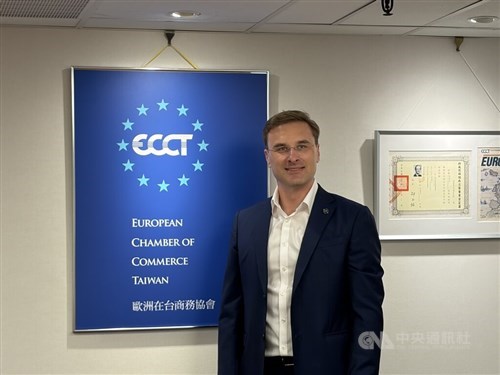
![New ECCT chair urges greater agility in Taiwan's software, energy sectors]() New ECCT chair urges greater agility in Taiwan's software, energy sectorsTaiwan is known for its strength in hardware manufacturing, but Frank Grunert, the new chairperson of the European Chamber of Commerce Taiwan (ECCT), sees considerable potential in software as well.10/10/2026 12:36 PM
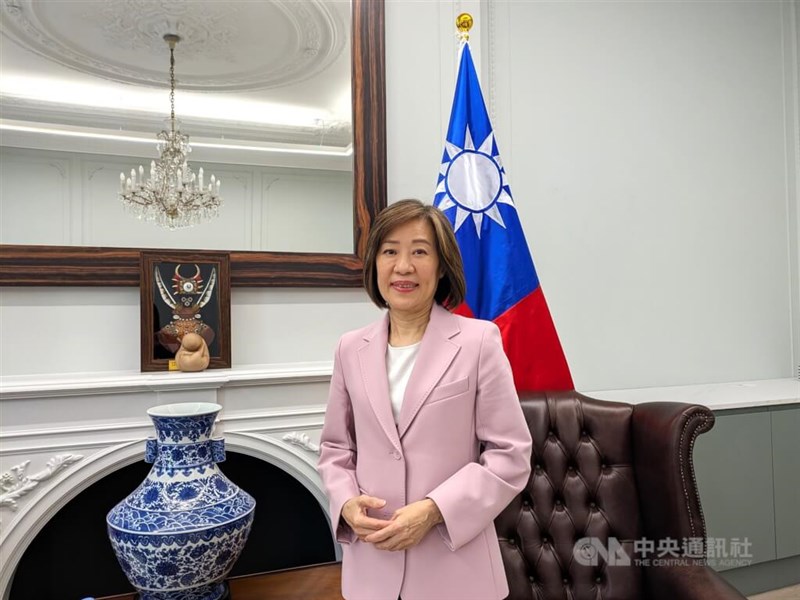
New ECCT chair urges greater agility in Taiwan's software, energy sectorsTaiwan is known for its strength in hardware manufacturing, but Frank Grunert, the new chairperson of the European Chamber of Commerce Taiwan (ECCT), sees considerable potential in software as well.10/10/2026 12:36 PM![Strategic partnership key to Taiwan-U.K. cooperation: Deputy economics minister]() Strategic partnership key to Taiwan-U.K. cooperation: Deputy economics ministerTaiwan's Deputy Minister of Economic Affairs Cynthia Kiang (江文若), who has just concluded an annual economic and trade dialogue with her U.K. counterpart in London, said Friday that establishing a strategic partnership is key to bilateral cooperation.10/03/2026 01:53 PM
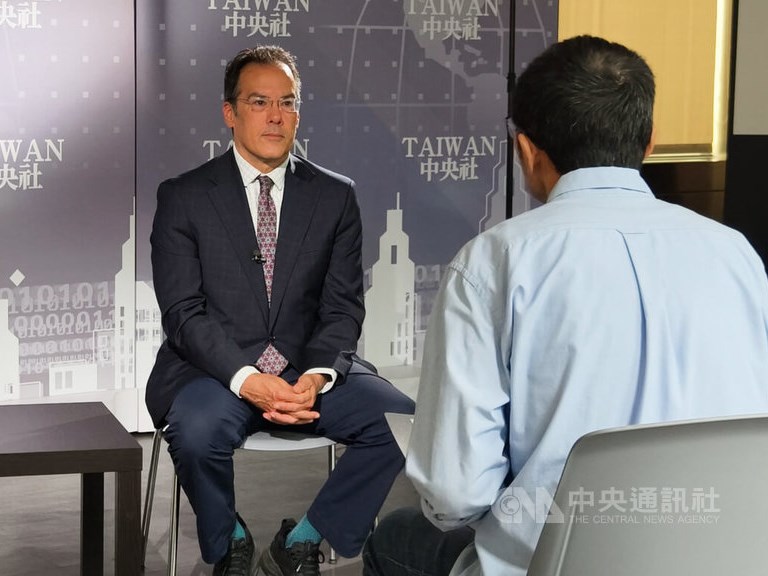
Strategic partnership key to Taiwan-U.K. cooperation: Deputy economics ministerTaiwan's Deputy Minister of Economic Affairs Cynthia Kiang (江文若), who has just concluded an annual economic and trade dialogue with her U.K. counterpart in London, said Friday that establishing a strategic partnership is key to bilateral cooperation.10/03/2026 01:53 PM![Taiwan, democracies must build resilience against China, Russia: Scholar]() Taiwan, democracies must build resilience against China, Russia: ScholarTaiwan and other democracies must strengthen their resilience against the "sharp power" wielded by authoritarian regimes such as China and Russia to defend their shared democratic values, a visiting American scholar said Monday.09/21/2026 04:39 PM
Taiwan, democracies must build resilience against China, Russia: ScholarTaiwan and other democracies must strengthen their resilience against the "sharp power" wielded by authoritarian regimes such as China and Russia to defend their shared democratic values, a visiting American scholar said Monday.09/21/2026 04:39 PM
- Politics
Lai urges respect for WWII history, Taiwan's 'right to exist'
10/10/2026 02:44 PM - Politics
Taiwan needs a 'chain of guardian mountains' across industries: Lai
10/10/2026 01:19 PM - Business
New ECCT chair urges greater agility in Taiwan's software, energy sectors
10/10/2026 12:36 PM - Culture
BigBang throws concert in Taipei; Jay Chou shares photos with group
10/10/2026 11:50 AM - Politics
Full text of President Lai Ching-te's National Day address
10/10/2026 11:10 AM