FEATURE/For foreign spouses, Taiwan's domestic violence safety net offers hope, obstacles
By Shih Hsiu-chuan, Rick Yi and Jennifer Aurelia, CNA staff writers
Thousands of miles from her home in Vietnam, A-Yueh once believed she was facing a violent marriage alone, until social workers stepped in, helping her escape abuse and rebuild her life.
Social workers and pro bono counsel helped A-Yueh overcome the threat of deportation that had loomed over her from the moment she decided to leave her abuser, guiding her successfully through her naturalization process and fight for a divorce and custody of her children.
Indah, from Indonesia, endured years of abuse due to fears of deportation and losing her son, compounded by her deep-seated belief that her child needed a father.
Her son's teacher uncovered the situation and advised Indah to call the domestic abuse 113 hotline, connecting her to support services.
Through this safety net, she obtained a protection order, counseling for her husband, and essential supplies -- critical after her husband was diagnosed with cancer, which tempered the abuse but increased her financial burden.
The pioneer law and its frayed edges
Both A-Yueh and Indah now live safer lives, but many foreign spouses who face domestic violence in Taiwan are not as fortunate.
Taiwan's social safety net for domestic violence survivors is anchored in the 1998 Domestic Violence Prevention Act, Asia's first law to classify domestic abuse as a public crime. It mandates reporting through the Ministry of Health and Welfare's (MOHW) 113 hotline and enshrines protections for victims.
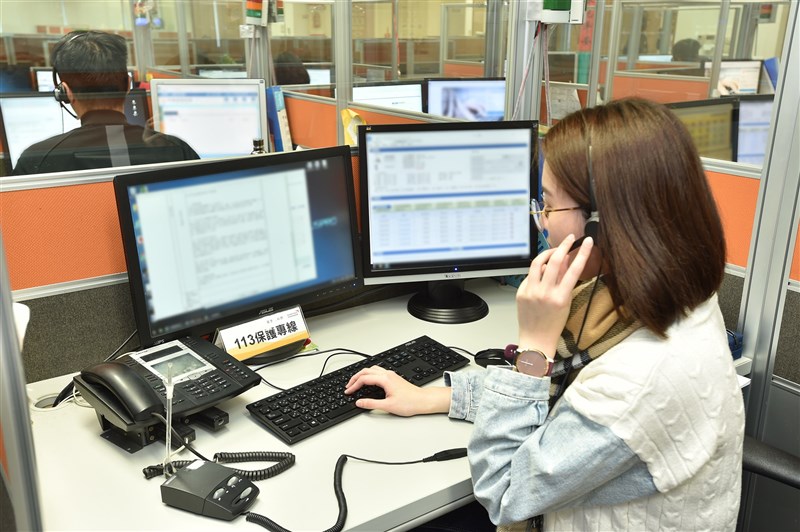
Those protections, however, often fall short for foreign spouses, mainly from China, Hong Kong and Macau (63.51 percent of all foreign spouses in Taiwan), Vietnam (20.44 percent), and Indonesia (5.39 percent), due to legal issues, language barriers, and social isolation.
In theory, the system offers a layered path from crisis response to long-term independence. In practice, navigating it can be overwhelming.
"Immigrant spouses remain largely beyond the system's reach," observed Hong Man-chi (洪滿枝), who supports Southeast Asian women through the TransAsia Sisters Association Taiwan (TASAT).
Her "sisters" as she calls them "often flee to their compatriots only to be drawn back by a partner's pleas, family pressure, or concern for their children," said Hong, a Vietnamese married to a Taiwan citizen. "That traps them in a cycle of violence."
One reason, which affected A-Yueh and Indah, is the fear of deportation, which was addressed with an amendment to Article 31 of the Immigration Act that took effect on Jan. 1, 2024.
The right to residency
Before the 2024 legal reform, foreign spouses such as A-Yueh who got divorced due to domestic violence could only stay in Taiwan if the divorce was obtained through a court ruling and if they had minor children with household registrations in Taiwan.
That often left abused spouses at the mercy of the court system.
Under the revised law, foreign spouses who get divorced due to domestic violence can stay in Taiwan simply by providing a police report on the abuse -- without needing to have children or to obtain a court ruling.
The revisions reflect over a decade of NGO and Control Yuan advocacy to protect the rights of foreign spouses and children, said Lee Ming-fang (李明芳), a senior executive officer at the National Immigration Agency.
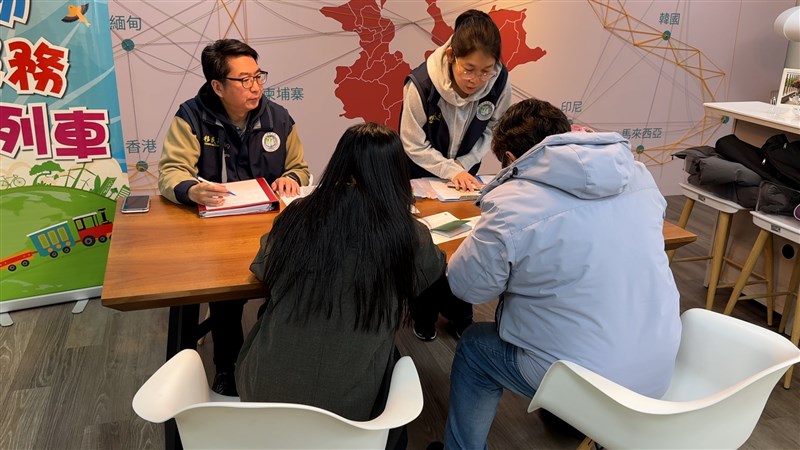
Though the law offers promise, awareness remains limited.
Chow Wai Ying (周慧盈), TASAT's executive secretary, said the organization welcomes the reform, but more needs to be done to communicate it through multilingual and scenario-based approaches to ensure victims understand their rights.
Greater awareness could increase reporting. According to the MOHW, about 2,000 abuse cases involving foreign spouses in intimate relationships were reported annually from 2020 to 2024.
But researchers cautioned that these figures likely understate the true prevalence of domestic violence. A 2025 National Taiwan University study found survivors endure abuse for an average of 4.2 years before reporting it.
Beyond legal issues, other obstacles in the system persist.
Long, winding path to freedom
For Hsiao-ling, a Chinese spouse, her fear of the "unknown" made the support system feel like an impenetrable maze.
Unfamiliar with how Taiwan works, she shuttled between central and local government offices seeking help and was often turned away feeling more confused and helpless than before.
Recalling her frustration, Hsiao-ling said she had trouble trusting the system because she felt her situation and needs were not understood by social workers.
Even when offered a place in a shelter, for example, she asked for its location out of concern it might be far from her child's school, but that information was initially withheld.
She eventually moved into a shelter, arranged her child's school transfer, and won a legal battle for custody -- an outcome she had been told was impossible without citizenship.
"Leaving required a leap of faith," she said.
Hsiao-ling said that even she, as a Mandarin speaker, faced countless "detours." Wondering how survivors who do not speak the language could cope, she urged a clearer, more transparent, and accessible support system.
Shortage of translators, social workers
Activists, including Control Yuan Commissioner Yeh Ta-hua (葉大華), cite a chronic shortage of qualified translators as a major obstacle in getting foreign nationals the help they need.
The shortage of interpreters hasn't improved much over the years, Hong said, adding "in rural areas especially, it's hard to find a translator, let alone one familiar with the law and legal jargon."
Yeh called for translator accreditation, legal training, and cross-checked blacklists across government databases to weed out unqualified translators, and higher pay to attract second-generation professionals.
A member of the National Human Rights Commission, Yeh also highlighted the low pay for social workers as a problem because it hinders recruitment, leaving staffing below needed levels.
Hsu Chih-chi (許芝綺), director of New Taipei's Domestic Violence and Sexual Assault Prevention Center, said social workers in her city dealing with intimate partner violence handle 30 to 35 cases each, above the central government's recommended 20 to 30.
Finding a home after the storm
For those who do escape, shelters continue to be a weak link in the support system, with inconvenient locations and the limited privacy in shared spaces falling short of survivors' needs.
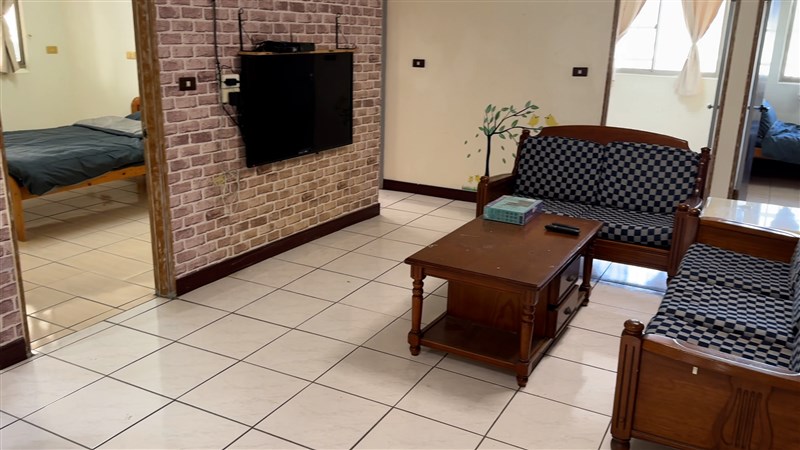
Taiwan has 26 emergency/short-term shelter sites with 312 beds, where victims can stay for up to three months in principle, and 23 more longer-term sites offering 109 household units for stays of up to two years, according to the MOHW.
That seems inadequate in a country where over 85,000 cases of intimate partner violence was reported in 2024.
A more long-term shelter at Linkou Social Housing, operated by the Garden of Hope Foundation with the New Taipei government since 2020, is widely seen as a model for a solution, even if it currently only offers 20 units.
Designed to facilitate healing, the project features public spaces for survivors to receive psychological counseling or simply be with themselves for reflection, in addition to basic housing units.
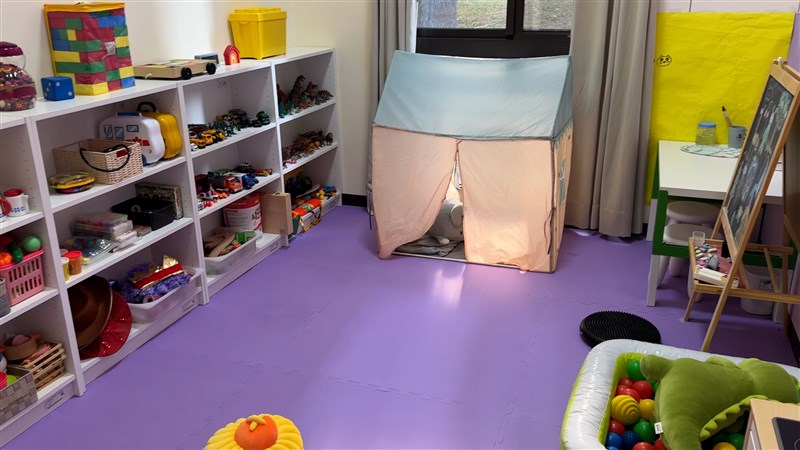
"A stable home is the first step toward finding a job," said Wang Yueh-hao (王玥好), CEO of the Garden of Hope Foundation. "Without a secure environment, survivors are often pulled back into a recurring cycle of violence."
Unequal access to financial aid by region
As with shelters, financial assistance for survivors -- covering legal fees, rent and counseling -- varies by locality.
Pony Chang (張國棟), head of Miaoli County's Department of Social Affairs, said the county's services for domestic violence victims are tied to funding but stressed that a "baseline of support" is always maintained despite fiscal constraints.
"The more funding we have, the more diverse our services can be, and the fewer restrictions we'll face," Chang said. "But even when the budget is tight, our core services are never halted -- our shelters are always open."
Tu Ying-chiu (杜瑛秋), CEO of the Taipei Women's Rescue Foundation, said some municipalities exhaust their annual budgets as early as mid-year.
"Once those funds dry up, the lack of financial support for survivors and their children becomes a critical issue," she said.
Advocates like Hong are urging the government to expand pro bono legal services, noting that most survivors cannot afford divorce or custody litigation after fleeing abuse.
"Sisters are often disqualified from legal aid just because they have small savings or insurance -- even though that money is crucial to starting over with their children," Hong said.
Funding increasing, but is it enough?
Funding for domestic violence prevention and victim protection has been on the rise, increasing 50 percent to NT$7.5 billion (US$237.7 million) between 2020 and 2023. Subsidies to local governments have grown 2.8-fold to NT$1.24 billion during the same period, said Kuo Tsai-jung (郭彩榕), director-general of the MOHW's Department of Protective Services.
The government also intends to further provide funding to increase social worker staffing under the 2026-2030 phase of the Social Safety Net 2.0 program, Kuo said.
Yet, while Taiwan's safety net has continued to evolve over the years, its true strength will depend on how effectively it reaches those at the margins who still live in fear.
As the stories of A-Yueh, Indah and Hsiao-ling show, legal rights only become a reality when anchored by practical support. Closing that gap is what turns escape from a leap of faith into a path survivors can begin to build a life on.
Enditem/ls
!['Umpire strikes back': Taiwanese ump sets U.S. pro baseball milestone]() 'Umpire strikes back': Taiwanese ump sets U.S. pro baseball milestoneIn her younger days, Sophiyah Liu (劉柏君) was a spiritual medium, serving as a bridge between the mortal plane and that of the unknown.09/18/2026 04:44 PM
'Umpire strikes back': Taiwanese ump sets U.S. pro baseball milestoneIn her younger days, Sophiyah Liu (劉柏君) was a spiritual medium, serving as a bridge between the mortal plane and that of the unknown.09/18/2026 04:44 PM![Made in Taiwan, sovereign in Europe: France's different chip strategy]() Made in Taiwan, sovereign in Europe: France's different chip strategyDuring a May visit to a high-performance computing center operated by the French Alternative Energies and Atomic Energy Commission (CEA) in Bruyères-le-Châtel, south of Paris, French President Emmanuel Macron was photographed holding a sample of Rhea1.09/05/2026 05:27 PM
Made in Taiwan, sovereign in Europe: France's different chip strategyDuring a May visit to a high-performance computing center operated by the French Alternative Energies and Atomic Energy Commission (CEA) in Bruyères-le-Châtel, south of Paris, French President Emmanuel Macron was photographed holding a sample of Rhea1.09/05/2026 05:27 PM![Beyond labels: How immigrant families reshape NCCU's Southeast Asia department]() Beyond labels: How immigrant families reshape NCCU's Southeast Asia department[Editor's Note: This is part two of a two-part series on a university department in Taiwan dedicated to Southeast Asian languages and regional studies, and the people behind it.]08/12/2026 12:12 PM
Beyond labels: How immigrant families reshape NCCU's Southeast Asia department[Editor's Note: This is part two of a two-part series on a university department in Taiwan dedicated to Southeast Asian languages and regional studies, and the people behind it.]08/12/2026 12:12 PM

- Sports
Taiwan bags silver medals in men's, women's team soft tennis
09/20/2026 07:57 PM - Politics
Labor minister heads to China for APEC meeting
09/20/2026 07:56 PM - Society
Favorable weather to allow Mid-Autumn Festival moon gazing: CWA
09/20/2026 07:40 PM - Culture
Lai outlines 4 priorities for Taiwan's cultural future at congress
09/20/2026 07:20 PM - Society
Over 21,000 swimmers participate in annual Sun Moon Lake swim fest
09/20/2026 04:56 PM