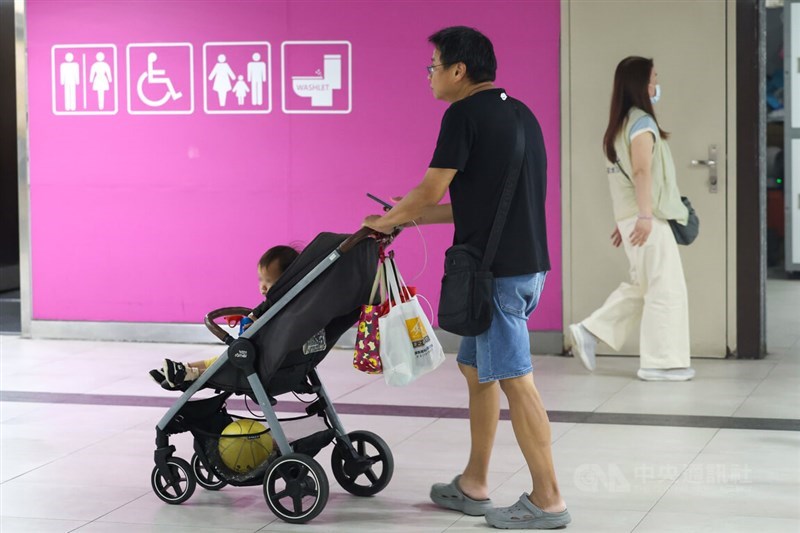
Taipei, May 19 (CNA) Premier Cho Jung-tai (卓榮泰) on Tuesday unveiled a broad package of family support measures, including expanded parental leave and housing tax incentives for parents, as part of the government's efforts to address Taiwan's declining birth rate.
Speaking at a Cabinet news conference ahead of the second anniversary of President Lai Ching-te (賴清德) taking office, Cho said the government will introduce a "0-to-18 full support" policy covering childbirth, child-rearing and education.
The overall plan is expected to be submitted for Cabinet approval on May 28, he said.
Under the proposal, the government will provide comprehensive support through increased subsidies, reduced financial burdens, greater workplace flexibility and expanded caregiving services, with the aim of creating a more family-friendly environment.
One of the key measures will expand the current parental leave system by extending eligibility to parents of children up to 6 years old, up from the current age limit of 3, Cho said.
To encourage parents to share caregiving responsibilities, the government will also introduce housing tax incentives for families raising children and review regulations governing marriage leave, maternity leave and paternity leave, he said.
Cho said the administration has already briefed Lai on the proposals and assessed the country's fiscal capacity to support the measures, though details are still being finalized ahead of Cabinet review.
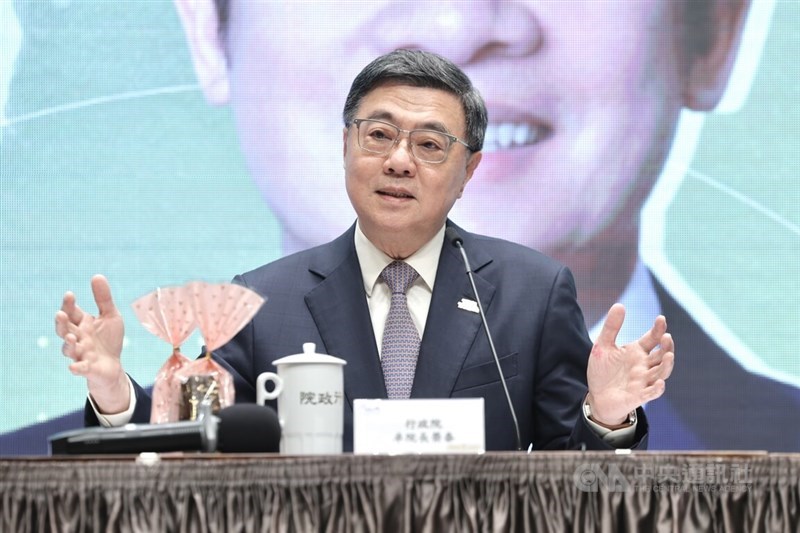
The premier made the announcement after the opposition Kuomintang legislative caucus on Monday proposed its own package to address Taiwan's declining birthrate, including fully subsidized National Health Insurance premiums for children aged 0-6, childcare subsidies of NT$20,000 every six months for children aged 0-6, and a monthly child allowance of NT$5,000 for children aged 0-15.
Cho said public policy should not be judged solely on the size of spending commitments, but on whether measures are backed by comprehensive planning and balanced support mechanisms.
Separately, Cho touted the administration's achievements over the past year and outlined upcoming policy initiatives.
Turning to the economy, Cho noted that Taiwan had an economic growth rate of 8.68 percent in 2025. Driven by this momentum, the monthly minimum wage is expected to break the NT$30,000 (US$947) threshold next year.
He added that the government is also considering salary adjustments for military personnel, civil servants and public school teachers.
While the exact scale of any public-sector pay raise remains under review, Cho said any adjustment proposal must first be evaluated by the government's remuneration review committee, which would take various socioeconomic factors into consideration.
To sustain long-term economic resilience, Cho said he has instructed several government agencies to draft a comprehensive bill aimed at supporting the transformation and upgrading of small and medium-sized enterprises and micro-enterprises.
Backed by expanded budget allocations, the new statute will build on last year's efforts, which assisted over 290,000 small, medium, and micro-enterprises in digital and net-zero transformations, while continuing to drive growth in traditional sectors and Taiwan's five key "trusted industries" (semiconductors, artificial intelligence, military, security/surveillance, and next-generation communications), Cho said.
- Society
Taiwan headline news
10/03/2026 10:22 AM - Sports
'Hao-yu like that?' A deep dive into Lee's rookie MLB season
10/03/2026 10:00 AM - Sports
Taiwan boosts medal haul in multiple events at Asian Games on Friday
10/02/2026 08:55 PM - Society
Workers at Taiwan snack maker Kuai Kuai extend strike over relocation
10/02/2026 08:45 PM - Business
Chain businesses association seeks more foreign workers
10/02/2026 08:04 PM