DEFENSE/Taiwan military police stage bridge blockade drill to secure capital
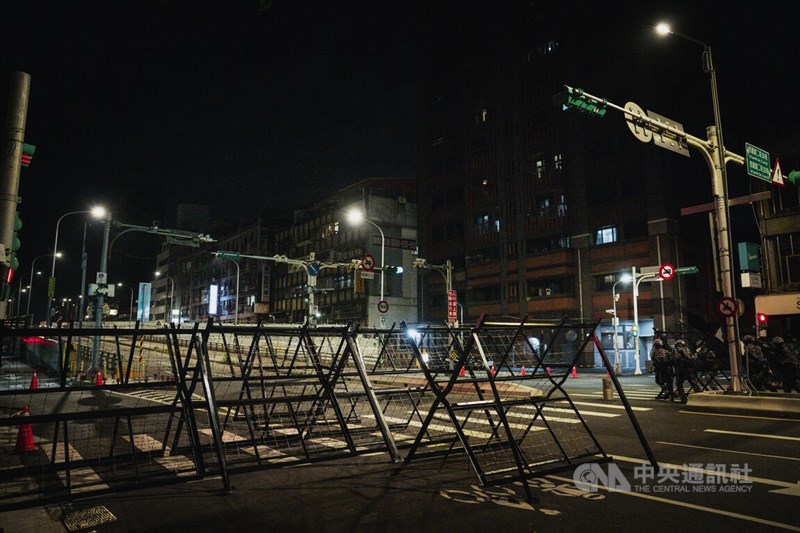
Taipei, Aug. 13 (CNA) Taiwan's military held a defensive blockade drill in Taipei's Wanhua District in the early hours of Thursday to prevent enemy armored units from advancing further into the heart of the capital as part of the annual Han Kuang exercises.
The simulated battle took place on Guangfu Bridge, a key connection between New Taipei and Taipei, as well as at road intersections at both ends of the bridge.
Under the military's scenario, enemy forces successfully carried out an amphibious landing and were advancing toward Taiwan's financial and administrative center.
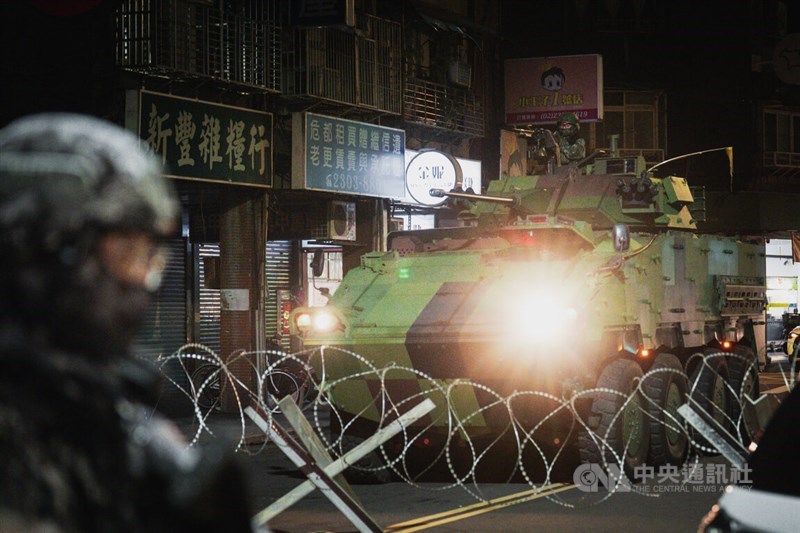
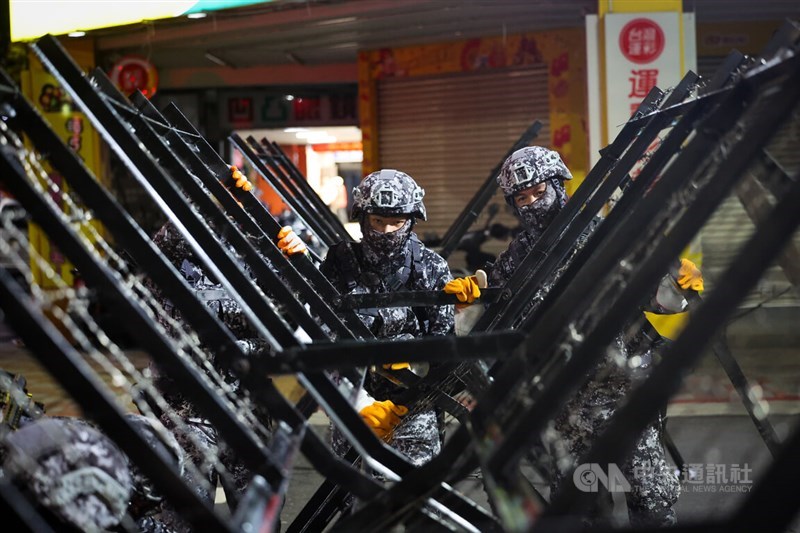
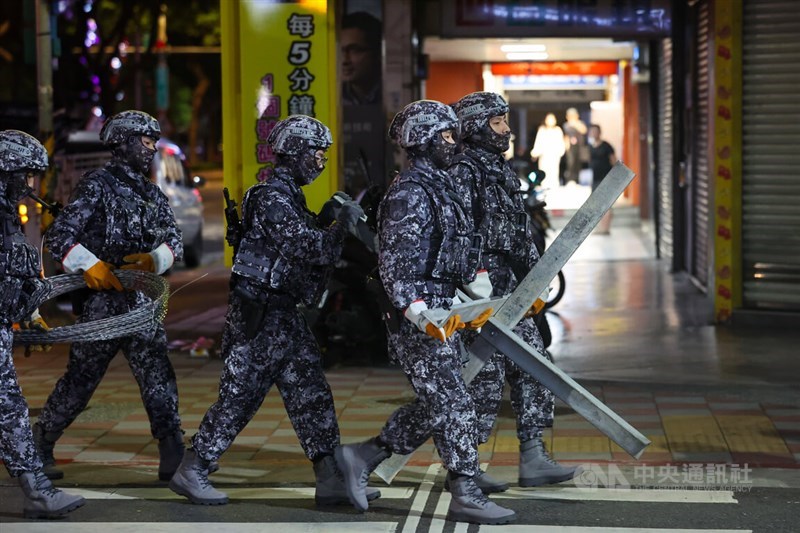
Military police dressed in camouflage uniforms placed gabions and Jersey barriers on the bridge to block the enemy advance. They also secured the perimeter on the Taipei side of the bridge by deploying Czech hedgehogs, barbed wire and barricades along three sides of an intersection to create a "kill zone."
Tour buses requisitioned from the private sector were also deployed as barriers under the military's civilian force requisition plan.
Military police personnel armed with T112 rifles simulated engagements with the opposing force, while attack drones simulated airdropped bombs.
At around 1:20 a.m., the battlefield commander issued an order to carry out denial measures to prevent enemy vehicles from advancing further by simulating the detonation of explosives planted near the bridge joint, creating a gap in the road, after military police and Army forces were pushed back by invading units.
Under the cover of smoke screens, military police continued engaging enemy infantry who crossed the bridge, exchanging gunfire with them while luring them into the kill zone. A platoon of Clouded Leopard CM33 and CM34 armored vehicles waiting at the perimeter then engaged the enemy with 30mm chain guns and T74 platoon machine guns.
Sheu Jyh-shyang (許智翔), one of the defense experts observing the drill on-site, told CNA that the drill reflected a strategy of deploying multilayered barriers to blockade and impede adversaries.
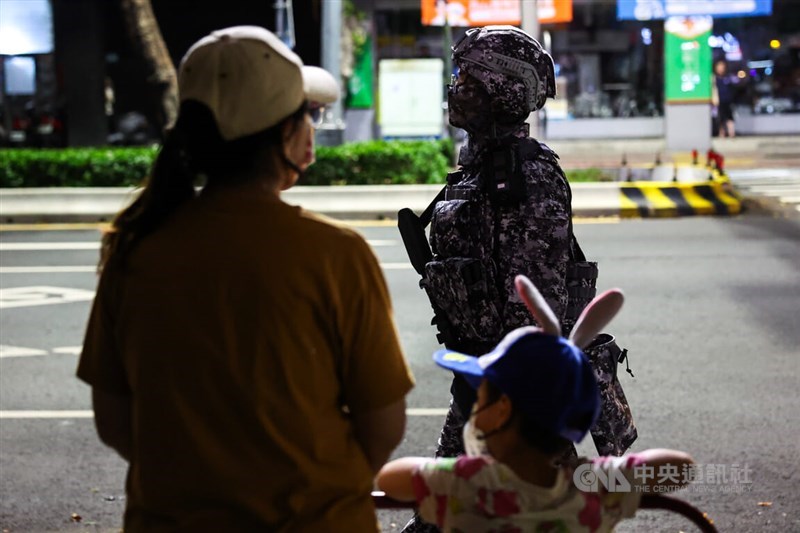
The blockade and defense of key bridges connecting Taipei with other administrative regions have traditionally been a highlight of the Han Kuang exercises, Taiwan's largest annual military drills, noted Sheu, a researcher at Taiwan's government-funded Institute for National Defense and Security Research.
Sheu recommended that the military deploy anti-armor weapons in future drills involving the blockade of bridges.
"Assuming that [the enemy] has breached the defenses of Taoyuan and other locations, the forward troops will consist of a large number of armored vehicles," Sheu said. "It is therefore necessary to include anti-armor rockets or even Javelin missiles."
Noting that buildings are often used in urban warfare to the advantage of defensive forces, Sheu also suggested that complex urban environments be taken into account in the design of future exercises.
In a statement, the Military Police Command said the drill tested the soundness of its defense strategies and commanders' abilities to respond flexibly to evolving battlefield situations, thereby ensuring the security of the Taipei Garrison Area.
It said that effective obstruction, defense and denial operations are critical to preventing enemy forces from penetrating the capital and protecting the national government and people's property.
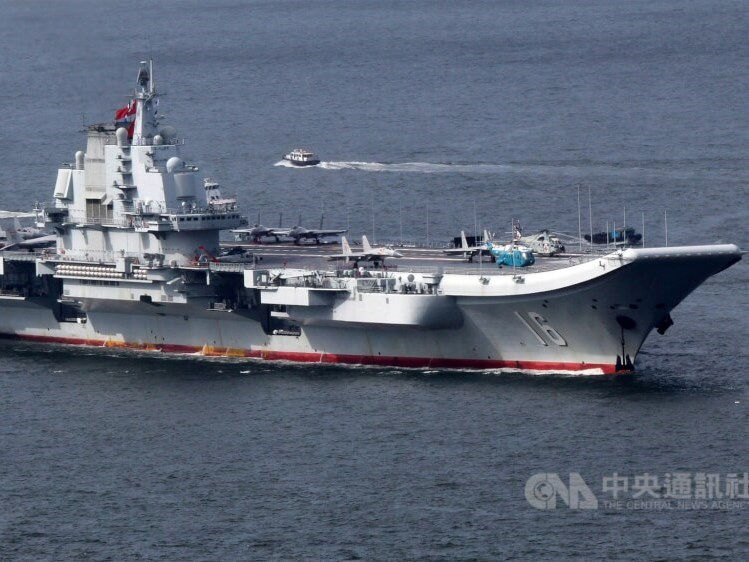
![Taiwan watching for large-scale PLA drills as peak season nears]() Taiwan watching for large-scale PLA drills as peak season nearsThe Ministry of National Defense (MND) said Thursday that it was closely monitoring the possibility of large-scale Chinese military exercises near Taiwan as the traditional peak season for People's Liberation Army (PLA) drills approaches.10/15/2026 03:30 PM
Taiwan watching for large-scale PLA drills as peak season nearsThe Ministry of National Defense (MND) said Thursday that it was closely monitoring the possibility of large-scale Chinese military exercises near Taiwan as the traditional peak season for People's Liberation Army (PLA) drills approaches.10/15/2026 03:30 PM![Ex-U.S. national intelligence director praises Han Kuang reforms]() Ex-U.S. national intelligence director praises Han Kuang reformsDennis Blair, director of national intelligence under former U.S. President Barack Obama, on Wednesday praised Taiwan's decision in recent years to transform its large-scale annual military exercises into a whole-of-society defense effort.10/14/2026 01:27 PM
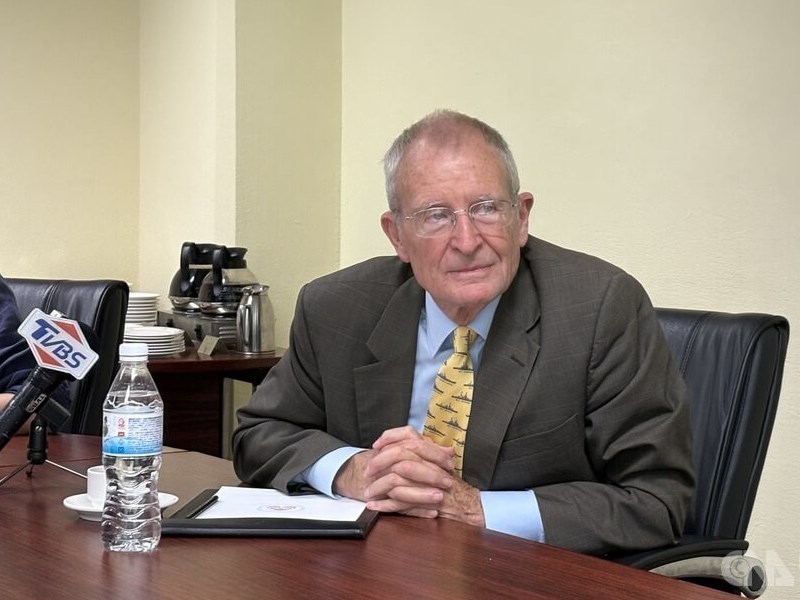
Ex-U.S. national intelligence director praises Han Kuang reformsDennis Blair, director of national intelligence under former U.S. President Barack Obama, on Wednesday praised Taiwan's decision in recent years to transform its large-scale annual military exercises into a whole-of-society defense effort.10/14/2026 01:27 PM![Defense ministry releases images of jets escorting new F-16Vs]() Defense ministry releases images of jets escorting new F-16VsThe Ministry of National Defense on Saturday released footage and photos of an F-16V Block 20 and Brave Eagle advanced jet trainers escorting two F-16V Block 70s that Taiwan received a day earlier.10/03/2026 03:05 PM
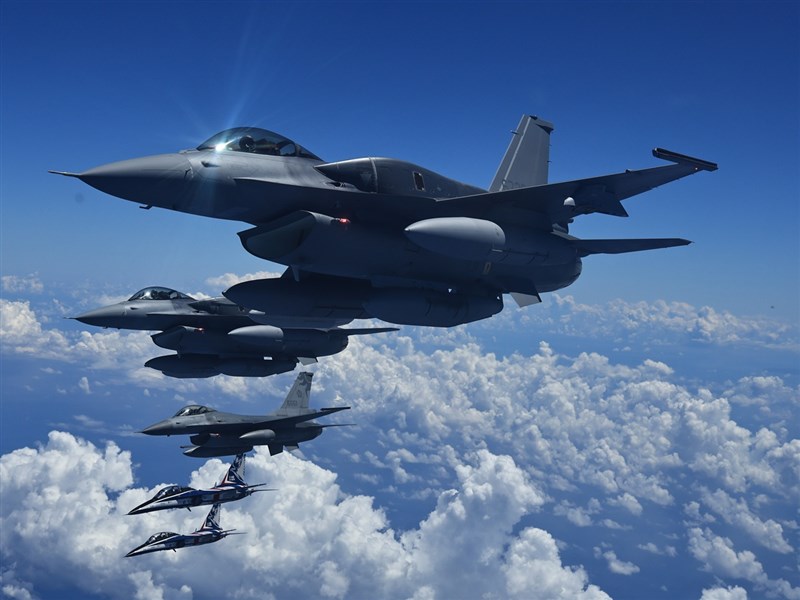
Defense ministry releases images of jets escorting new F-16VsThe Ministry of National Defense on Saturday released footage and photos of an F-16V Block 20 and Brave Eagle advanced jet trainers escorting two F-16V Block 70s that Taiwan received a day earlier.10/03/2026 03:05 PM
- Sports
Jeremy Lin joins ESPN's NBA analyst lineup for new season
10/16/2026 10:53 AM - Business
U.S. dollar up sharply in Taipei trading
10/16/2026 10:22 AM - Society
Taiwan headline news
10/16/2026 10:19 AM - Business
Taiwan shares open higher
10/16/2026 09:11 AM - Politics
Cabinet approves upgraded dementia care plan targeting '888' goals by 2035
10/15/2026 09:03 PM