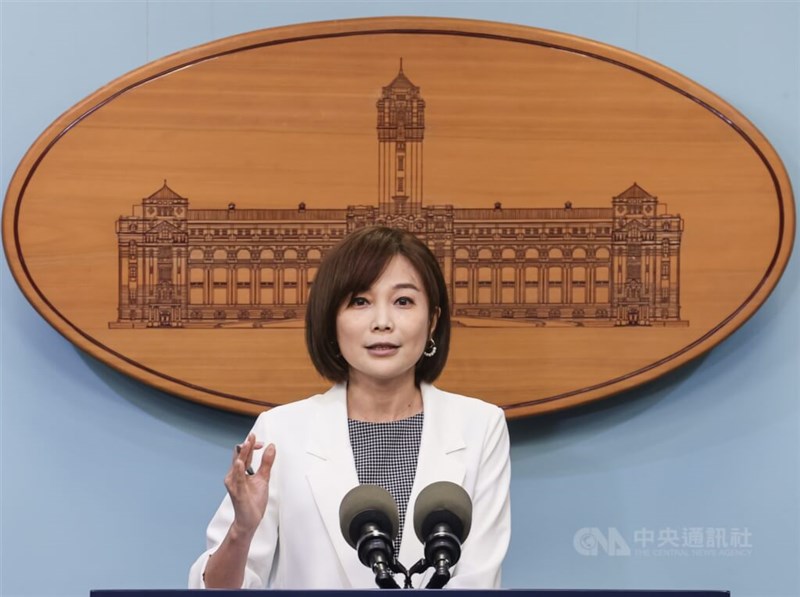
Taipei, May 31 (CNA) Taiwan's Presidential Office on Sunday condemned China over its expulsion of a New York Times correspondent from Beijing, following the newspaper's interview of President Lai Ching-te (賴清德), saying the move highlighted Beijing's suppression of press freedom and its threat to international media outlets.
In a statement, Presidential Office spokesperson Karen Kuo (郭雅慧) said Taiwan had noted a series of recent incidents in which Beijing had used similar tactics to "threaten and pressure international media outlets and journalists."
"This concerns not only press freedom and freedom of expression, but also the safety of journalists, and Taiwan and relevant partners are paying close attention to the situation," she added.
Kuo's statement came after reports emerged that China had expelled Vivian Wang in February this year. Wang is a New York Times China correspondent who had been based in Beijing since 2022.
The New York Times confirmed the expulsion in a statement issued on Friday by its executive editor, Joseph Kahn, who called Beijing's decision "wrong" and urged China to reinstate Wang.
According to an Associated Press report on Saturday, Wang was expelled after The New York Times hosted Taiwan's President Lai in a recorded interview for its DealBook Summit 2025, which aired in December last year.
Wang had no role in the interview, but host Andrew Ross Sorkin referred to Taiwan as a country -- a description Beijing rejects -- and Lai warned of China's aggressive behavior in the Taiwan Strait while saying that "Taiwan will do everything necessary to protect itself," AP reported.
Kuo said in Sunday's statement that, as a democratic country, it is normal for the president to give interviews to explain the country's position to the world and express "its determination to work with others to safeguard regional security and peace."
Beijing's use of "groundless excuses" and "crude means" to threaten the media will not help improve its international image, but instead further highlights that China has become "a troublemaker" in the international community, Kuo said.
Taiwan's government attaches "great importance" to the situation and will work with relevant partners to ensure that international media outlets and journalists are protected from "the threat of transnational repression," she said.
Kuo, however, did not identify those partners in the statement or elaborate on how Taiwan would work with them to achieve that goal.
Citing an anonymous source, AP reported that the U.S. government had revoked the visa of a Chinese national working for China's state-run Xinhua News Agency in the United States, calling it "an apparent reciprocal act" in response to Beijing's decision to expel Wang.
The Chinese embassy in Washington did not immediately respond to a request for comment, according to AP.
- Politics
DPP at 40: Founders reflect on risk, rise, reckoning
09/28/2026 11:10 AM - Society
Heat warnings issued Monday across Taiwan
09/28/2026 10:36 AM - Business
Taiwan headline news
09/28/2026 10:29 AM - Sports
Taiwan's medal standing at 2026 Aichi-Nagoya Asian Games
09/28/2026 10:02 AM - Sports