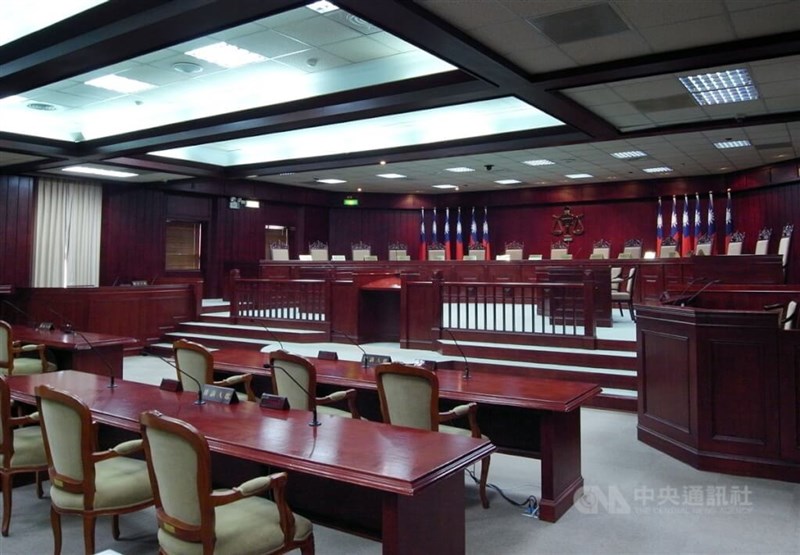
Taipei, May 21 (CNA) Opposition Kuomintang Legislator Weng Hsiao-ling (翁曉玲) and Presidential Office Secretary-General Pan Men-an (潘孟安) traded barbs Thursday over prolonged vacancies on Taiwan's Constitutional Court that have left the body severely understaffed for more than 18 months.
The dispute took place during a legislative committee session reviewing the 2026 budget and work plans for the Presidential Office and the National Security Council.
During the hearing, Weng accused President Lai Ching-te (賴清德) of failing to fulfill his constitutional obligations by not submitting a new list of nominees to address the ongoing shortage.
There have been vacancies on the Constitutional Court since Oct. 31, 2024, when seven of the court's 15 grand justices, including the chief justice and deputy chief justice, retired at the end of their eight-year terms.
Since then, Hsieh Ming-yang (謝銘洋) has served as acting president of the Judicial Yuan and acting chief justice of the Constitutional Court, while the vacancies remain unfilled.
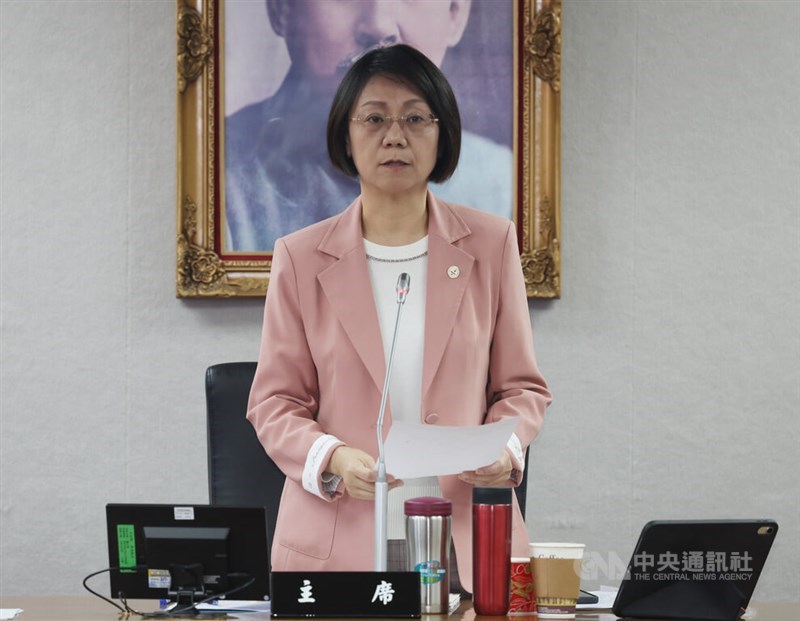
Weng acknowledged that Lai had previously submitted two nomination lists, both of which were rejected by the Legislature, where opposition parties hold a majority of seats, on Dec. 24, 2024, and July 25, 2025.
However, she argued that the president remains constitutionally obligated to continue nominating candidates until the vacancies are filled.
She questioned how long Hsieh would continue serving in an interim capacity, adding that Taiwan's legal community includes far more qualified candidates than the 14 nominees already proposed.
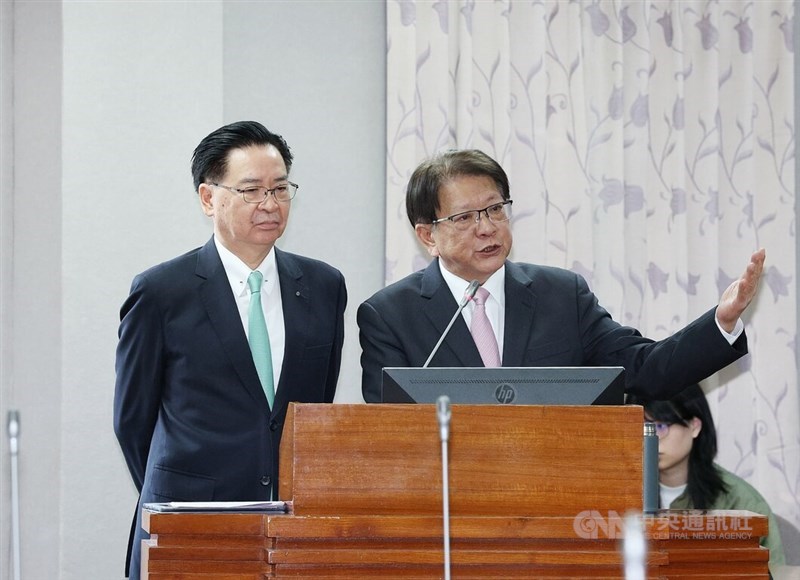
Responding to Weng, Pan defended the administration's handling of the issue, saying Lai had already nominated a total of 14 legal experts in two separate rounds, all of whom were rejected by lawmakers.
"Should we keep submitting nominees only for them to be rejected again?" Pan said, accusing legislators of subjecting respected legal scholars to political attacks and humiliation during the confirmation process.
Weng countered that the Constitution requires the president to continue making nominations despite previous rejections.
Following the committee session, Pan clarified his remarks to reporters, walking back any implication that the administration would completely halt the nomination process.
He said that whether to submit new nominees is a decision for the president and not within the scope of his own authority.
Pan emphasized that his remarks were intended only to explain the process and rebut claims that the administration had failed to act.
"I was only stating the facts," Pan said. "Whether or not to submit another list is the president's authority."
The political deadlock has significantly disrupted the court's operations.
In late 2024, the Legislature passed amendments to the Constitutional Court Procedure Act raising the minimum quorum for deliberations to 10 justices and requiring at least nine votes to declare a law unconstitutional, effectively paralyzing the court from operating with only eight grand justices.
However, the court resumed limited operations after contentiously striking down the amendments on Dec. 19, 2025. In that ruling, five of the remaining justices found the stricter quorum requirements unconstitutional, arguing that the reduced bench could continue hearing cases and issuing judgments.
Lawmakers from the KMT and Taiwan People's Party denounced the ruling, subsequently filing criminal malfeasance and abuse of power charges against the five justices.
The decision also exposed deep divisions within the judiciary, as three dissenting justices, all appointed by the ruling Democratic Progressive Party, argued the ruling was invalid because the court lacked the 10-member threshold required at the time to issue such a constitutional judgment.
Under Taiwan's Constitution, the Constitutional Court is composed of 15 grand justices, including the president and vice president of the Judicial Yuan. All grand justices are nominated by the president and must receive confirmation from the Legislative Yuan before taking office.
- Society
Taiwan headline news
10/03/2026 10:22 AM - Sports
'Hao-yu like that?' A deep dive into Lee's rookie MLB season
10/03/2026 10:00 AM - Sports
Taiwan boosts medal haul in multiple events at Asian Games on Friday
10/02/2026 08:55 PM - Society
Workers at Taiwan snack maker Kuai Kuai extend strike over relocation
10/02/2026 08:45 PM - Business
Chain businesses association seeks more foreign workers
10/02/2026 08:04 PM