AI boom moving beyond models to infrastructure, devices: think tank
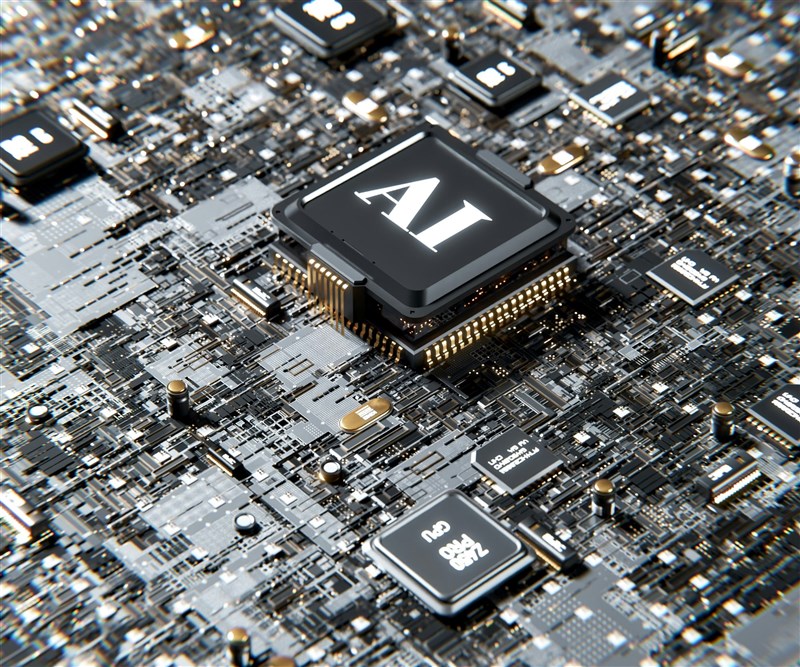
Taipei, May 21 (CNA) The global AI industry is entering a new phase in which growth is shifting beyond AI model development to infrastructure expansion and real-world deployment on devices and across industries, the head of the Market Intelligence and Consulting Institute (MIC) said Thursday.
The current wave of AI development is "no longer just about models" but increasingly about the broader ecosystem needed to support deployment, MIC Director General Chris Hung (洪春暉) said at the COMPUTEX Best Choice Award ceremony in Taipei.
"AI applications are no longer confined to the cloud and are beginning to enter edge computing, end devices, and manufacturing sites," he said.
Referring to a layered AI infrastructure framework popularized by Nvidia CEO Jensen Huang (黃仁勳), Hung said the AI ecosystem spans energy, chips, infrastructure, models, and applications.
AI has evolved into "a new generation of national infrastructure," Hung said.
The expansion of AI workloads is driving demand for servers, networking, cooling systems and power infrastructure, as data centers scale up to support both AI training and inference, he added.
Citing MIC projections, Hung said global AI server shipments will continue rising through 2030, while AI-related semiconductors are expected to account for nearly half of the overall semiconductor market by 2028.
Meanwhile, the focus of AI computing has been gradually shifting from cloud-based training to edge and end-user applications, with AI PCs expected to reach a "rapid adoption stage" in 2026 as more devices become capable of running AI workloads locally, he said.
"AI has become a full ecosystem," with the technology increasingly spreading into transportation, healthcare, manufacturing, and office applications, Hung said.
AI-enhanced Wi-Fi development is also evolving from a focus on peak speeds to improving reliability and low-latency performance in real-world environments, he added.
Founded in 1987, MIC serves as both an industry consultant and a government think tank in Taiwan, under the country's Institute for Information Industry.
- Business
NT$10 receipts win NT$10 million prizes
10/05/2026 09:02 PM - Politics
OCAC minister, family accused of misusing public resources overseas
10/05/2026 08:58 PM - Politics
New Eswatini envoy pledges support for Taiwan's int'l participation
10/05/2026 08:17 PM - Politics
Taichung mayoral rivals Ho, Chiang visit transport project sites
10/05/2026 07:41 PM - Society
6 Taipei police officers disciplined over misconduct in gay bar raid
10/05/2026 07:04 PM