INTERVIEW/Top U.S. envoy affirms Taiwan commitments despite Trump's remarks
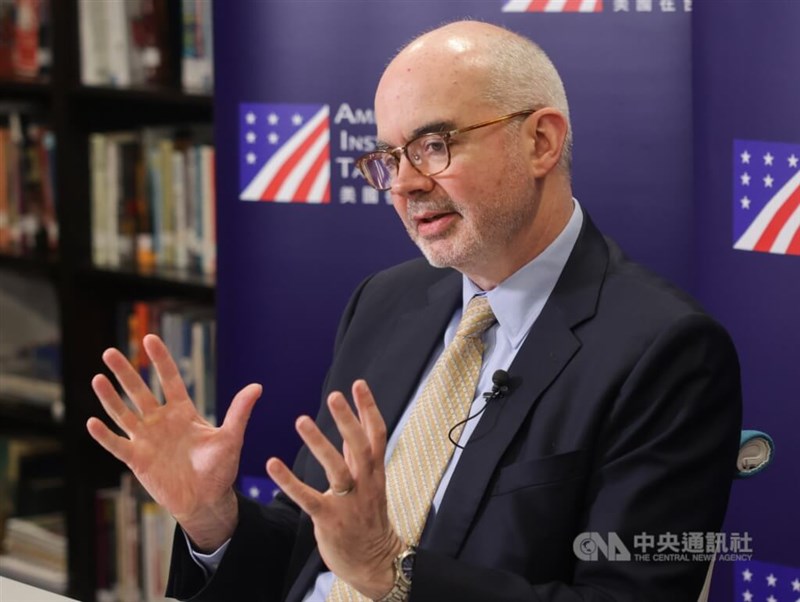
Taipei, May 21 (CNA) The United States' top envoy to Taiwan has reaffirmed that Washington's long-standing commitments to Taiwan have not changed after U.S. President Donald Trump called arms sales to Taiwan a "good bargaining chip" in dealings with China.
In a Fox News interview that aired shortly after Trump concluded a trip to China and meetings with Chinese President Xi Jinping (習近平) from May 13-15, Trump said he was weighing whether to approve a US$14 billion arms package for Taiwan.
Later, when asked again about the issue, Trump said the decision depended on China.
"I'm holding that in abeyance, and it depends on China," he said. "It's a very good negotiating chip for us, frankly. It's a lot of weapons."
• Arms sales to Taiwan not a bargaining chip with China: U.S. scholars
Trump's comments seemed to violate the U.S. Six Assurances to Taiwan -- issued by former President Ronald Reagan's administration in 1982 -- which included a pledge not to consult Beijing on arms sales to Taiwan.
Saying it was Xi who raised the issue of arms sales, Trump seemed to directly brush the pledge aside.
"What am I going to say? I don't want to talk to you about it because I have an agreement that was signed in 1982?"
Asked about Trump's comments, American Institute in Taiwan (AIT) Director Raymond Greene told CNA in a written interview that Trump and other senior U.S. officials had reaffirmed that there has been no change in U.S. policy toward Taiwan "and that this stance was clearly conveyed to the Chinese side."
"This policy, which consists of the Three Communiqués, the Taiwan Relations Act, and the Six Assurances, has been consistent across U.S. administrations from both parties and has ensured peace across the Taiwan Strait for nearly five decades," Greene said.
He also said the recently concluded Trump-Xi meeting in Beijing had produced satisfactory outcomes for Washington, adding that "establishing a stable framework for bilateral relations will help enhance regional security, including in the Taiwan Strait."
The White House had also made clear that Washington does not see "stable U.S.-China relations and a strong U.S.-Taiwan partnership as being in conflict," he said.
Greene also said the U.S. welcomed President Lai Ching-te's (賴清德) reiteration of Taiwan's long-standing commitment to cross-Taiwan Strait dialogue and maintaining the cross-strait status quo.
Washington hopes Beijing will reciprocate by engaging with Taiwan's democratically elected leaders "without preconditions and by reducing its military pressure around Taiwan," Greene said.
Asked about the Legislative Yuan's passage of a special defense budget with a spending cap of NT$780 billion (US$24.9 billion) exclusively for U.S. weapons systems, Greene said the U.S. viewed the passage as an "important first step toward meeting Taiwan's urgent defense needs."
"We now look forward to the Legislative Yuan working in a collaborative fashion to secure quick passage of funding for the remaining capabilities requested by the Ministry of National Defense, including drones and integrated air and missile defense," he said.
KMT chair's upcoming U.S. trip
Regarding opposition Kuomintang (KMT) chairwoman Cheng Li-wun's (鄭麗文) planned trip to the U.S., reportedly scheduled for June, Greene told CNA that many American lawmakers and scholars were looking forward to meeting her in person.
He said many of them were interested in asking her whether the KMT leadership "is fundamentally changing the party's political orientation."
According to Greene, most Americans "associate the KMT with Chiang Kai-shek and the fight against communism," while many foreign policy experts view the modern KMT as a "centrist party" that has sought to balance strong defense and cooperation with the U.S. while engaging with Beijing "to preserve the status quo."
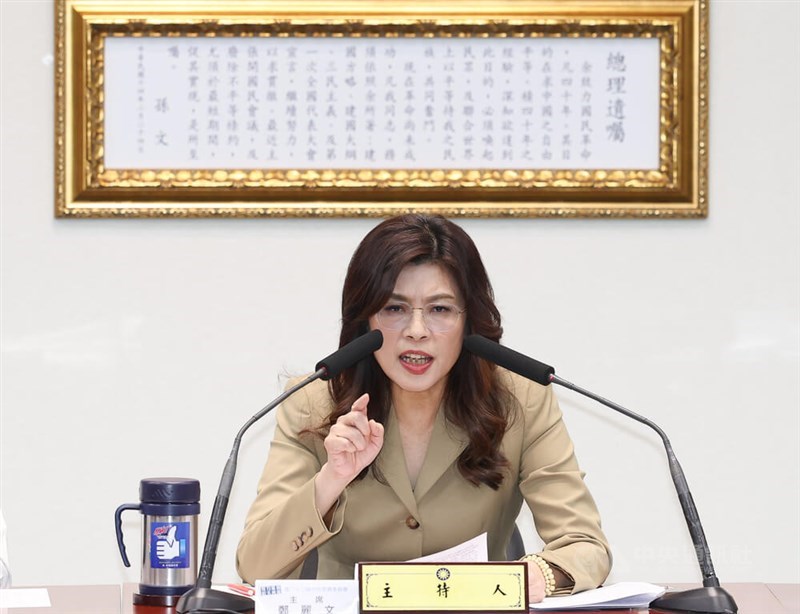
In recent months, however, international media reports have created the impression that the KMT "has started to adopt or emulate CCP positions on key diplomatic and security issues," while not considering the interests of the U.S. or Japan, Greene said.
"This visit should offer an opportunity to address those concerns, as well as clarify the KMT's stance on pending issues such as investments in Taiwan's defense industrial base," Greene said.
Greene is the director of the AIT, which serves as the U.S.' de facto embassy in Taiwan in the absence of official diplomatic ties.
![Taiwan, democracies must build resilience against China, Russia: Scholar]() Taiwan, democracies must build resilience against China, Russia: ScholarTaiwan and other democracies must strengthen their resilience against the "sharp power" wielded by authoritarian regimes such as China and Russia to defend their shared democratic values, a visiting American scholar said Monday.09/21/2026 04:39 PM
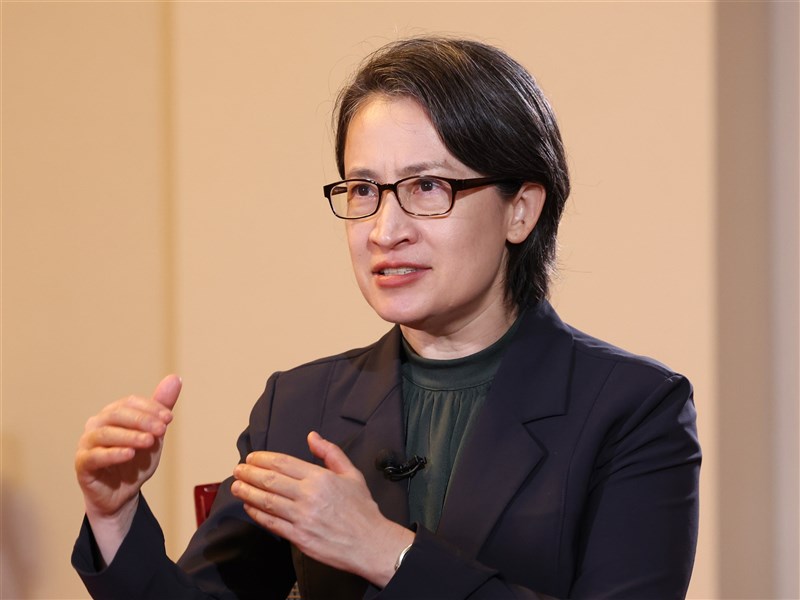
Taiwan, democracies must build resilience against China, Russia: ScholarTaiwan and other democracies must strengthen their resilience against the "sharp power" wielded by authoritarian regimes such as China and Russia to defend their shared democratic values, a visiting American scholar said Monday.09/21/2026 04:39 PM![European Parliament vice president praises Hsiao as 'role model' for women]() European Parliament vice president praises Hsiao as 'role model' for womenEuropean Parliament Vice President Pina Picierno on Saturday praised Taiwanese Vice President Hsiao Bi-khim (蕭美琴) as a role model for freedom-loving women around the world and told CNA that she would soon begin planning a trip to Taipei after accepting Hsiao's invitation to visit.09/13/2026 01:08 PM
European Parliament vice president praises Hsiao as 'role model' for womenEuropean Parliament Vice President Pina Picierno on Saturday praised Taiwanese Vice President Hsiao Bi-khim (蕭美琴) as a role model for freedom-loving women around the world and told CNA that she would soon begin planning a trip to Taipei after accepting Hsiao's invitation to visit.09/13/2026 01:08 PM![VP Hsiao flags funding, oversight gaps in opposition drone bills]() VP Hsiao flags funding, oversight gaps in opposition drone billsVice President Hsiao Bi-khim (蕭美琴) has questioned key elements of military drone procurement bills sponsored by opposition lawmakers, saying the omissions would hurt the industry and Taiwan's preparedness.08/26/2026 10:21 AM
VP Hsiao flags funding, oversight gaps in opposition drone billsVice President Hsiao Bi-khim (蕭美琴) has questioned key elements of military drone procurement bills sponsored by opposition lawmakers, saying the omissions would hurt the industry and Taiwan's preparedness.08/26/2026 10:21 AM

- Business
Amazon taking part in Taiwan PCB maker's private placement
09/29/2026 09:06 PM - Sports
Taiwan snatches 2 more silvers in shooting, Kurash at Asian Games
09/29/2026 08:42 PM - Business
Taiwan economic indicators stay strong for 9th straight month: NDC
09/29/2026 07:44 PM - Politics
AIDC, Corrections Agency hold counter-drone drill
09/29/2026 07:15 PM - Politics
KMT, TPP legislators reject all 27 of Lai's Control Yuan nominees
09/29/2026 06:55 PM