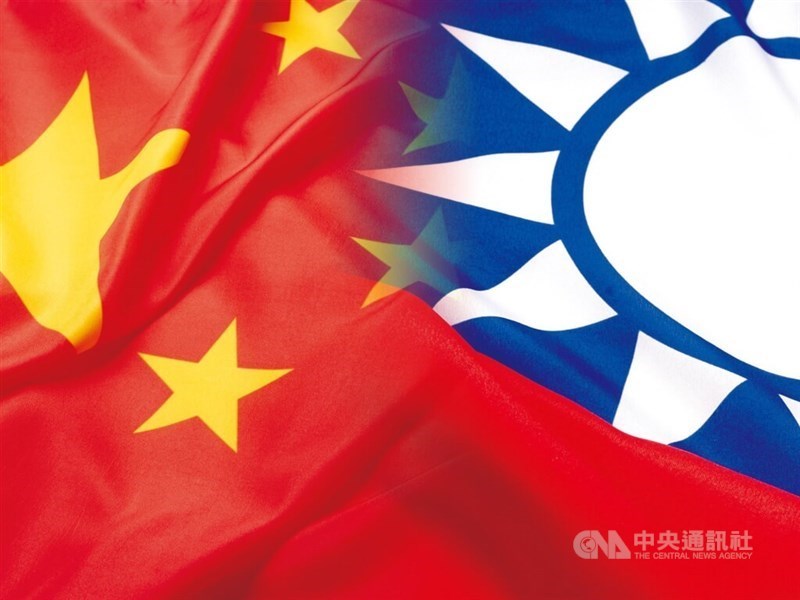
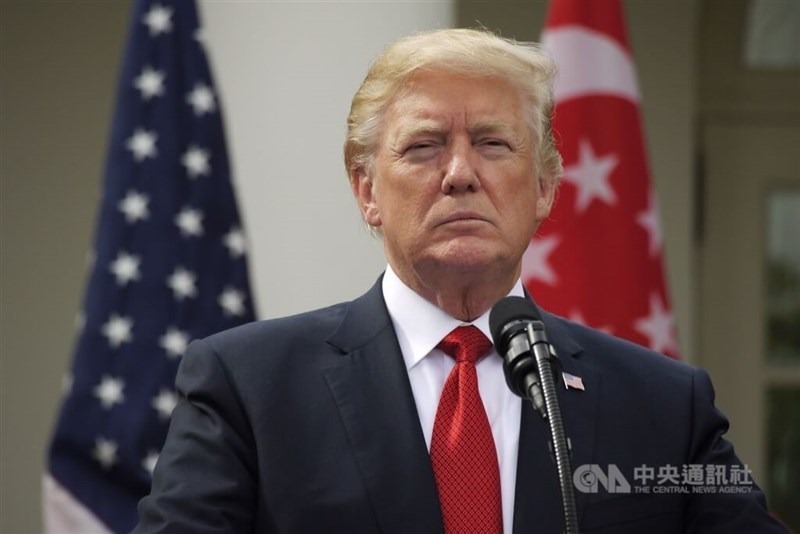
Washington, May 16 (CNA) Two American experts on Saturday said U.S. arms sales to Taiwan should not be used as a bargaining chip, after U.S. President Donald Trump said earlier that the sales were a "good bargaining chip" in dealings with China.
In a Fox News interview that aired right after he concluded a trip to China and meetings with Chinese President Xi Jinping (習近平) on Friday, Trump said he was weighing whether to approve a US$14 billion arms package for Taiwan.
"I haven't approved it yet. We are gonna see what happens. I may do it, I may not do it," the president said.
Later, when asked again about the issue, Trump said it was up to China.
"I'm holding that in abeyance and it depends on China," he said. "It's a very good negotiating chip for us, frankly. It's a lot of weapons."
Asked to comment, Bonnie Glaser, managing director of the Indo-Pacific Program at the German Marshall Fund, expressed concern that Trump's views on Taiwan "may have been influenced by the lecture he received from Xi" during his just-concluded trip to Beijing.
"I hope that members of his [Trump's] team have an opportunity to provide him with a more balanced and accurate perspective," she told CNA.
"Trump says he wants to avoid war. Providing arms to Taiwan will help prevent conflict, not provoke conflict. Taiwan should never be used as a bargaining chip," she said.
Ryan Hass, director of the John L. Thornton China Center at the Washington-based think tank Brookings Institution, expressed similar concerns in a commentary published Saturday.
"Trump's public openness to negotiating with Beijing over America's posture on Taiwan will serve as the diplomatic equivalent of a matador waving a red flag in front of a bull," he wrote in the article titled "Trump's Dangerous Taiwan Gamble."
"It will cause Beijing to intensify its efforts to test the boundaries of what it can gain in terms of loosening America's commitment to Taiwan's security," he wrote.
Hass, who served as director for China, Taiwan, and Mongolian affairs at the White House National Security Council during President Barack Obama's second term from 2013 to 2017, said Trump was essentially "giving up credibility without extracting benefits from Beijing."
"This is not just a policy shift. It is a shift from deterrence to dealmaking in a domain where there is no deal to be made, beyond offering unilateral concessions that undermine deterrence."
He said that if Trump wanted to reduce cross-strait risks, bargaining Taiwan away was not a good option.
Instead, Hass argued, Washington should remain "firmly focused on upholding peace and stability in the Taiwan Strait and keeping a path open for leaders on both sides of the Strait eventually to resolve their differences."
In response to Trump's Fox News interview, Taiwan's Presidential Office said U.S. arms sales to Taiwan "were not only part of Washington's security commitments under the Taiwan Relations Act, but also a key element of collective deterrence against regional threats."
- Politics
Lai's WWII remarks warn of China's bid to reshape world order: Analysts
10/10/2026 07:27 PM - Business
Gasoline, diesel prices to remain unchanged next week: CPC
10/10/2026 06:09 PM - Politics
Opposition leaders criticize DPP, Lai in National Day remarks
10/10/2026 04:48 PM - Politics
Ex-President Tsai calls for deeper ties between Taiwan, Silicon Valley
10/10/2026 04:25 PM - Society
Filipino worker hospitalized, over 300 evacuated in Tainan dorm fire
10/10/2026 03:59 PM