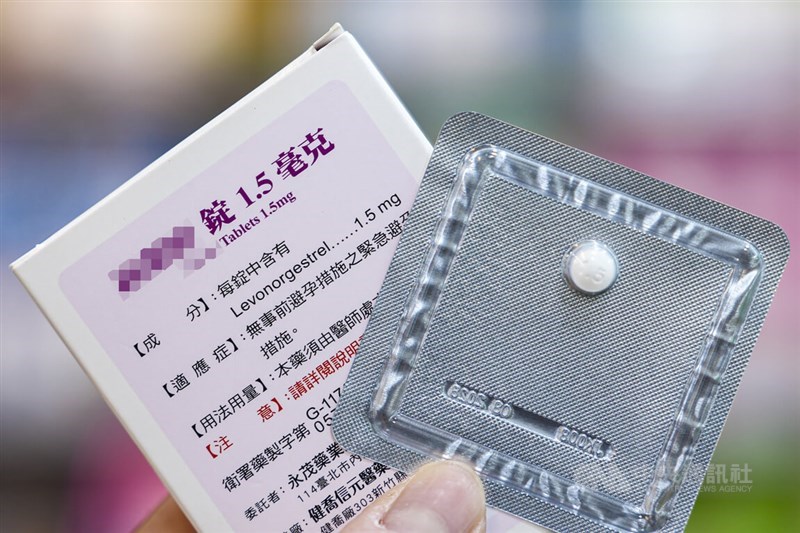
Taipei, July 2 (CNA) Taiwan will consider a limited relaxation of controls on access to the morning-after pill, taking Japan as a reference, Health Minister Shih Chung-liang (石崇良) said Thursday amid backlash over recently proposed contraception sales restrictions.
The policy plan will be finalized in the second half of 2026, and include comprehensive support measures, as the morning-after pill still has side effects, Shih said at the Legislature.
The policy shift came in the wake of backlash following a Taiwan Food and Drug Administration (TFDA) proposal on June 25, indicating it would add three prescription drugs, including two oral emergency contraceptives, to its drug traceability system by amending the Pharmaceutical Affairs Act.
The drugs, misoprostol, levonorgestrel and ulipristal acetate, currently require a doctor's prescription but are available at some pharmacies, which might stop if they are included in the traceability system.
TFDA said the measure is intended to ensure pharmaceutical companies' report compliance and allow regulators to track drug distribution. The draft is open for public comment for 60 days.
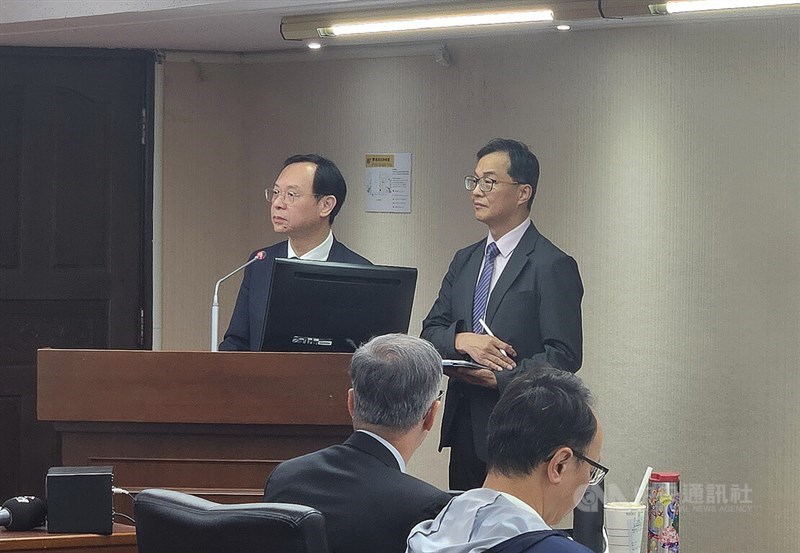
However, the change could make it harder for vulnerable women, including minors, immigrants and those controlled by their partners, to obtain the drugs on time, Democratic Progressive Party (DPP) Legislator Lin Yueh-chin (林月琴) suggested during a hearing of the Legislature's Social Welfare and Environmental Hygiene Committee on Thursday.
She also noted that OB-GYN clinics are closed on weekends and less accessible in rural areas.
Shih responded that the three drugs are not suitable for long-term use, noting that misoprostol, a prostaglandin used for gastric conditions, can induce uterine contractions and expel an embryo, and must be used with caution.
Levonorgestrel and ulipristal acetate are high-dose progestins, not regular contraceptives, he added.
Taiwan is currently reviewing Japan's model, where emergency contraceptives are available on a limited pharmacist-supervised over-the-counter basis, the minister said, noting that the timing of drug use directly impacts efficacy.
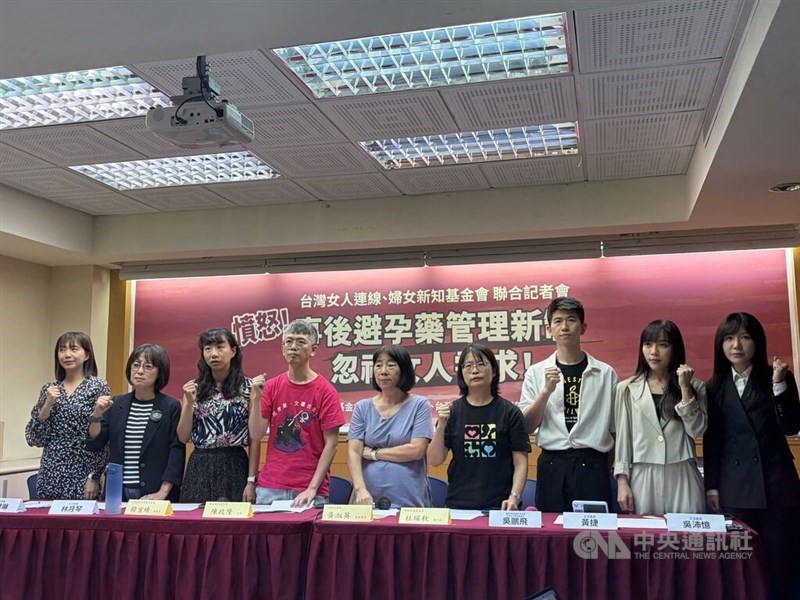
In response, women's rights groups said at a joint news conference Thursday that morning-after pills, used after contraceptive failure or sexual assault, are most effective when taken as soon as possible, ideally within 72 hours.
Taipei Women's Rescue Foundation CEO Tu Ying-chiu (杜瑛秋) said some patients cannot access treatment within 72 hours, as survivors of intimate partner violence may avoid clinics and services are limited on weekends.
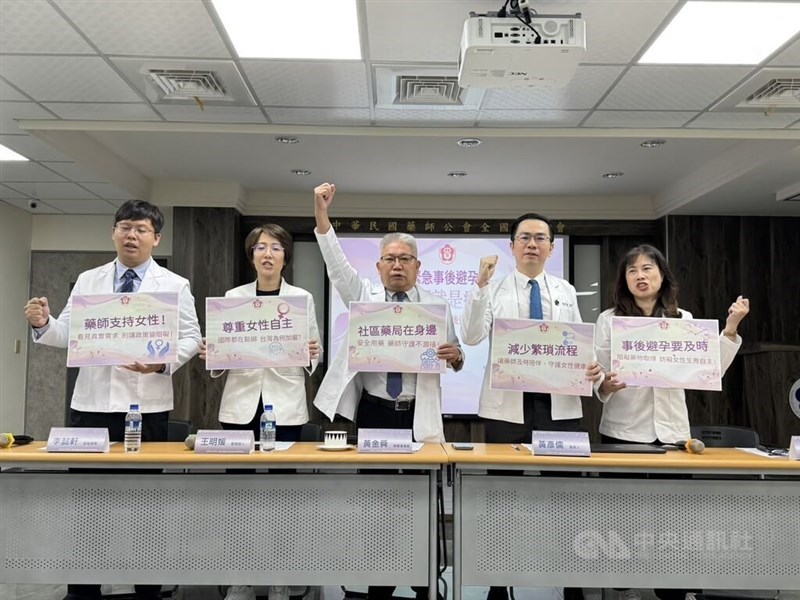
The Taiwan Pharmacist Association said Thursday that misoprostol, a stomach drug often used off-label for abortion, should be included in the traceability system, while the other two emergency contraceptives function differently.
The association said levonorgestrel has been assessed by the World Health Organization as safe for single use, does not induce miscarriage or affect future fertility, and is listed as a non-prescription drug in about 90 countries.
The TFDA said Wednesday it is studying whether emergency contraceptive pills could be dispensed under prescription and pharmacist instruction models.
Deputy Health Minister Lin Ching-yi (林靜儀) said on social media Wednesday that the proposal was driven in part by concerns that large volumes of the drugs were unaccounted for, raising risks of misuse and profit-seeking.
In 2025, the TFDA held discussions referencing Japan's system, under which emergency contraceptives are sold without a prescription but must be taken under pharmacist supervision, followed by a medical visit about three weeks later.
- Politics
Cabinet approves upgraded dementia care plan targeting '888' goals by 2035
10/15/2026 09:03 PM - Politics
Taipei mayoral candidates Chiang, Shen to debate Oct. 31
10/15/2026 08:56 PM - Politics
Army to open Chengkungling base to public Oct. 24
10/15/2026 08:52 PM - Society
Labor groups allege contract swaps, low pay for Indonesian workers
10/15/2026 08:39 PM - Politics
MND says zero tolerance for bullying after new suicide case evidence
10/15/2026 08:34 PM