Medical capacity reduction, internet slowdowns conclude civil resilience drills
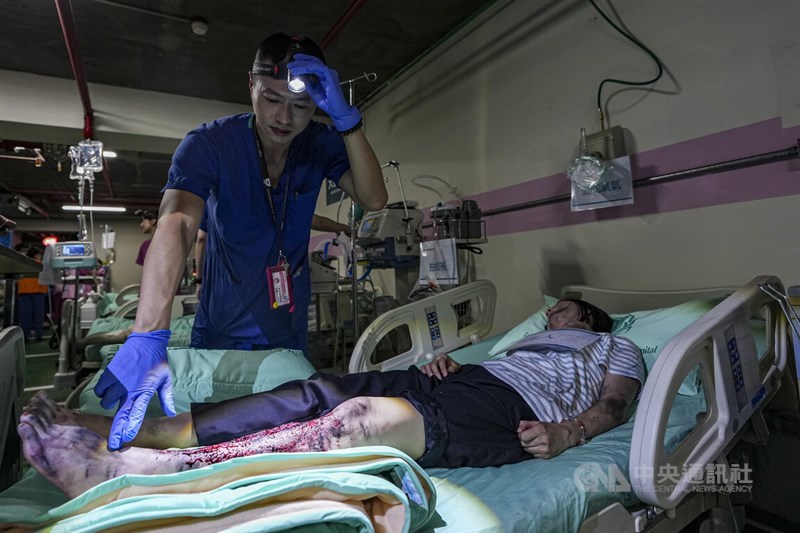
Taipei, Aug. 13 (CNA) A New Taipei hospital held a medical capacity reduction drill Thursday on the last day of nationwide civil defense drills, while Taipei and other parts of northern Taiwan simulated degraded internet environments for the first time.
The drills are part of the nationwide Urban Resilience Exercises that began in April to build whole-of-society resilience during crises.
Taipei Medical University-Shuang Ho Hospital conducted the medical capacity reduction drill to simulate sustaining medical care when critical infrastructure is damaged, disrupting, for example, water, electricity or oxygen supplies.
It also set up an underground ward area to simulate wartime operations, as underground spaces are considered safer than the ground surface during war.
President Lai Ching-te (賴清德) inspected the drill. American Institute in Taiwan (AIT) Director Raymond Greene and New Taipei Mayor Hou Yu-ih (侯友宜) were also in attendance.
Lai toured the underground ward area on the hospital's third basement level, which included a restricted area, wartime storage facilities, a blood donation station and core medical areas, such as general wards, an emergency dialysis area and an intensive care unit.
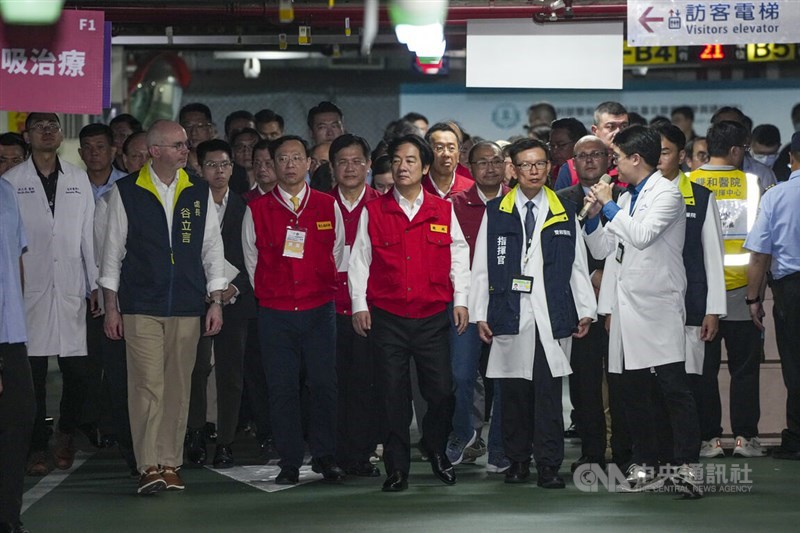
Medical personnel told Lai that once instructed to reduce the hospital's medical load, they would complete preparations for the wards within 48 hours.
They said shortages of painkillers and sedatives could become a major challenge during wartime, and doctors could use ultrasound-guided pain management techniques to maintain adequate pain control in the underground facility.
The medical team also practiced using headlamps to simulate a possible power outage during wartime.
Ma Hon-ping (馬漢平), vice superintendent at Shuang Ho Hospital, said at a seminar last year that the hospital would set aside 80-90 beds for treating a potential influx of patients after medical capacity reduction measures take effect.
Later in the day, air raid defense drills were carried out in seven cities and counties in northern Taiwan.
During the drills, mobile internet was significantly slowed, to simulate disruptions to the internet.
At the elevated Taipei MRT Jiantan Station, disembarking passengers were guided by police officers to the ground level, while some passengers took shelter along walls or other fortified structures in the station. Some just sat casually on the floor.
A passenger from Canada named Noah told CNA that he believed the internet slowdown drill was necessary because it showed people what a disruption in internet connectivity caused by "hostilities" would be like.
Another passenger, Anna, from Poland, said the air raid drill felt "real" and was necessary because it provides people with an understanding of how to respond should war breaks out.
"I think in Poland we should also have this kind of drill," she said.
Both passengers said they had learned of the drills beforehand.
- Politics
Taipei Mayor Chiang agrees to at least one televised debate with Shen
10/13/2026 08:45 PM - Society
Animal groups renew push for referendum on full ban of wild boar snares
10/13/2026 08:36 PM - Science & Tech
NTHU study finds plant compound may help treat brain injuries
10/13/2026 07:50 PM - Business
Economists see AI boom sustaining Taiwan growth, urge diversification
10/13/2026 07:25 PM - Society
Northern Taiwan to see heavier rain Thursday before weather stabilizes
10/13/2026 07:04 PM