DEFENSE/Defense officials target 2027 for integrated counter-drone network
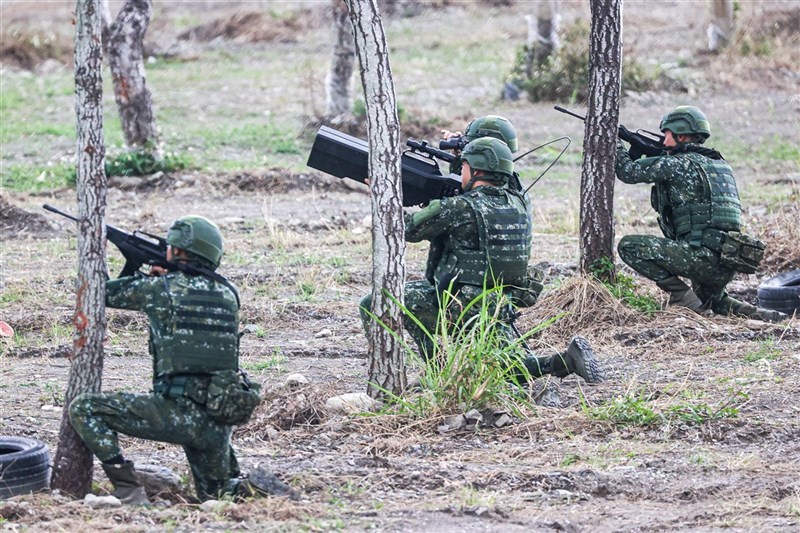
Taipei, Aug. 5 (CNA) Defense officials said Wednesday they expect to launch critical systems by the end of 2027 to integrate counter-drone capabilities across the armed forces and complete an interface to coordinate military and non-military counter-drone operations.
At a meeting of the Legislative Yuan, ruling Democratic Progressive Party Legislator Wang Ting-yu (王定宇) said this year's Han Kuang military exercises, which began Wednesday, will include drone warfare and counter-drone drills.
However, he highlighted a lack of integration among counter-drone systems across military branches and between the non-kinetic, or "soft-kill" systems used by the armed forces, the coast guard and government-funded companies that operate critical infrastructure.
Asked by Wang to clarify the issue, Army Chief of Staff Chen Chien-yi (陳建義) said hard-kill and soft-kill capabilities are assigned to different units, although their operational plans are developed by the same combat training unit.
Huang Wen-chi (黃文啟), head of the Ministry of National Defense's Department of Strategic Planning, said the armed forces' existing counter-drone systems have yet to be integrated with a counter-drone command-and-control (C2) system that is currently under development.
Former commander of the United States Army Pacific Charles A. Flynn also highlighted shortcomings in Taiwan's counter-drone integration when he attended the Taiwan-U.S. Defense Industry Forum in May, Wang said.
The MND's counter-drone systems should also be linked with those being acquired by government-owned companies such as Taiwan Power Co., CPC Corp., Taiwan Railway Corp., as well as the National Police Agency and the Coast Guard Administration, all of which are seeking to procure soft-kill counter-drone systems, he added.
Wang asked whether those systems would eventually be integrated, warning that without coordination they could interfere with one another and even bring down Taiwan's own drones.
Calling the lack of integration concerning, Wang asked when the MND expected to integrate its existing counter-drone capabilities into a C2 system and make it operational.
"We are on the front line, not in a rear area where we can take our time," he said.
In response, Huang said several systems capable of integrating the military's counter-drone capabilities are expected to become operational next year, "if the projects proceed as planned."
Wang also recommended that the MND establish an interagency task force to oversee counter-drone operations, including decisions on what types of systems to deploy, similar to how the United States has assigned the role to the Joint Interagency Task Force 401 (JIATF-401).
Li Shih-chiang (李世強), president of the government-funded National Chung-Shan Institute of Science and Technology, said the institute is working to integrate counter-drone systems protecting non-military critical infrastructure and expects to complete the project by the end of 2027.
Li said that once the project is complete, the National Fire Agency will serve as the "Big C2" authority, while the MND will decide when to connect its systems.
"We will have the interface ready, but when [the systems] will be connected will depend on the overall combat preparedness level," Li said.
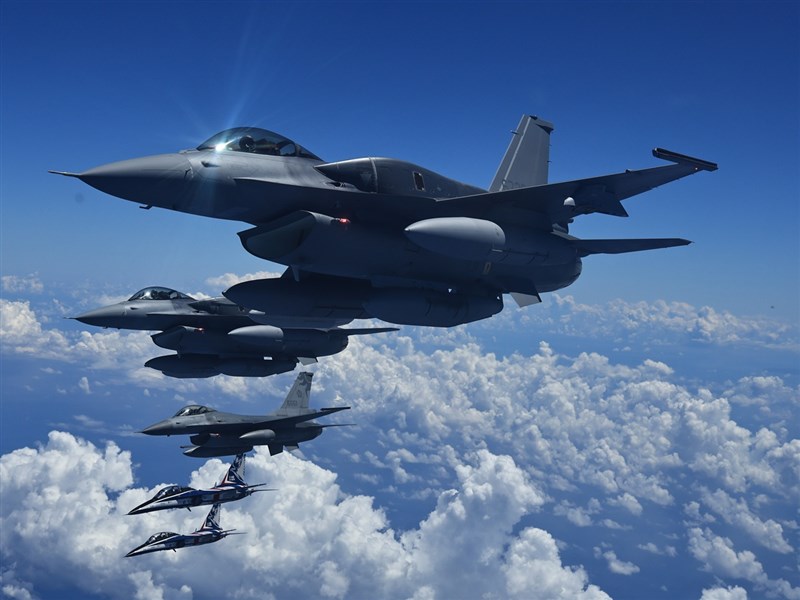
![Defense ministry releases images of jets escorting new F-16Vs]() Defense ministry releases images of jets escorting new F-16VsThe Ministry of National Defense on Saturday released footage and photos of an F-16V Block 20 and Brave Eagle advanced jet trainers escorting two F-16V Block 70s that Taiwan received a day earlier.10/03/2026 03:05 PM
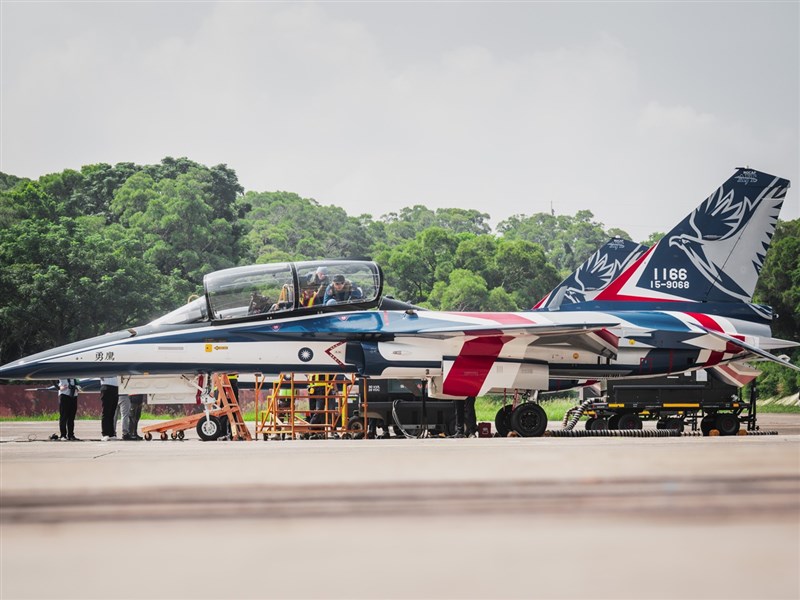
Defense ministry releases images of jets escorting new F-16VsThe Ministry of National Defense on Saturday released footage and photos of an F-16V Block 20 and Brave Eagle advanced jet trainers escorting two F-16V Block 70s that Taiwan received a day earlier.10/03/2026 03:05 PM![Taiwan completes production of 66 Brave Eagle advanced jet trainers]() Taiwan completes production of 66 Brave Eagle advanced jet trainersTaiwan completed production of all 66 domestically developed Brave Eagle advanced jet trainers Thursday, with Aerospace Industrial Development Corp. (AIDC) Chairman Tsao Chin-pin (曹進平) personally piloting one of the final two aircraft to the Air Force Academy in Kaohsiung's Gangshan District.09/24/2026 03:18 PM
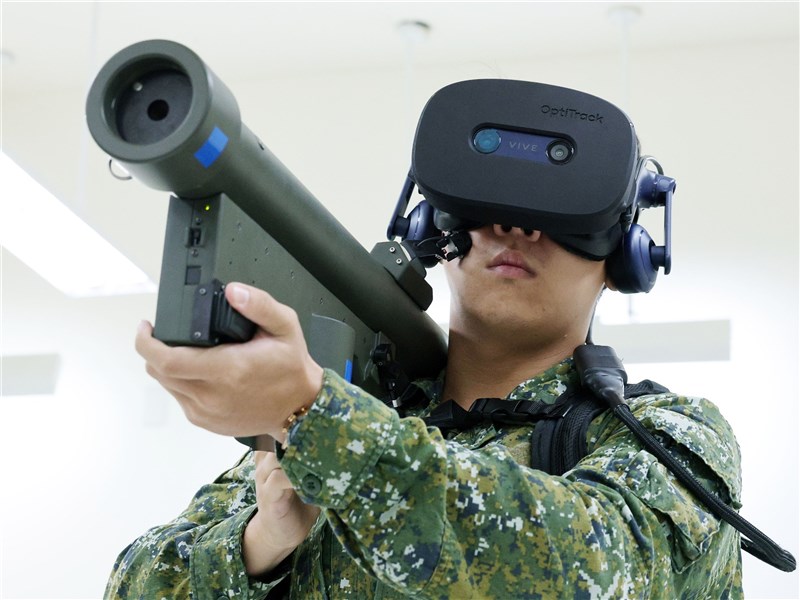
Taiwan completes production of 66 Brave Eagle advanced jet trainersTaiwan completed production of all 66 domestically developed Brave Eagle advanced jet trainers Thursday, with Aerospace Industrial Development Corp. (AIDC) Chairman Tsao Chin-pin (曹進平) personally piloting one of the final two aircraft to the Air Force Academy in Kaohsiung's Gangshan District.09/24/2026 03:18 PM![Army unveils Stinger simulators, highlights counter-drone role]() Army unveils Stinger simulators, highlights counter-drone roleTaiwan's Army unveiled simulators for United States-made Stinger missile systems Tuesday, highlighting their use in training personnel to engage airborne targets, including drones.09/22/2026 07:39 PM
Army unveils Stinger simulators, highlights counter-drone roleTaiwan's Army unveiled simulators for United States-made Stinger missile systems Tuesday, highlighting their use in training personnel to engage airborne targets, including drones.09/22/2026 07:39 PM
- Politics
Eswatini king thanks Taiwan for helicopter donation
10/11/2026 04:38 PM - Society
Kaohsiung couple detained for abuse after 2-year-old daughter's death
10/11/2026 03:19 PM - Business
U.S. launches Section 337 probe involving Taiwan firms
10/11/2026 03:16 PM - Sports
Taiwanese men's, women's doubles pairs reach BWF Arctic Open finals
10/11/2026 01:51 PM - Society
Taiwan headline news
10/11/2026 01:15 PM