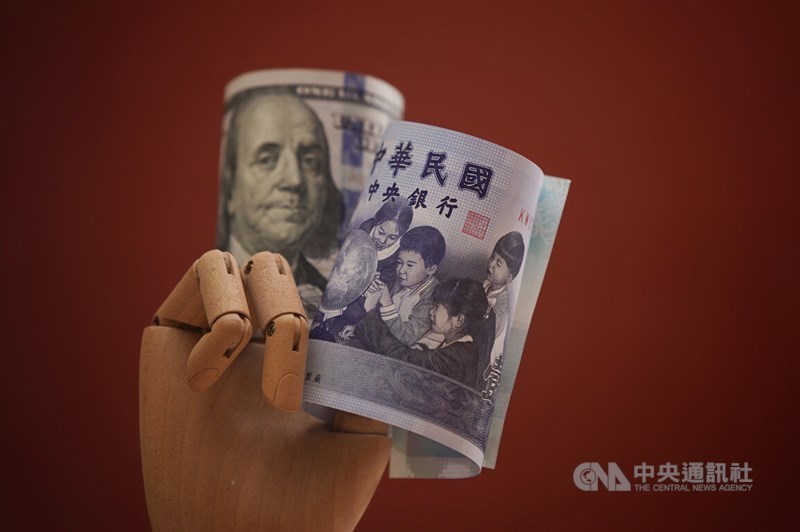
Washington, July 23 (CNA) The United States on Thursday announced Section 301 tariffs targeting imports from 60 economies, with certain goods from Taiwan subject to a 10 percent duty when the measure takes effect on Friday (U.S. time).
In a notice, the Office of the United States Trade Representative (USTR) said it was imposing tariffs under Section 301 of the Trade Act of 1974 on 60 economies that it accused of failing to enforce measures prohibiting the import of goods made with forced labor.
According to a pre-publication version of the Federal Register notice, if the most-favored-nation (MFN) tariff on a product from Taiwan is below 10 percent, the combined MFN and Section 301 tariff will total 10 percent.
Products already subject to an MFN tariff of 10 percent or more will not face an additional Section 301 duty.
The new tariff regime stems from a report released in early June on import bans covering goods made with forced labor, in which the USTR recommended imposing tariffs on 60 economies.
The report said Taiwan appeared to be taking steps to fulfill its commitments to prohibit such imports, but had yet to enact a legal ban.
The tariffs follow a USTR investigation that included two rounds of public hearings, received more than 2,100 public comments, and involved consultations with U.S. trading partners to address longstanding concerns, according to the agency.
The investigation, launched on March 12, came less than three weeks after the U.S. Supreme Court struck down sweeping global tariffs imposed by President Donald Trump. It was widely seen as an attempt by the Trump administration to rebuild tariff pressure on trading partners.
Other economies affected by the decision were China and India, with tariff rates ranging from 10 percent to 12.5 percent, according to the Federal Register notice.
In a USTR news release, U.S. Trade Representative Jamieson Greer said the United States has enforced a ban on imports made with forced labor for nearly a century and that it was "well past time" for its trading partners to adopt similar measures.
At a news conference Friday, the Taiwan Institute of Economic Research (TIER) said the U.S. Section 301 measures announced so far were relatively favorable to Taiwan.
It said Taiwan faces a 10 percent tariff under the forced-labor-related action, compared with 12.5 percent for Japan, China and many other economies.
TIER President Chang Chien-yi (張建一) attributed Taiwan's comparatively favorable treatment partly to its efforts to address U.S. concerns over forced labor.
He said the measures could narrow the tariff disadvantage traditionally faced by Taiwanese exporters, particularly in industries such as automobile parts.
TIER economist Liu Pei-chen (劉佩真) said, however, that a separate Section 301 investigation into semiconductor overcapacity, expected to conclude by the end of July, posed greater uncertainty.
Advanced-node foundries should be less affected, while mature-node foundries could face greater exposure because concerns about excess capacity are concentrated in that segment, she said.
Chang added that Taiwan exports relatively few semiconductors directly to the United States, with many shipped elsewhere for assembly into information and communications technology products.
The impact could be greater if Washington imposed tariffs on finished products containing chips not manufactured in the U.S., he said.
- Politics
Cabinet approves upgraded dementia care plan targeting '888' goals by 2035
10/15/2026 09:03 PM - Politics
Taipei mayoral candidates Chiang, Shen to debate Oct. 31
10/15/2026 08:56 PM - Politics
Army to open Chengkungling base to public Oct. 24
10/15/2026 08:52 PM - Society
Labor groups allege contract swaps, low pay for Indonesian workers
10/15/2026 08:39 PM - Politics
MND says zero tolerance for bullying after new suicide case evidence
10/15/2026 08:34 PM