Taiwan will strengthen protection of nationals in wake of China ethnic unity law: Cho
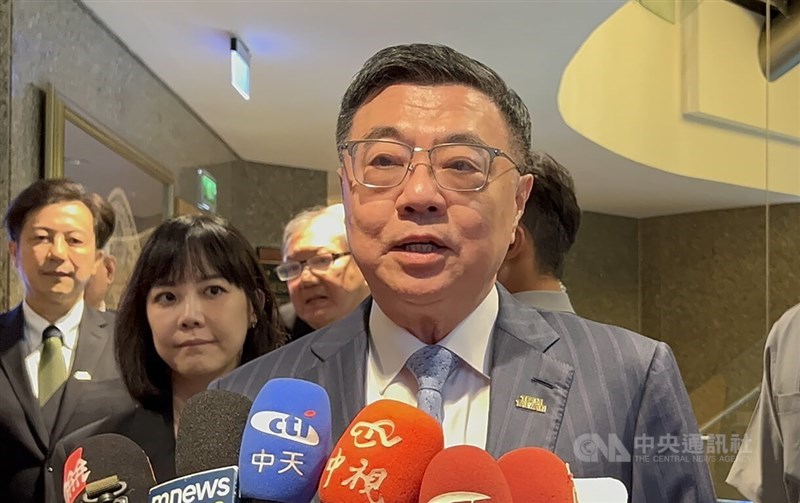
Taipei, July 1 (CNA) Premier Cho Jung-tai (卓榮泰) said Wednesday that China's Law on Promoting Ethnic Unity and Progress seeks to eliminate the sovereignty of the Republic of China, Taiwan's official name, and the Taiwanese government will redouble efforts to protect its citizens.
Cho made the remarks at an event in Taipei, noting that the law, which took effect on Wednesday, covers all of Taiwan's population of 23 million people in its goal to promote Chinese ethnic unity.
He called on people to watch how political parties in Taiwan react to the law, in particular which parties publicly endorse it and which ones keep silent.
Because the law targets any individual, including Taiwanese, engaged in acts that could undermine Chinese ethnic unity, the government will redouble efforts to protect Taiwanese citizens, Cho said.
He did not, however, specify what additional measures the government will adopt.
The law has codified China's unification agenda and indicates that Beijing might no longer tolerate and wants to eliminate the "Republic of China," he added.
The law, passed in March by China's National People's Congress, stipulates that any Chinese citizen is obligated to uphold national unification. It aims to "enhance Taiwan compatriots' sense of belonging, identification, and pride" and the sense that "compatriots" on both sides of the Taiwan Strait are Chinese and members of the Chinese nation.
Any organization or individual within or outside the People's Republic of China who commit acts that undermine ethnic unity and progress or create ethnic division will be pursued for legal responsibility in accordance with law, it said.
Separately on Wednesday, Deputy Mainland Affairs Council (MAC) Minister Shen Yu-chung (沈有忠) urged Taiwanese citizens not to visit China, Hong Kong and Macau unless necessary, in the wake of the law taking effect.
Shen was responding to a question from Legislator Lin Chu-yin (林楚茵) of the ruling Democratic Progressive Party on what measures the MAC has taken to protect civilians and public servants from the potential repercussions of the law.
Shen said the MAC will work with the Ministry of Foreign Affairs (MOFA) and consult with foreign embassies and representative offices in Taiwan to identify which countries have mutual judicial assistance agreements with China and which countries are considered to lean toward Beijing.
Meanwhile, the MAC will gauge the impact of the law and issue travel advisories if necessary, he added.
Shen noted that 13 Taiwanese citizens were reported missing or had their personal freedom restricted in China last month.
The number could rise with the implementation of the law, he said, warning citizens not to visit China, Hong Kong or Macau unless necessary.
Lin also asked Defense Minister Wellington Koo (顧立雄) and Deputy Foreign Minister Chen Ming-chi (陳明祺) what preparations their respective agencies have made for personnel posted overseas in response to the law.
Koo and Chen both said that such personnel undergo anti-espionage training before they are stationed overseas.
Although personnel at Ministry of National Defense think tanks do not currently receive such training, going forward the ministry will make it mandatory, Koo said.
MOFA will step up efforts to warn travelers about personal safety and consult with relevant countries on how to strengthen measures to ensure the safety of its personnel, Chen added.
- Politics
Xi's WWII account obscures ROC role, evokes Japan tensions: Scholars
09/29/2026 04:30 PM - Business
U.S. dollar closes higher on Taipei forex market
09/29/2026 04:11 PM - Business
Consumer confidence rises to 18-month high in September
09/29/2026 03:26 PM - Business
Taiwan shares close down 0.82%
09/29/2026 01:54 PM - Business
7-Eleven announces five NT$10 million invoice prize winners
09/29/2026 01:31 PM