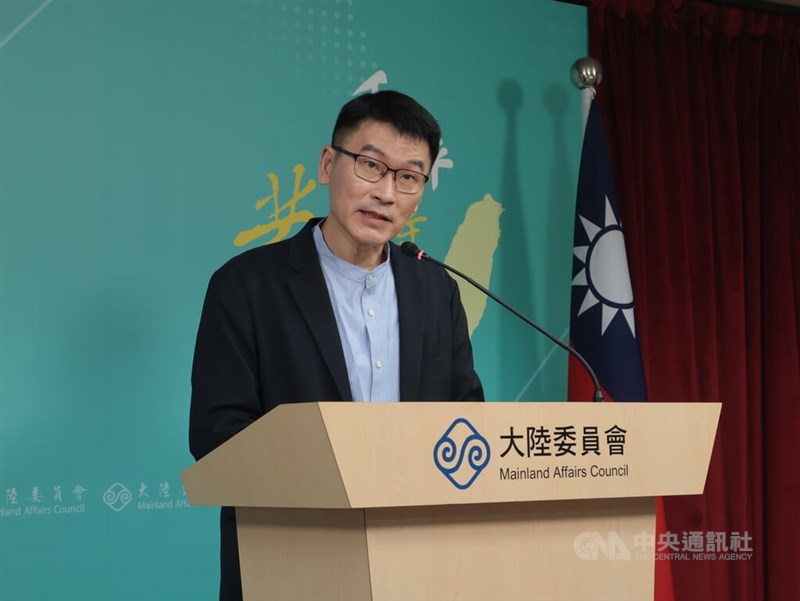
Taipei, June 25 (CNA) Taiwan's Mainland Affairs Council (MAC) said Thursday that China's new "ethnic unity" law, set to take effect on July 1, contains vaguely defined provisions, and that Beijing has done little to ease international concerns over its extraterritorial reach.
China's Ethnic Unity and Progress Promotion Law contains "very vague" legal concepts, including "undermining ethnic unity" and acts that are "detrimental to ethnic unity and progress," MAC deputy head and spokesperson Liang Wen-chieh (梁文傑) told a regular news briefing in Taipei.
Liang argued that those concepts "all lack clear definitions," leaving people unable to determine what is safe or risky and therefore likely to self-censor.
Asked about comments made by China's Vice Minister of Justice Hu Weilie (胡衛列) a day earlier in response to international concerns over the law, Liang said: "I don't think his remarks will allay the concerns of other countries."
Aimed at "forging a strong sense of community for the Chinese nation," the new law includes Article 63, under which organizations and individuals outside China who engage in acts against China that "undermine ethnic unity and progress" or "promote ethnic separatism" shall be held legally liable.
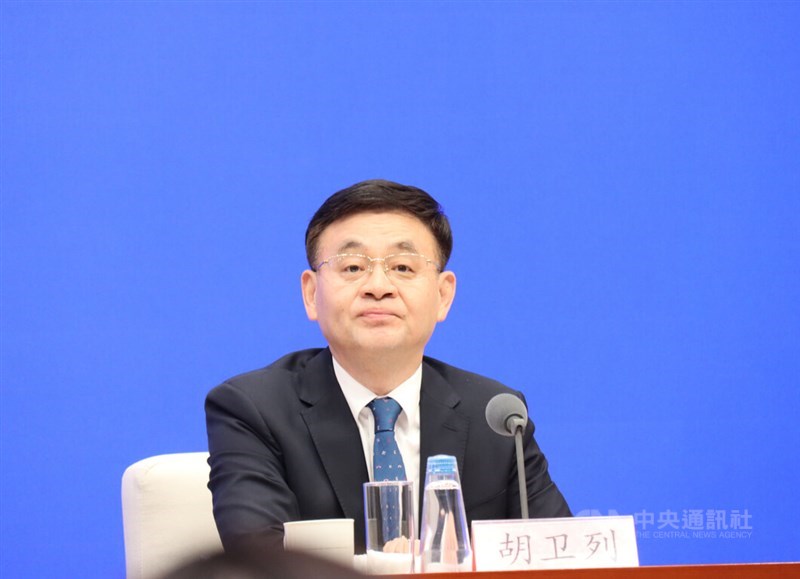
At a press conference in Beijing on Wednesday, Hu rejected Western media claims that Article 63 involves "long-arm jurisdiction" or "extraterritoriality," saying the law's overseas provisions were "justified, lawful and necessary," according to China's state-run Xinhua News Agency.
Hu said the provision complies with "legal principles, basic norms of international law and common practice worldwide," Xinhua reported.
The vice minister also said all countries are entitled to "enact domestic laws countering separatist and destructive conduct," as protecting national unity, territorial integrity and social stability falls within every country's sovereign rights, according to Xinhua.
During Thursday's briefing, Liang said China has long used tools such as AI and big data to monitor online speech, and that people could be questioned, interrogated, or detained after traveling to China or Hong Kong over comments they had previously made online.
He cited cases in which Taiwanese people who had posted comments on Facebook in support of Hong Kong's 2019 pro-democracy protests later faced questioning, interrogation, or detention when they traveled to Hong Kong.
Such cases show that Beijing's explanation of the new law "cannot dispel people's concerns," Liang said, adding that Taiwanese people already face similar risks when traveling to China, where authorities could also bring "various trumped-up charges" against them if they wished.
- Society
Seasonal winds to bring cooler weather across parts of Taiwan
10/03/2026 07:26 PM - Politics
Local election campaigns heat up across Taiwan
10/03/2026 06:56 PM - Politics
Taiwan confirms its patrol vessels monitoring Chinese ships near Philippines
10/03/2026 06:46 PM - Business
CPC to leave domestic gasoline, diesel prices unchanged next week
10/03/2026 05:48 PM - Science & Tech
Taiwan, U.K. sign science, technology deal covering 3 areas
10/03/2026 04:26 PM