INTERVIEW/Scholar uses rare skill to decode work shining light on Taiwan's past
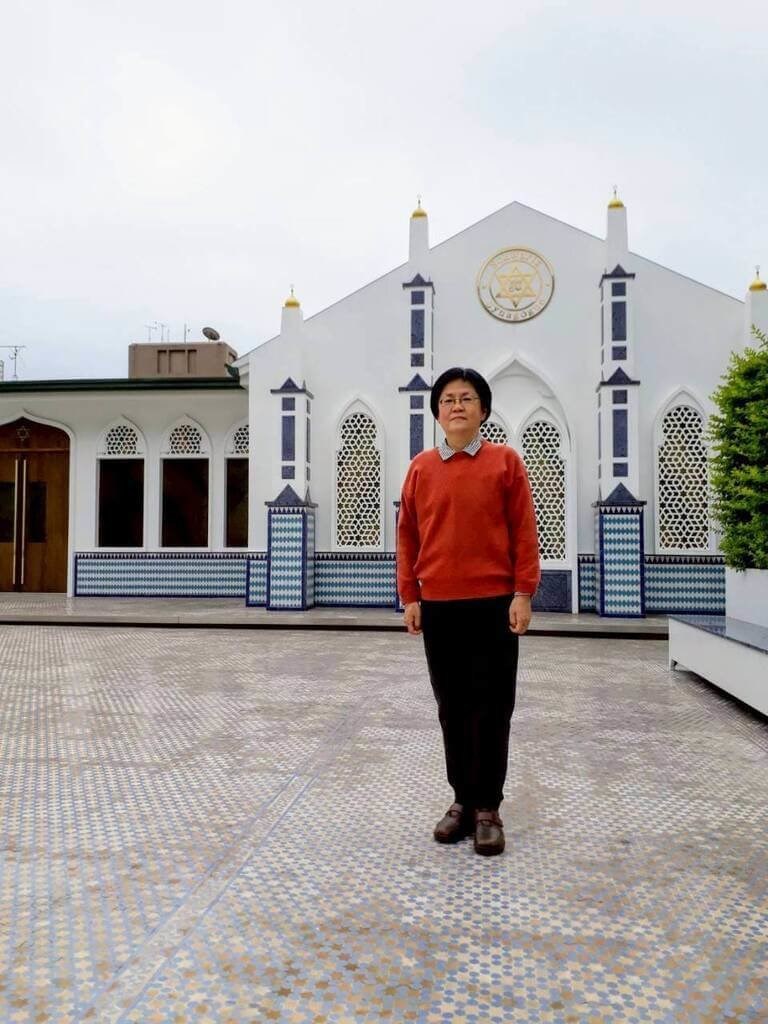
New Taipei, June 22 (CNA) When Taiwanese scholar Chang Shoou-huey (張守慧) realized that a 350-year-old travelogue of Taiwan written in an obsolete form of German existed, she saw it as a unique opportunity to apply years of specialized training.
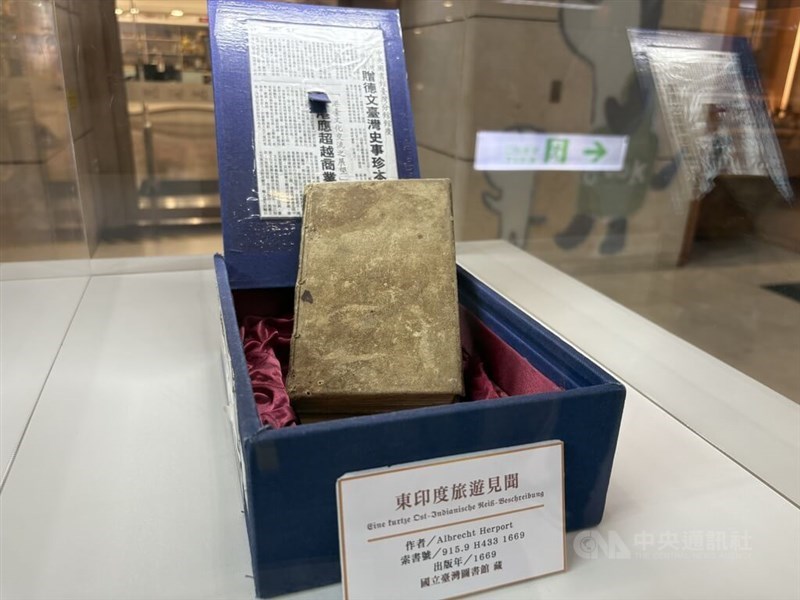
That moment came in 2023 at a Kaohsiung book fair, where National Taiwan Library Director Tsao Tsau-ying (曹翠英) mentioned to her that the library held a rare 1669 volume no one had been able to translate.
Chang, a professor at Wenzao Ursuline University of Languages in Kaohsiung, immediately recognized the challenge.
"When I saw the original book, I knew it was my field," Chang said in a recent interview with CNA.
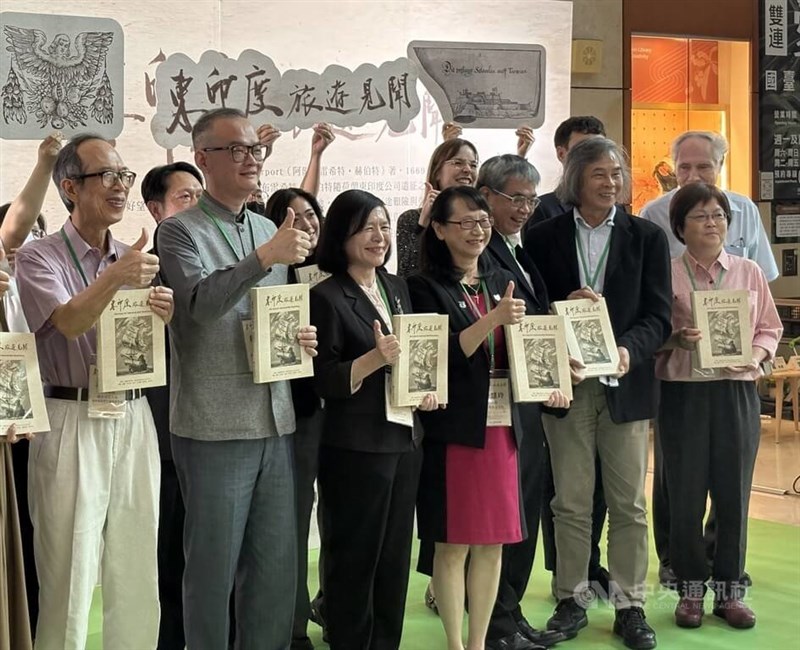
That encounter led to a year-long project that culminated in May with the publication of the first complete Chinese translation of "A Short Description of a Nine-Year East Indian Journey," a 17th-century travelogue by Swiss painter and soldier Albrecht Herport.
While the book provides one of the earliest firsthand European accounts of Taiwan, the story behind its translation is one of Chang's uncommon linguistic expertise and long-standing commitment to preserving cultural heritage.
A rare specialty
What made Chang uniquely suited to the project is an expertise shared by very few scholars. The text was written in Early New High German and printed in Gothic blackletter script -- a combination that is difficult even for many modern German speakers to read.
"People who can read this kind of language are already rare in Germany," Chang said. "Those fluent in both Early New High German and Chinese are even rarer."
For Chang, whose research focuses on ancient Germanic languages and Jewish culture, the project was a natural fit.
In January 2024, she assembled a multilingual team of specialists in German, French, Spanish and Japanese to examine the original volume in the library's climate-controlled rare books vault and painstakingly decipher the centuries-old text.
Reading between the lines of history
Chang's expertise allowed her to do more than translate the words on the page; it also helped her interpret the historical context.
When Herport wrote that Dutch defenders saw a "mermaid" before the fall of Fort Zeelandia, Chang believes the figure was more likely a Chinese soldier hiding in the water, whose long hair floating on the surface was mistaken for that of a mythical creature.
She also urged readers to critically examine the book's colonial-era prejudices, including derogatory depictions of Taiwan's Indigenous peoples.
"These documents record not only history itself, but also the perspectives behind the writing," Chang said, adding that such biases offer insight into how Europeans viewed distant societies during the colonial era.
• Full Chinese translation of 350-year-old Taiwan account published
From Mainz to Taiwan
Chang's interest in preserving historical texts dates back to her graduate studies in Germany, where she became one of the few scholars in Asia specializing in Yiddish, the West Germanic language historically spoken by Ashkenazi Jews.
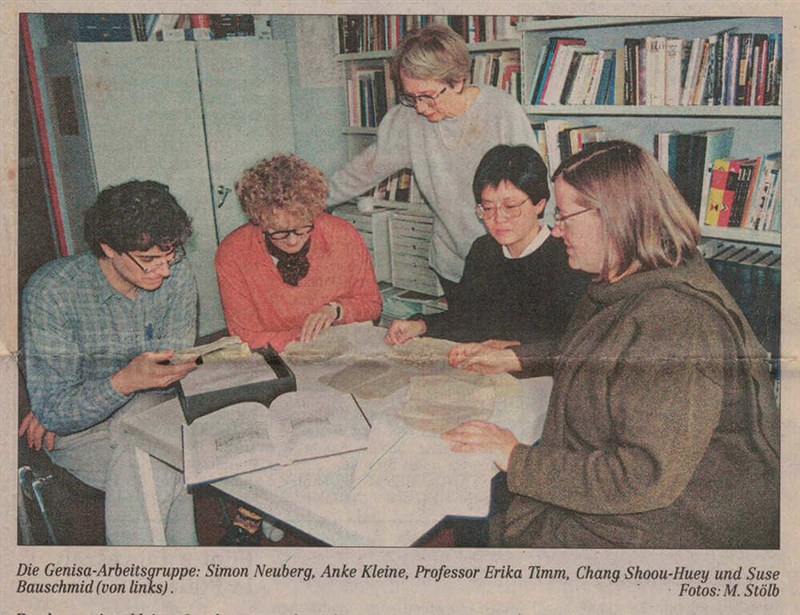
During renovations at a synagogue near Mainz, she helped rescue centuries-old Jewish manuscripts that had initially been discarded as construction waste.
Working with her doctoral adviser and fellow students, Chang spent weeks drying, cleaning and reconstructing the fragile, water-damaged pages.
The effort salvaged more than 20 volumes and helped reconstruct the reading culture of an 18th-century German-Jewish village.
Living and studying in Germany also left Chang with a lasting appreciation for the country's culture of remembrance. Memorial plaques marking the homes of Holocaust victims are embedded in streets and public spaces, keeping history visible in everyday life.
She believes Taiwan can draw lessons from that experience as it continues to reckon with its own history, including the White Terror period.
Building bridges across cultures
Today, Chang's work extends beyond historical research. She serves as the honorary representative for southern Taiwan at the German Institute Taipei, promoting academic and cultural exchanges between Taiwan and Germany.
She said German interest in Taiwan has grown since TSMC invested in Saxony, while Taiwanese literature, film and performing arts have also attracted increasing attention.
Although her work covers a wide range of activities, Chang sees them all as part of the same mission.
"Whether translating old texts, studying literature, or promoting international exchanges, I am doing the same thing," she said. "It is about helping different cultures understand one another."
![European Parliament vice president praises Hsiao as 'role model' for women]() European Parliament vice president praises Hsiao as 'role model' for womenEuropean Parliament Vice President Pina Picierno on Saturday praised Taiwanese Vice President Hsiao Bi-khim (蕭美琴) as a role model for freedom-loving women around the world and told CNA that she would soon begin planning a trip to Taipei after accepting Hsiao's invitation to visit.09/13/2026 01:08 PM
European Parliament vice president praises Hsiao as 'role model' for womenEuropean Parliament Vice President Pina Picierno on Saturday praised Taiwanese Vice President Hsiao Bi-khim (蕭美琴) as a role model for freedom-loving women around the world and told CNA that she would soon begin planning a trip to Taipei after accepting Hsiao's invitation to visit.09/13/2026 01:08 PM![VP Hsiao flags funding, oversight gaps in opposition drone bills]() VP Hsiao flags funding, oversight gaps in opposition drone billsVice President Hsiao Bi-khim (蕭美琴) has questioned key elements of military drone procurement bills sponsored by opposition lawmakers, saying the omissions would hurt the industry and Taiwan's preparedness.08/26/2026 10:21 AM
VP Hsiao flags funding, oversight gaps in opposition drone billsVice President Hsiao Bi-khim (蕭美琴) has questioned key elements of military drone procurement bills sponsored by opposition lawmakers, saying the omissions would hurt the industry and Taiwan's preparedness.08/26/2026 10:21 AM![Taiwan eyeing global drone role via partnerships: Vice President Hsiao]() Taiwan eyeing global drone role via partnerships: Vice President HsiaoTaiwan should leverage its strengths in cybersecurity and pursue international partnerships to secure a central role in the global drone supply chain as demand for drones booms worldwide, Vice President Hsiao Bi-khim (蕭美琴) has said.08/26/2026 10:11 AM
Taiwan eyeing global drone role via partnerships: Vice President HsiaoTaiwan should leverage its strengths in cybersecurity and pursue international partnerships to secure a central role in the global drone supply chain as demand for drones booms worldwide, Vice President Hsiao Bi-khim (蕭美琴) has said.08/26/2026 10:11 AM
- Politics
- Sports
Gymnastics chief dismissed after denying duo World spots
09/15/2026 09:25 PM - Politics
Labor minister stresses 'reciprocal dignity' ahead of China APEC meeting
09/15/2026 09:19 PM - Society
NT$1M reward offered for information leading to arrest of fugitive aide
09/15/2026 09:12 PM - Science & Tech
Taiwan study shows ongoing natural selection shaping disease susceptibility
09/15/2026 07:14 PM