By Zachary Lee, CNA staff reporter
The war in the Middle East and the resulting blockade of the Strait of Hormuz have hurt businesses throughout Asia as prices of raw materials skyrocket and fears of shortages grow.
Taiwan has tried to contain some of the potential economic damage by having state-run fuel and power companies absorb some of the increases in natural gas and oil costs.
Southeast Asia, however, has struggled to adapt, given its greater dependence on Middle East resources, as Taiwanese businesspeople there have found out.
"The price hike happened almost overnight," said Kuo Hsiu-min (郭修敏), a Taiwanese entrepreneur who has run a high-grade PVC plastics manufacturing business in Thailand for more than 30 years. She told CNA that raw material costs had surged by roughly 50 percent in the weeks after the war in the Middle East began.
Kuo was one of several businesspeople attending a recent Taiwanese community gathering in Bangkok who expressed concern about the uncertainty that existed and the scope of the economic challenges.
"Nearly every sector represented in that room has been hit," she said.
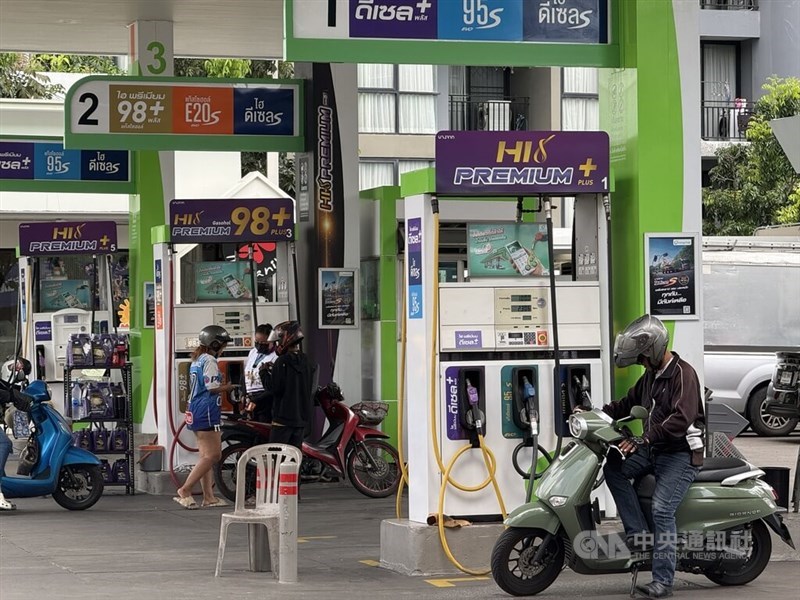
Taiwanese businesses in Thailand have reason to be worried. Thailand gets 52.6 percent of its crude oil, natural gas, and refined fuel from the Middle East, according to the Trade Policy and Strategy Office.
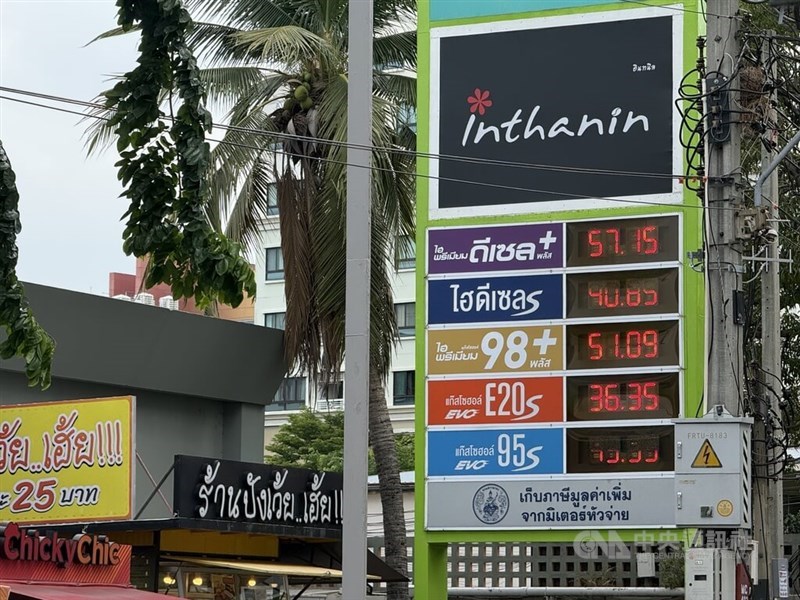
It saw diesel prices soar to a historic high of about 50 baht per liter (about NT$49.65) in early April as the Middle East tensions intensified, and the Bank of Thailand recently adjusted its 2026 economic growth forecast to 1.5 percent, down from a 1.9 percent projection made in February.
No clear end
Some of those at the gathering have turned to Taiwan for help, and Kuo is one of them.
"The day I learned about the price increase, I immediately placed several orders from Taiwan to build inventory," she said, explaining that she has used Taiwan's supply chain as a buffer against the local price surge.
But that has only had a limited impact. Kuo said the most difficult factors to manage have been the rapid change in prices and uncertainty.
"We don't know when the war will end and when energy prices will stabilize," she said.
The sentiment is echoed across the board. According to Thai media reports, high global energy prices have already forced some local factories to shut down.
Under pressure
Taiwanese entrepreneurs in other sectors share a similar sense of whiplash.
Hsieh Wen Kuei (謝文桂), who has owned a food business in Thailand for nearly 40 years, said upstream suppliers have raised their prices, with some even "taking advantage of the situation to inflate their quotes," placing greater pressure on mid- and downstream businesses, including his own.
In the past, Hsieh said, price adjustments came gradually, with room to negotiate. But this time, "they raised prices immediately, with no room for discussion."
In the Architecture, Engineering, and Construction (AEC) industry, the pressure has been just as acute.
Chang Wei-pien (章維斌), president of a construction firm, noted that steel rebar, cement and structural steel prices all soared sharply after the Middle East conflict began -- with some materials being repriced every two days.
To cope with the pressures, Chang's approach has been to make purchases prudently.
"We only buy what we need," he said. He has also postponed projects or slowed down their progress to withstand the pressure.
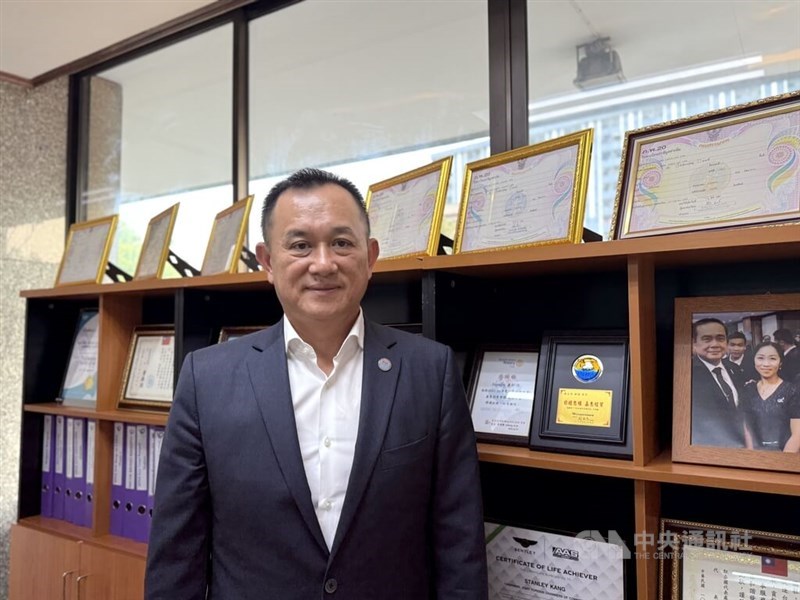
According to Stanley Kang (康樹德), honorary president of Thai-Taiwan Business Association, the hardest-hit sector during the crisis has been manufacturing, but in reality "all sectors are affected."
"For Thailand, which must pay for those energy imports in foreign currency, the effect has compounded into broader inflation and weakening consumer demand," he said.
Cautious optimism
Despite the uncertain outlook, however, some Taiwanese entrepreneurs remain cautiously optimistic, saying Thailand remains competitive in the region due to a more stable political climate under the new government.
Kuo, for instance, said she remains confident in Thailand's long-term prospects, citing its strategic location and relatively developed infrastructure as key advantages.
Still, other Taiwanese businesses in Thailand are still sitting on the sidelines, bracing for what comes next.
"Change is always happening. If you can't keep up, you might just disappear," Kang said.
Enditem/ls
- Business
Taiwan shares open lower
10/15/2026 09:06 AM - Politics
Taiwan's parties ramp up campaigning ahead of Nov. 28 local elections
10/14/2026 09:21 PM - Politics
Belize PM vows stronger support for Taiwan after China sanctions
10/14/2026 09:07 PM - Business
Musk's Terafab plan poses no short-term threat to TSMC: Analyst
10/14/2026 08:22 PM - Society
Northern Taiwan to see showers Thursday as day-night temperature gap widens
10/14/2026 08:15 PM