
By Chao Yen-hsiang, CNA staff reporter
Football is the most popular sport in the world, but in Taiwan it struggles to command the attention enjoyed by other sports.
Baseball has its 2024 WBSC Premier12 title, badminton, propelled for years by former world No. 1 Tai Tzu-ying (戴資穎), regularly captures national attention, and basketball dominates arenas and sports talk shows.
In contrast, football is rarely part of the conversation.
However, before the FIFA Women's World Cup was inaugurated in 1991, Taipei was once at the pinnacle of women's football.
"Saying Taiwanese football is not striving hard enough would be unfair," said Robert Lee (李弘斌), a football commentator whose book, "60 Years of Taiwan Football: 1958-2020" (台灣足球60年), traces the sport's decadeslong development in Taiwan.
"There has always been a group of people who continued to work at it," he said.
From Hong Kong boots to Mulan
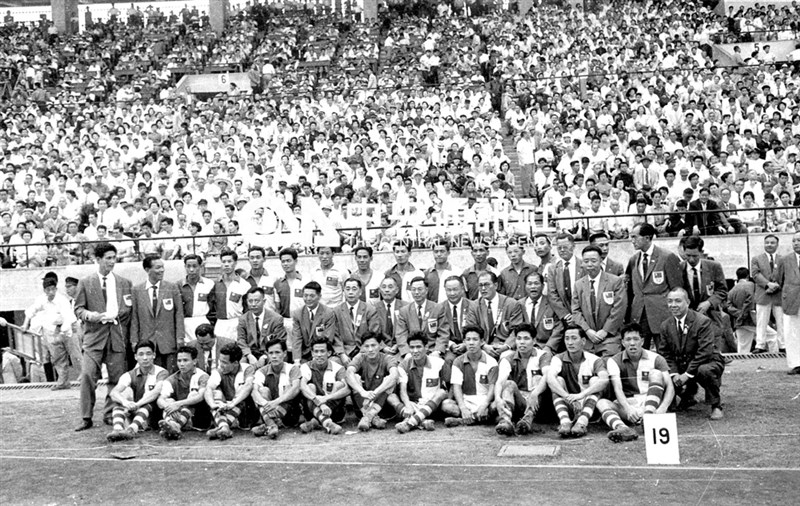
According to Lin Hsin-kai (林欣楷), a Ph.D. candidate in history at National Cheng Kung University and author of "Our Dream: A Century Development of Taiwan Football" (我們的足球夢), football was once considered one of Taiwan's earliest "national sports" alongside basketball after the Republic of China (ROC) government relocated to Taiwan in 1949.
In the 1950s and 1960s, the ROC men's national team, bolstered by elite Hong Kong players known as the "Hong Kong boots," won gold medals at the Asian Games in 1954 and 1958.
However, amid Taiwan's diplomatic isolation in the 1970s, the country lost its place in the Asian Football Confederation (AFC) and spent years competing in Oceania while neighboring countries rapidly professionalized and expanded their football systems.
"By the time Taiwan returned to Asia, everything had changed," Lee said.
Women's football in Taiwan followed a different trajectory.
Taiwan's women's team dominated Asia throughout the late 1970s and 1980s, winning three straight Asian Cup titles between 1977 and 1981 and reaching the quarterfinals of the inaugural FIFA Women's World Cup in 1991.
According to Lee, women's football in Asia at the time remained largely outside the control of the AFC and was instead organized by the now-defunct Asian Ladies Football Confederation, through which Taiwan's team was able to continue competing internationally even as the men's game declined.
It was against this backdrop that Taiwan established the Mulan women's football team in 1975.
Named after the heroine Hua Mulan, who took her father's place in battle, the women's team came to embody Taiwan's football aspirations on the international stage at a time when the men's game was beginning to lose its footing, Lin said.
"Europe was still banning women's football in many places," Lin noted. "Taiwan happened to enter the field very early."

Encouraged by Mulan's international success, Taipei hosted the Women's World Invitational Tournament, known as the Chunghua Cup, from 1978 to 1987. It was one of the world's few major women's football tournaments.
Lin and Lee argue that Taiwan's achievements at that time reflected not only early investment but also the limitations of the country's sports system.
"It was a state-led elite training model," Lin said. "It focused on cultivating top athletes, not on making football truly popular."
"In baseball, a dominant pitcher can change everything," Lin said. "Football doesn't work that way."
After the fall
As women's football professionalized globally in the 1990s and 2000s, Taiwan gradually lost the edge it held. Both Lin and Lee said countries that were once behind Taiwan built professional leagues, youth academies and broader player pools while Taiwan struggled to develop a sustainable football ecosystem.
Lin compared the decline to the collapse of other state-supported sports systems.
"It was like taking medicine," he said. "Once the medicine stopped, things returned to their original state."
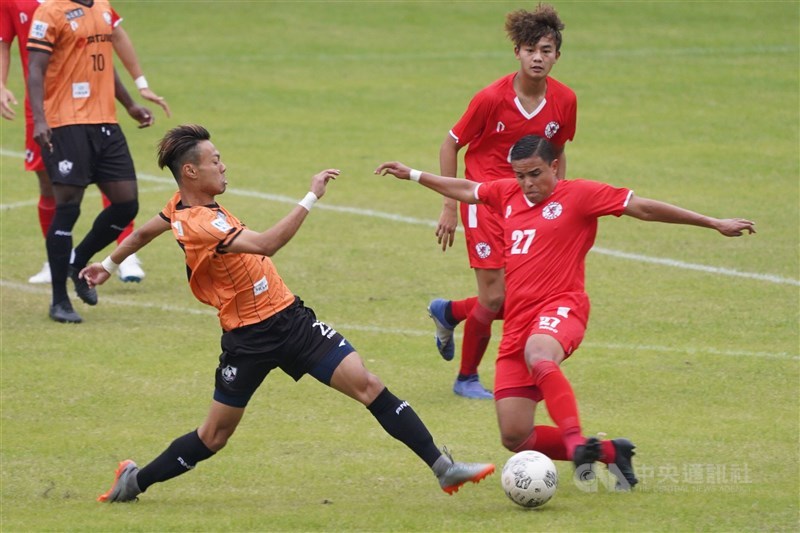
For years, Taiwan's domestic football scene revolved around company-backed teams such as Taiwan Power Co. (Taipower) and Tatung Co., with Taipower long viewed as a stable destination for top players because it offered secure employment after retirement.
However, Lee argued that the model also had unintended consequences, as many players remained within the company after retirement rather than moving into coaching or youth development, thus limiting the transfer of football knowledge and experience to the next generation.
"That's not Taipower's fault," Lee said. "The problem is that it cannot be the best option."
Enduring passion
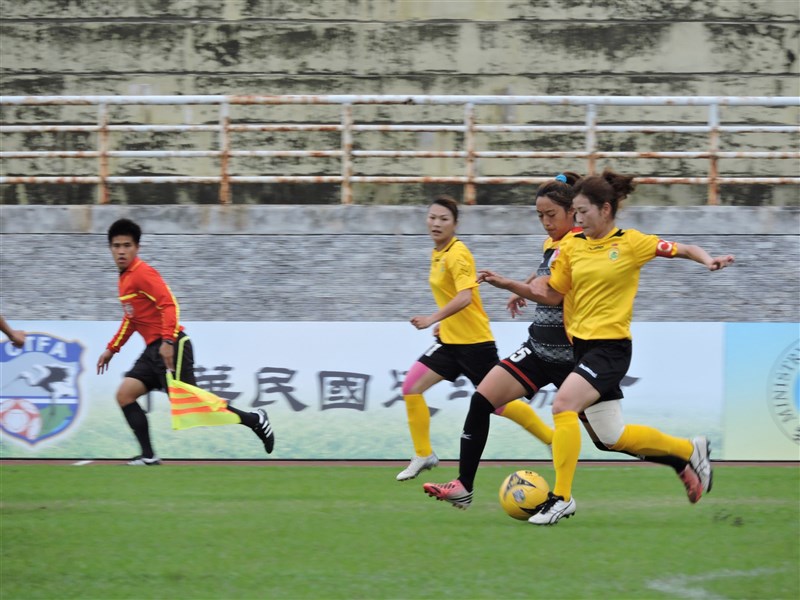
Over the past decade, Taiwanese football has gradually shifted toward a club-based structure, Lee noted.
The launch of the Taiwan Mulan Football League in 2014 and the Taiwan Football Premier League in 2017 provided stable semi-professional competitions for women and men, while AFC-promoted club licensing requirements pushed teams to build youth systems and sustainable development structures.
In 2022 and 2026, Taiwan reached the quarterfinals of the AFC Women's Asian Cup, coming within one victory of returning to the Women's World Cup for the first time since 1991.
Lin believes that Taiwan's greatest football challenge is not simply tactics or talent, but the lack of a unified platform capable of connecting players, clubs, schools and officials.
Even national teams have often struggled to field the strongest possible squads, he said.
Still, Taiwan's back-to-back quarterfinal appearances at the AFC Women's Asian Cup attested to the country's enduring pursuit of its football dreams despite decades of setbacks, Lin said.
"No matter the era or the circumstances, there have always been Taiwanese passionate about football and dreaming of reaching the international stage," he added.
Enditem/AW
![DPP at 40: Founders reflect on risk, rise, reckoning]() DPP at 40: Founders reflect on risk, rise, reckoningFour decades after the Democratic Progressive Party (DPP) was founded under martial law, its pioneers recall the risks they took, the democratic changes they helped bring about and the challenges facing the party today.09/28/2026 11:10 AM
DPP at 40: Founders reflect on risk, rise, reckoningFour decades after the Democratic Progressive Party (DPP) was founded under martial law, its pioneers recall the risks they took, the democratic changes they helped bring about and the challenges facing the party today.09/28/2026 11:10 AM!['Umpire strikes back': Taiwanese ump sets U.S. pro baseball milestone]() 'Umpire strikes back': Taiwanese ump sets U.S. pro baseball milestoneIn her younger days, Sophiyah Liu (劉柏君) was a spiritual medium, serving as a bridge between the mortal plane and that of the unknown.09/18/2026 04:44 PM
'Umpire strikes back': Taiwanese ump sets U.S. pro baseball milestoneIn her younger days, Sophiyah Liu (劉柏君) was a spiritual medium, serving as a bridge between the mortal plane and that of the unknown.09/18/2026 04:44 PM![Made in Taiwan, sovereign in Europe: France's different chip strategy]() Made in Taiwan, sovereign in Europe: France's different chip strategyDuring a May visit to a high-performance computing center operated by the French Alternative Energies and Atomic Energy Commission (CEA) in Bruyères-le-Châtel, south of Paris, French President Emmanuel Macron was photographed holding a sample of Rhea1.09/05/2026 05:27 PM
Made in Taiwan, sovereign in Europe: France's different chip strategyDuring a May visit to a high-performance computing center operated by the French Alternative Energies and Atomic Energy Commission (CEA) in Bruyères-le-Châtel, south of Paris, French President Emmanuel Macron was photographed holding a sample of Rhea1.09/05/2026 05:27 PM

- Politics
Shen holds 1st Taipei campaign motorcade; Chiang urges debate coordination
10/11/2026 08:39 PM - Society
Firefighters work to extinguish Miaoli trash dump fire
10/11/2026 07:58 PM - Politics
Lai's National Day speech steady, avoided provoking Beijing: Scholar
10/11/2026 06:53 PM - Society
Songshan: The ups and downs of Taipei's 'other airport'
10/11/2026 06:36 PM - Society
Philippines opens largest OFW service center in Taipei, eyes expansion
10/11/2026 06:11 PM