Taipei, July 23 (CNA) The Mainland Affairs Council (MAC) said Thursday that Zhou Manzhi (周滿芝), a China-born woman convicted in a final ruling of developing organizations in Taiwan under Beijing's direction, will be stripped of the Taiwanese citizenship she obtained through marriage in 2004.
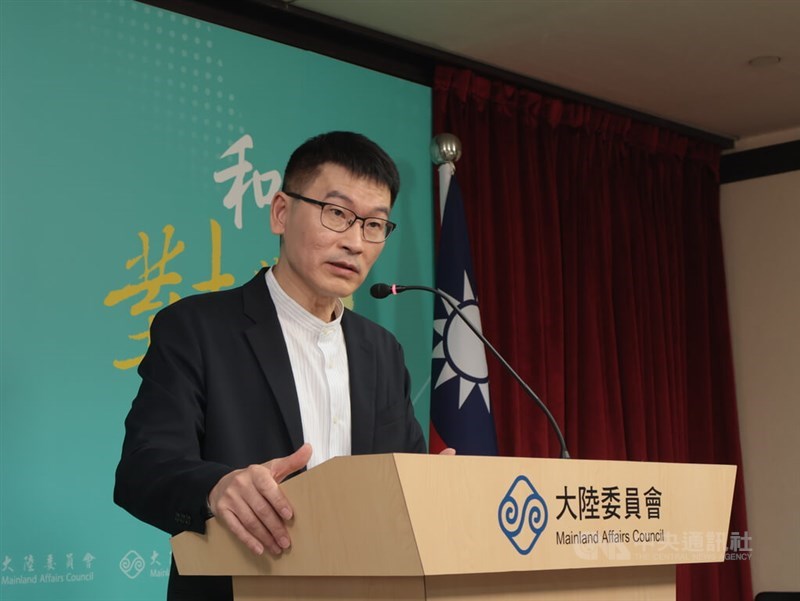
"Since the [Supreme] Court has determined that she committed these acts and convicted her, of course her [Taiwan] status will be revoked," MAC deputy head and spokesperson Liang Wen-chieh (梁文傑) told a regular news briefing in Taipei.
The acts Liang referred to were Zhou's efforts to develop two marriage-immigrant advocacy groups in Taiwan on behalf of China-based organizations found to be under the Chinese Communist Party's (CCP) substantive control, a finding made by the Taiwan High Court's Kaohsiung Branch and upheld by the Supreme Court.
In its ruling Wednesday, the Supreme Court upheld Zhou's eight-year prison sentence for violating the National Security Act.
Asked about the legal basis and timing of the revocation, Liang did not provide a timetable but said the government would apply relevant provisions of the Cross-Strait Act because the conduct identified by the courts "clearly endangered national security."
Under Article 33 of regulations governing family-based residency and settlement in Taiwan for people from China, authorities can revoke the settlement permission and household registration of an individual who was originally a Chinese national and is deemed likely to "endanger national security or social stability."
The MAC's planned action would therefore revoke Zhou's settlement permission and household registration, effectively stripping her of the Taiwanese citizenship she obtained after marrying a Taiwanese national.
The ruling
Zhou was acquitted by the Taiwan High Court's Kaohsiung Branch in March 2025, after it found insufficient evidence that two China-based groups linked to her activities were controlled by the CCP.
The Supreme Court ordered a retrial in September last year, finding that the lower court had failed to fully consider a National Security Bureau investigation indicating the two groups were linked to CCP officials, Chinese government or military personnel.
During the retrial, the high court found that whether a Chinese organization was controlled by the CCP should not be determined solely from its formal registration as a private association, according to Liang.
"You cannot simply look at whether it formally qualifies as a CCP organization," Liang said. "You have to examine whether it is under the CCP's substantive control."
The approach, which was upheld by the Supreme Court, will have "a major impact" on how investigators and prosecutors handle similar cases in the future, Liang said.
The retrial court sentenced Zhou to eight years in prison in January for violating the National Security Act. Zhou appealed, but the Supreme Court dismissed her appeal Wednesday, making the conviction final.
- Politics
Chinese exchange student deported over video showing him 'pinching Lai'
10/16/2026 08:45 PM - Politics
Chiang proposes easing urban renewal threshold; Shen questions bottlenecks
10/16/2026 08:22 PM - Society
Champi expected to become typhoon within 24 hours; path remains uncertain
10/16/2026 07:40 PM - Politics
10 local election candidates fail eligibility review: CEC
10/16/2026 07:27 PM - Politics
Taiwan lawmakers pass health insurance premium subsidies for seniors
10/16/2026 07:24 PM