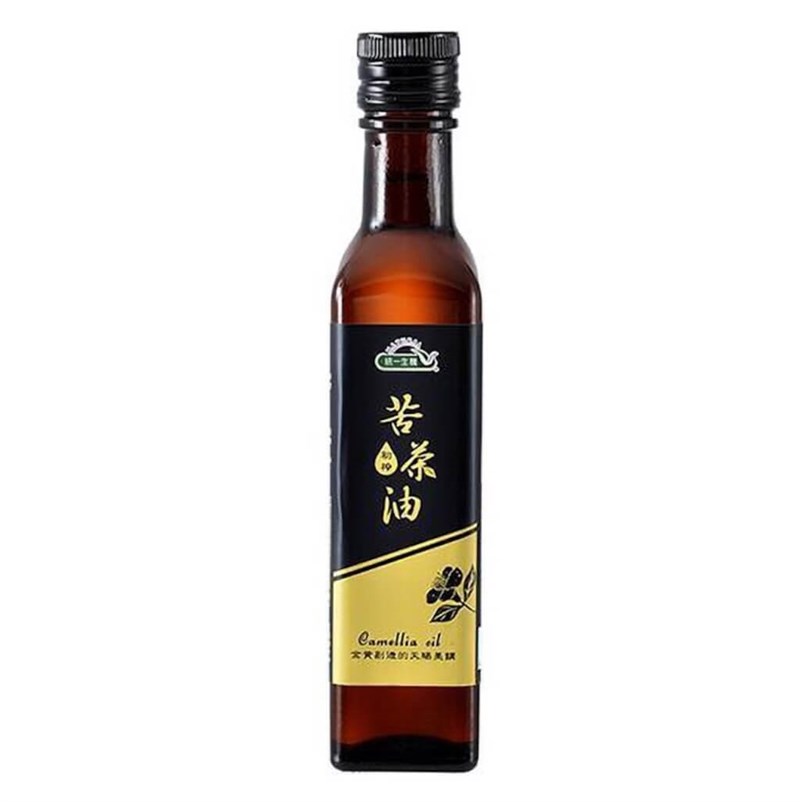
Taipei, July 23 (CNA) Health Minister Shih Chung-liang (石崇良) said Thursday that a suspected benzo[a]pyrene (BaP) contamination case involving camellia oil produced by a New Taipei-based company is unrelated to the recent Central Union Oil Corp. scandal, with the investigation ongoing.
Speaking to reporters at the Legislative Yuan, Shih said the two cases involved completely different raw materials, adding that Aconpure Green Technology Inc., which produced the camellia oil, had already notified downstream businesses to remove and recall the affected products.
He did not elaborate further, except to say that the investigation was ongoing.
His comments came after the New Taipei Department of Health on Wednesday issued a statement that it was informed by Aconpure the previous day that a batch of its camellia oil had been found to contain 2.9 micrograms per kilogram of BaP, exceeding Taiwan's legal limit of 2 μg/kg.
According to the New Taipei department, a total of 5,024 bottles of the affected camellia oil were produced, of which two batches totaling 939 bottles had been sold, while the remaining products did not enter the market and were sealed for storage.
The department said its officials and others from the Taiwan Food and Drug Administration (TFDA) conducted an on-site inspection that day, during which the TFDA collected five camellia oil samples for testing, adding that follow-up action will be taken in accordance with the law based on the test results.
It reminded food businesses that if products are found to pose potential health and safety risks, sales must be immediately suspended. In such cases, the businesses should initiate recalls and notify local health authorities, the department said, warning that failure to do so may result in fines of NT$30,000 (US$941.08) to NT$3 million.
In a separate statement on Wednesday, the TFDA said BaP is a polycyclic aromatic hydrocarbon compound that can be produced during high-temperature cooking processes, such as frying, charcoal grilling and excessive charring of food, and is classified as a Group 1 carcinogen by the International Agency for Research on Cancer.
Liu Fang-ming (劉芳銘), director of the TFDA's Northern Taiwan Management Center, told CNA that the camellia oil "had nothing to do with the Central Union case," as the raw materials involved were different.
The Central Union case involved soybeans, while the Aconpure case involved camellia seeds, although both cases involved issues related to the heating process, Liu explained.
- Sports
Taiwan boosts medal haul in multiple events at Asian Games on Friday
10/02/2026 08:55 PM - Society
Workers at Taiwan snack maker Kuai Kuai extend strike over relocation
10/02/2026 08:45 PM - Business
Chain businesses association seeks more foreign workers
10/02/2026 08:04 PM - Politics
Shen unveils Taipei education platform, Chiang defends free lunches
10/02/2026 06:45 PM - Politics
Taiwan receives first 2 F-16V Block 70s (update)
10/02/2026 06:39 PM