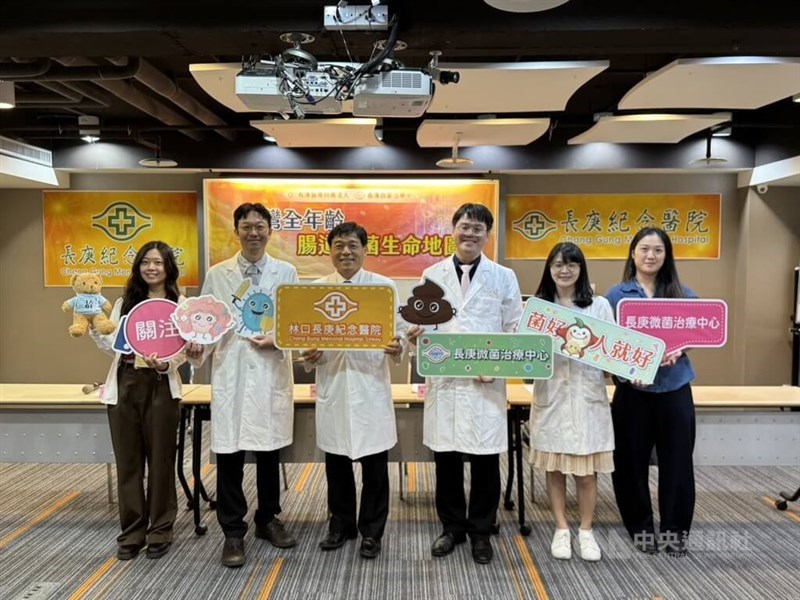
Taipei, July 17 (CNA) Chang Gung Memorial Hospital has built Taiwan's first gut microbiome database covering people from newborns to 93 years old, mapping how intestinal bacteria change throughout life and laying the groundwork for microbiome-based medicine in Taiwan.
The gut microbiome, often described as the body's "second genome," is a complex ecosystem of microorganisms that influences digestion, metabolism, immune function and even cardiovascular health, the Chang Gung Microbiota Therapy Center (CGMTC) said at a Friday press conference.
The center analyzed samples from 1,005 Taiwanese participants to create a life-course map of the local gut microbiome, providing a reference for understanding health patterns in Taiwan's population.
Chang Gung Memorial Hospital Vice President Chiu Cheng-hsun (邱政洵) said most gut microbiome research has relied on data from Europe and the United States, but differences in diet and lifestyle mean those findings may not fully apply to Taiwan.
A locally developed microbiome database will improve the accuracy of future assessments of gastrointestinal, metabolic and neurodegenerative disease risks while supporting the development of more personalized healthcare, Chiu said.
The study found that infancy and childhood are critical periods for establishing the gut microbiome. Early in life, Bifidobacterium species dominate and help regulate immune development, while bacteria linked to fiber digestion and anti-inflammatory functions become more prevalent with age.
Researchers also used artificial intelligence to develop a model that predicts a person's "microbiome age," CGMTC Deputy Director Yeh Yuan-ming (葉元鳴) said. Adult gut bacteria contain age-related signals that AI can identify, suggesting the microbiome may reflect certain aspects of biological aging and lifestyle, he said.
However, the researchers cautioned that the model remains experimental. With an average prediction error of about 11.56 years, it cannot yet be used to determine an individual's biological age, assess disease risk or provide clinical diagnoses.
- Sports
Taiwan boosts medal haul in multiple events at Asian Games on Friday
10/02/2026 08:55 PM - Society
Workers at Taiwan snack maker Kuai Kuai extend strike over relocation
10/02/2026 08:45 PM - Business
Chain businesses association seeks more foreign workers
10/02/2026 08:04 PM - Politics
Shen unveils Taipei education platform, Chiang defends free lunches
10/02/2026 06:45 PM - Politics
Taiwan receives first 2 F-16V Block 70s (update)
10/02/2026 06:39 PM